

Maddy summaryThis Pennsylvania House resolution designates the week of October 13 through 19, 2024, as "Credit Union Week" to recognize the role of credit unions in the state. The measure highlights how these financial cooperatives provide low-cost services and financial education to over 5.3 million members across Pennsylvania and New Jersey. By officially naming this time period, the resolution aims to raise awareness about credit unions' commitment to community service and member advancement. The text is a ceremonial designation that does not alter laws or create new regulations.
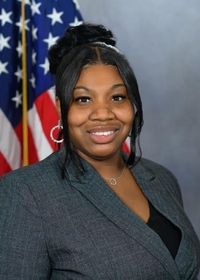
Rep. Carol Kazeem
Sponsored bills
Maddy summaryThis Pennsylvania House Resolution formally recognizes November 11, 2024, as Veterans Day within the state. The measure highlights the significant number of veterans living in Pennsylvania and their contributions to the community and workforce. By passing this resolution, the legislature aims to honor the service and sacrifice of these individuals without creating any new laws or funding.
Maddy summaryThis Pennsylvania House Resolution celebrates the 388th anniversary of the United States National Guard, which traces its origins to a militia organized in Boston in 1636. The document highlights the historical evolution of the National Guard, noting its dual role in serving both state and federal needs for disaster relief and defense. It specifically acknowledges the Pennsylvania National Guard's long history, dating back to 1747, and directs that a copy of the resolution be presented to the unit.
Maddy summaryThis Pennsylvania bill creates a new Employee Misclassification Working Group to coordinate efforts among state agencies in identifying and addressing cases where workers are incorrectly classified as independent contractors rather than employees. The legislation mandates that the Department of Revenue share tax information with specific labor and unemployment offices to help investigate these misclassification issues and requires the use of federal identification numbers to streamline data matching. The working group itself will be led by a representative from the Department of Labor and Industry and will include members from the Department of Revenue and the Office of Attorney General, with optional participation from local prosecutors and labor enforcement officers. Meetings of the group are required to occur at least every three months to develop and oversee enforcement strategies.
Maddy summaryThis bill amends Pennsylvania's Cosmetology Law to explicitly include natural hair braiders in its licensing requirements. It mandates that individuals performing natural hair braiding must obtain a cosmetology license and work only in licensed salons, while also prohibiting the rental of booths within those establishments. The legislation clarifies that these rules apply solely to those whose business is dedicated to braiding and does not affect emergency services, medical professionals, or licensed barbers. Additionally, the bill establishes specific eligibility criteria for taking the required examination and outlines the fees and renewal processes for these new licenses.
Maddy summaryThis bill requires healthcare providers, including physicians and midwives, to offer pregnant and postpartum patients a standardized screening tool for mood and anxiety disorders in their primary language. It mandates that providers share information about available support resources with patients and, with consent, with their accompanying individuals or designated contacts. The legislation also directs the Department of Health to create a public awareness campaign about perinatal mental health and to maintain an updated list of counseling and assistance services.
Maddy summaryThis bill updates the funding rules for Pennsylvania highways that were transferred from state to local control. It sets the annual maintenance payment rate at $12,500 per mile for these roads and establishes a mechanism to automatically adjust these payments every two years starting in 2026. The adjustments will be based on changes in the Consumer Price Index to account for inflation, ensuring maintenance funds keep pace with rising costs. Local municipalities that received these highways will directly receive the increased payments, while the Department of Transportation will handle the calculations and notify the public of any changes.
Maddy summaryThis bill amends the Osteopathic Medical Practice Act to change the term "registered" to "licensed" in specific sections of the law. The change directly affects the official title and terminology used to describe osteopathic physicians within the state's regulatory framework. By updating the language, the legislation ensures consistency in how medical professionals are identified in legal documents. The bill does not alter the actual requirements for practicing medicine, only the wording used in the statute.
Maddy summaryThis bill makes a minor technical correction to the Medical Practice Act of 1985 by clarifying the definition of "registered" in the text. The amendment adds the words "licensed" to the phrase, changing it to "registered] licensed" to ensure precise terminology regarding medical professionals. This change does not alter the substantive rules or regulations of the act but serves to improve the accuracy of the legal definitions within the law.
Maddy summaryThis bill amends the Pennsylvania Human Relations Act to update the list of protected characteristics, explicitly adding sex, sexual orientation, gender identity or expression, familial status, handicap, disability, and the use of support animals to existing categories like race and age. The legislation directly affects employers, employment agencies, labor organizations, and providers of housing and public accommodations by clarifying that discrimination based on these new and existing traits is unlawful. It reinforces the state's policy of ensuring equal opportunity and mandates that the Pennsylvania Human Relations Commission enforce these protections through established procedures and penalties. Additionally, the bill includes provisions to protect religious exercise while maintaining the commission's powers and duties to prevent prejudice and handle complaints.