

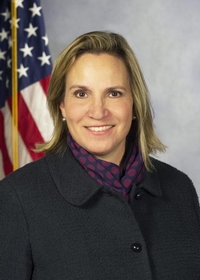
Photo of Christina Sappey
D Pennsylvania House · District 158 On the 2026 ballot

Rep. Christina Sappey

Compare
Total votes
6,597
all sessions
Attendance
99%
72 missed
Near the chamber average
With party
98%
of cast votes
Near the chamber average
Bipartisan score
1%
crosses aisle rarely
Near the chamber average
Sponsored
930
bills & resolutions
Near the chamber average
Committees
6
assignments
930 bills and resolutions

Sponsored bills

Total
930
Primary
69
Co-sponsor
861
This page
930
matching current filters
Co-sponsor HB 2496
Passed · Pennsylvania House · Co-sponsor
An Act amending the act of July 31, 1968 (P.L.805, No.247), known as the Pennsylvania Municipalities Planning Code, in general provisions, providing for pause on data center proposals.

Maddy summaryThis bill amends Pennsylvania's Municipalities Planning Code to allow local governments to temporarily halt the submission of new data center development applications. Under the new provision, a municipality can adopt a resolution at a public meeting to pause these submissions for up to 180 days, a period that begins retroactively from the date of public notice. During this pause, local authorities may update their zoning laws regarding data centers, and any applications received while the pause is in effect will be evaluated under the new rules. The legislation defines a data center as a facility primarily used for housing servers or data storage systems with specific backup power and cooling infrastructure.

Passed Jun 30, 2026 1 co-sponsor
Primary HB 2535
In committee · Pennsylvania House · Lead sponsor
An Act providing for the public safety regulation of large load users; requiring the submission of emergency operations plans and generalized infrastructure inventories as a condition of occupancy; protecting confidential security information; and providing for enforcement and penalties.

Maddy summaryHB 2535, known as the Commercial Data Center Public Safety Act, regulates large data centers in Pennsylvania that consume 25 megawatts or more of power. To receive a certificate of occupancy, these facilities must submit detailed emergency plans and inventories listing battery types, cooling agents, and fire suppression systems to local fire officials. The bill also mandates annual updates to these documents and restricts access to the information to authorized safety and law enforcement personnel to protect confidential security details.

In committee Jun 30, 2026 0 co-sponsors
Co-sponsor HB 2674
In committee · Pennsylvania House · Co-sponsor
An Act amending Title 66 (Public Utilities) of the Pennsylvania Consolidated Statutes, in general provisions relating to Public Utility Code, further providing for definitions.

Maddy summaryThis bill updates the Pennsylvania Public Utility Code by formally defining "commercial data centers" and refining the legal definition of "public utility." It specifically categorizes large data facilities with a peak demand of 25 megawatts or more as commercial data centers, while simultaneously clarifying that such facilities are not considered public utilities if selling electricity to the grid is not their primary business. These changes aim to provide clearer regulatory boundaries for utility providers and data center operators without altering existing operational requirements.

In committee Jun 26, 2026 1 co-sponsor
Co-sponsor HB 2207
Passed · Pennsylvania House · Co-sponsor
An Act amending Title 12 (Commerce and Trade) of the Pennsylvania Consolidated Statutes, in small business first, further providing for capital development loans.

Maddy summaryHB 2207 increases the maximum loan amount for small businesses in Pennsylvania seeking capital development loans (for land, buildings, machinery, and equipment) from $400,000 to $2,000,000, or 50% of total project costs, whichever is lower. It clarifies that costs incurred during the 12 months before applying are included in the total project costs calculation. The bill directly affects small businesses applying for these state-backed loans through Pennsylvania's capital development program. The changes take effect 60 days after enactment.

Passed Jun 25, 2026 1 co-sponsor
Co-sponsor HB 2234
Passed · Pennsylvania House · Co-sponsor
An Act amending the act of March 4, 1971 (P.L.6, No.2), known as the Tax Reform Code of 1971, in malt beverage tax, further providing for limited tax credits and providing for spent grain donation tax credit.

Maddy summaryHB 2234 creates a tax credit for Pennsylvania breweries that donate spent grain byproduct (leftover grain from brewing) to local farms. Breweries can claim a credit of $0.16 per pound of dry weight donated, up to $30,000 annually or their total tax liability, if the grain is delivered to farms within 100 miles. The credit applies to donations made to "eligible agricultural operations" engaged in normal farming activities under Pennsylvania law. Applications must be submitted by February 1 each year for the prior year's donations, with the Department of Revenue reviewing eligibility and coordinating with the Liquor Control Board. This directly benefits breweries and farms participating in the program by reducing brewery tax bills while repurposing brewing waste.

Passed Jun 25, 2026 1 co-sponsor
Primary HB 2653
In committee · Pennsylvania House · Lead sponsor
An Act amending Title 40 (Insurance) of the Pennsylvania Consolidated Statutes, providing for behavioral health care provider access; and imposing penalties.

Maddy summaryThis bill requires insurance companies in Pennsylvania to contract with behavioral health care providers who meet specific criteria, such as being licensed in good standing and offering services within the state. The law mandates that insurers cannot deny network participation to qualified providers who agree to standard contract terms, ensuring patients have access to a wider range of mental health and substance use disorder specialists. Additionally, the legislation establishes rules for claim handling and prohibits discrimination based on the type of behavioral health service provided. By creating these new requirements, the bill aims to remove barriers that might prevent individuals from finding suitable care within their insurance networks.

In committee Jun 24, 2026 0 co-sponsors
Co-sponsor HB 2184
In committee · Pennsylvania House · Co-sponsor
An Act amending Title 66 (Public Utilities) of the Pennsylvania Consolidated Statutes, in general provisions, further providing for definitions; in powers and duties, providing for public interest; and, in rates and distribution systems, further providing for rates to be just and reasonable, for voluntary changes in rates and for rates fixed on complaint and investigation of costs of production.

Maddy summaryHB 2184 amends Pennsylvania's public utilities law to define "public interest" and require the Public Utility Commission (PUC) to consider eight specific factors when making utility decisions. These factors include residential rate affordability, energy strategy (renewables, distributed generation, energy efficiency), grid modernization, environmental protection, economic growth (jobs, tax revenue), reliability, and environmental justice. The bill updates existing provisions about "just and reasonable" rates (Section 1301), mandatory 60-day notice for rate changes (Section 1308), and complaint-based rate investigations (Section 1309). It directly affects all utility companies operating in Pennsylvania and the PUC, which must now document how decisions align with these public interest factors. The bill takes effect 60 days after enactment.

In committee Jun 23, 2026 1 co-sponsor
Co-sponsor HB 462
Passed · Pennsylvania House · Co-sponsor
An Act amending Title 42 (Judiciary and Judicial Procedure) of the Pennsylvania Consolidated Statutes, in limitation of time, further providing for infancy, insanity or imprisonment; in matters affecting government units, further providing for exceptions to sovereign immunity and for exceptions to governmental immunity; and making a repeal.

Maddy summaryHB 462 amends Pennsylvania law to extend time limits for filing lawsuits involving minors, individuals with mental incapacity, or those imprisoned. It also clarifies when government units (like cities or counties) can be sued by specifying exceptions to sovereign immunity. The bill directly affects citizens seeking legal action against government entities and the government units themselves, by changing deadlines and liability rules. Key provisions include updating filing deadlines for specific vulnerable groups and defining clearer scenarios where governments lose immunity from lawsuits. This is a substantive policy change to court procedures, not a procedural or commemorative measure.

Passed Jun 23, 2026 1 co-sponsor
Co-sponsor HB 1135
In committee · Pennsylvania House · Co-sponsor
An Act amending the act of March 1, 1974 (P.L.90, No.24), known as the Pennsylvania Pesticide Control Act of 1973, providing for prohibited pesticides.

Maddy summaryHB 1135 prohibits the use of paraquat, a specific chemical pesticide, within Pennsylvania. It defines paraquat by its chemical identifier (CAS number 4685-14-7) and includes related salts, making it unlawful for farmers, agricultural businesses, or any pesticide users to apply it in the state. The bill amends Pennsylvania's 1973 Pesticide Control Act to add this prohibition, effective one year after enactment, and overrides any conflicting existing regulations. This directly affects pesticide users and applicators operating in Pennsylvania.

In committee Jun 23, 2026 1 co-sponsor
Co-sponsor HB 464
Passed · Pennsylvania House · Co-sponsor
A Joint Resolution proposing an amendment to the Constitution of the Commonwealth of Pennsylvania, further providing for courts to be open and suits against the Commonwealth.

Maddy summaryHB 464 is a constitutional amendment proposal that would ensure Pennsylvania courts remain open for lawsuits against the state government (the "Commonwealth"). It directly affects residents, businesses, and local governments who may need to sue the state for issues like contract disputes or government actions. The key provision would amend the state constitution to guarantee access to courts for such cases, removing potential barriers to filing suit. This is a procedural change to constitutional access, not a new law with specific funding or regulations.

Passed Jun 23, 2026 1 co-sponsor
Showing 11 to 20 of 930 bills