

Maddy summaryHB 857 amends Pennsylvania's Human Services Code to update reimbursement rates for emergency ambulance services under Medicaid programs. It requires the state to pay ambulance providers the higher of either Medicare's 2023 rates or current Medicaid ambulance fees (as updated in 2023) for services provided to Medicaid enrollees starting January 1, 2024. For services where patients declined transport, new rates based on 2025 Medicare data or updated Medicaid fees will apply beginning July 1, 2025. This directly affects licensed emergency medical services agencies that provide ambulance transport to Medicaid beneficiaries.
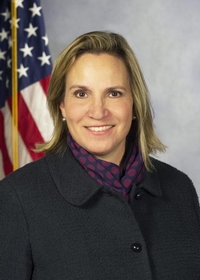
Rep. Christina Sappey
Sponsored bills
Maddy summaryHB 744 amends Pennsylvania's ethics laws to restrict gifts to public officials. It prohibits public officials, employees, nominees, or candidates from accepting cash gifts or non-cash gifts exceeding $50 in value from a single source in a year (Section 1103.1). Key exceptions include gifts from family members (excluding cash for candidates), lobbyists for major life events like weddings, and election contributions made under state law (Section 1103.2). The bill aims to prevent undue influence by clarifying what constitutes a prohibited gift under the state's financial disclosure framework.
Maddy summaryHB 673, the Riparian Buffer Protection Act, requires property owners and developers to protect existing natural vegetation buffers along rivers and streams and restore damaged buffers. It defines "natural riparian buffers" as vegetation providing ecosystem benefits (like filtering pollution, preventing erosion, and supporting wildlife) and prohibits land development that creates impervious cover (such as roads, driveways, or concrete) within these buffer zones. Municipalities gain authority to issue permits for development, inspect properties, and enforce rules, with penalties for violations. The law also clarifies how it interacts with existing state environmental regulations and local ordinances.
Maddy summaryHR 12 is a ceremonial resolution recognizing February 2025 as "Black History Month" in Pennsylvania. It does not create new laws or policies but formally acknowledges the month through the House of Representatives. The resolution highlights the historical origins of Black History Month, including Dr. Carter Godwin Woodson's founding of the Association for the Study of African American Life and History, and notes the 2025 theme focused on African Americans and labor. This resolution directly affects Pennsylvania residents by designating the month for commemoration, without altering any legal rights or obligations.
Maddy summaryThis Pennsylvania House Resolution (HR 39) is a symbolic tribute honoring former President Jimmy Carter following his death on December 29, 2024, at age 100. It commemorates his life, presidency, and humanitarian work - including the Camp David Accords, founding The Carter Center, and efforts to eradicate Guinea worm disease - through a series of historical "whereas" statements. As a commemorative resolution, it does not create new laws, allocate funds, or directly affect any individuals or policies. The resolution serves only to formally extend the Pennsylvania General Assembly's condolences and recognize Carter's legacy. It is purely ceremonial, with no legislative or policy impact.
Maddy summaryHB 374 amends Pennsylvania's Election Code to strengthen reporting requirements for campaign finance. It requires any individual or organization (including 501(c) groups) making independent expenditures over $100 in a year to report the candidate or ballot question they support, using the same forms as political committees. Additionally, it mandates that candidates, political committees, or organizations making contributions or independent expenditures over $500 after the final pre-election report must file a report within 24 hours via fax, mail, or in-person appearance. This bill directly affects candidates, political committees, and entities making significant campaign expenditures. The changes aim to increase transparency around late contributions and independent spending.
Maddy summaryHB 329 modifies Pennsylvania's school funding formula to adjust how state funds are distributed to school districts starting in fiscal year 2025-2026. It creates a new "Senior Citizen Tax Freeze" program (Section 504.1), allowing eligible seniors (65+ who own their homes) to freeze school property taxes at their base payment level, preventing increases beyond that amount. Seniors must apply within 45 days of tax due dates, provide proof of ownership and payment, and the state will reimburse school districts for tax increases above the base amount starting April 2025. The program is funded through the existing Property Tax Relief Reserve Fund, with payments made annually from that fund. This directly affects seniors owning homesteads in Pennsylvania school districts.
Maddy summaryHB 286 allows Pennsylvania seniors meeting specific criteria to lock their property tax payments at the "base year" amount. To qualify, applicants must be at least 65 years old (or meet widow/widower/disabled criteria), live in their home for 10+ years, and have household income under $45,000 annually. Political subdivisions would implement the program through annual applications requiring proof of ownership, tax payment history, and income eligibility. The Department of Revenue would track participation and submit a legislative report by 2030.
Maddy summaryThis bill amends Pennsylvania's Election Code to set annual contribution limits for political campaigns. It caps individual donations to a single candidate at $10,000 per calendar year and limits political action committee (PAC) contributions to $20,000 per candidate annually. These restrictions apply directly to donors and PACs supporting candidates for any office within Pennsylvania. The changes take effect 60 days after enactment.
Maddy summaryHB 272 establishes a grant program to help Pennsylvania municipalities and emergency service facilities (like fire stations, police departments, and ambulance services) install solar energy systems. The Department of Environmental Protection will administer the program, awarding competitive grants to cover eligible costs such as solar equipment, installation, permits, and site assessments. Applicants must submit a site assessment and verify contractors meet licensing, safety, and legal requirements through an affidavit. The program also requires the department to provide technical assistance and educational resources about solar energy projects.