

Maddy summaryThis bill establishes the Pennsylvania Maternal and Infant Outcome Measures Survey Program within the Department of Health to collect data on the health experiences of mothers and babies. The program will conduct surveys of individuals who have recently had a live birth to gather information on their behaviors, attitudes, and experiences before, during, and after pregnancy. The Department of Health is authorized to use available funding, including federal money, and may hire outside contractors to run the survey while ensuring all personal data remains confidential. Additionally, the bill allows the department to share de-identified survey results with researchers and publish them in public reports to help improve maternal and child health outcomes.
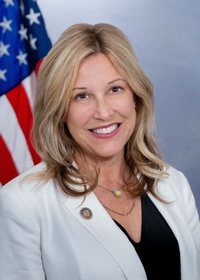
Rep. Melissa Shusterman
Sponsored bills
Maddy summaryThis bill directs Pennsylvania's Human Services department to replace current Supplemental Nutrition Assistance Program cards with new chip-enabled versions by January 1, 2028. The new cards will be provided free of charge to eligible recipients and will include security features like tap-to-pay technology to prevent benefit theft. The department must issue regular reports on the transition progress to state legislators and take steps to secure funding, including applying for federal grants.
Maddy summaryThis bill prohibits Pennsylvania state agencies from using text messages to collect unpaid fines, fees, or tolls or to notify individuals about such charges. It defines a text-based communication as any written message sent on a mobile device, explicitly excluding standard email. The law applies to all Commonwealth agencies as currently defined by state statute and will become effective 60 days after passage.
Maddy summaryThis bill establishes a new framework for Pennsylvania public utilities to earn a return on their equity investments, directly affecting investor-owned electric, gas, and water companies regulated by the state commission. It creates a competitive auction process where utilities can bid to set their own return rates based on market conditions, while also providing a default rate of the 10-year U.S. Treasury yield plus 2 percent if no auction occurs. To support this system, the legislation requires utilities to separate their services into distinct legal entities and mandates annual reporting to ensure transparency. Ultimately, the law aims to determine how much profit these utility companies can make on their investments while maintaining oversight through the state commission.
Maddy summaryThis bill, known as the Pennsylvania Common Cents Act, requires government agencies, municipalities, and public utilities to round cash payments to the nearest five-cent increment when collecting face-to-face sales. Specifically, totals ending in one, two, six, or seven cents will be rounded down, while those ending in three, four, eight, or nine cents will be rounded up. The rule applies only to physical cash transactions and does not affect payments made by card, check, or other digital methods. It takes effect immediately upon passage.
Maddy summaryHB 2207 increases the maximum loan amount for small businesses in Pennsylvania seeking capital development loans (for land, buildings, machinery, and equipment) from $400,000 to $2,000,000, or 50% of total project costs, whichever is lower. It clarifies that costs incurred during the 12 months before applying are included in the total project costs calculation. The bill directly affects small businesses applying for these state-backed loans through Pennsylvania's capital development program. The changes take effect 60 days after enactment.
Maddy summaryHB 1925 regulates how healthcare facilities, insurance companies, and Medicaid/CHIP managed care plans can use artificial intelligence. It requires the Department of Health, Insurance Department, and Department of Human Services to create rules for AI safety and transparency in these sectors. The bill imposes penalties for failing to comply with these new requirements. It directly affects providers and insurers operating in Pennsylvania's health and insurance systems.
Maddy summaryThis bill requires insurance companies in Pennsylvania to contract with behavioral health care providers who meet specific criteria, such as being licensed in good standing and offering services within the state. The law mandates that insurers cannot deny network participation to qualified providers who agree to standard contract terms, ensuring patients have access to a wider range of mental health and substance use disorder specialists. Additionally, the legislation establishes rules for claim handling and prohibits discrimination based on the type of behavioral health service provided. By creating these new requirements, the bill aims to remove barriers that might prevent individuals from finding suitable care within their insurance networks.
Maddy summaryThis bill updates Pennsylvania's Real Estate Licensing and Registration Act to formally establish a new license for home inspectors and a registration for those in training. It defines what constitutes a home inspection and a material defect, clarifying that these terms apply to noninvasive visual examinations of residential properties rather than specialized tests for specific systems like plumbing or radon. The legislation also adds definitions for campground membership salespersons and expands the duties of real estate brokers to include requirements for maintaining an office. Additionally, the bill outlines penalties for operating without a license and sets rules for continuing education and reciprocal licensing for home inspectors.
Maddy summaryThis bill is a ceremonial resolution that designates the week of September 12 through 18, 2026, as "Neonatal Nurses Week" in Pennsylvania. It aims to honor the work of neonatal nurses who provide specialized care to newborn infants, particularly those in intensive care units with complex health needs. The measure does not change any laws or policies but serves to publicly acknowledge the skills and dedication of these healthcare professionals.