

Maddy summaryHB 1109 would establish a legal process for "compassionate aid in dying" in Pennsylvania, allowing terminally ill adults to request medication to end their life under strict safeguards. To qualify, patients must be 18 or older, under the care of a healthcare provider, have a terminal illness confirmed by a consulting provider, and be deemed capable of making an informed decision after counseling. The process requires a written request, a waiting period, and detailed documentation to ensure the decision is voluntary and informed, while protecting healthcare providers from forced participation. Violations of the law would be subject to penalties as outlined in the bill.
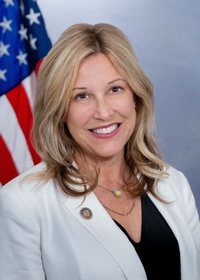
Rep. Melissa Shusterman
Sponsored bills
Maddy summaryHB 1150 raises Pennsylvania's minimum wage to $15 per hour starting January 1, 2026, with annual increases thereafter. It also establishes a phased timeline for tipped employees: requiring higher base cash wages starting in 2025 (e.g., $5.00/hour after June 2025) and mandating that by July 1, 2029, employers must pay the full minimum wage without relying on tips. The bill ensures all tips received by employees remain their property and cannot be used by employers to meet minimum wage requirements. This directly affects most private-sector employers and tipped workers in Pennsylvania, particularly in hospitality and service industries.
Maddy summaryHB 1097 creates a new minor criminal offense in Pennsylvania for organizing or operating events where live pigeons are used as targets for shooting contests, either for amusement or skill testing. This applies to anyone who willfully runs such events at a designated location, including using mechanical aids to present pigeons to shooters. The bill explicitly excludes legal hunting under state game laws, dog training activities, or permitted special events. It takes effect 60 days after enactment.
Maddy summaryHB 1064 amends Pennsylvania's Health Care Facilities Act to require all health care facilities - including hospitals, clinics, mental health centers, urgent care centers, and dental offices - to establish and publicly share written policies regarding firearms on their premises. The bill mandates that facilities either permit firearms with safety procedures (e.g., storage guidelines) or outline specific steps for staff if someone enters with a firearm. These policies must address both permitted and prohibited firearm scenarios, applying to all locations providing medical services as defined by Pennsylvania law. The bill takes effect 60 days after enactment.
Maddy summaryHR 150 is a Pennsylvania House resolution designating April 11-17, 2025, as "Black Maternal Health Week" to highlight the disproportionate maternal health disparities affecting Black women and birthing persons in the state. It references Pennsylvania data showing Black women face maternal mortality rates twice as high as White women (148 vs. 74 deaths per 100,000 live births in 2020) and higher morbidity rates. The resolution does not create new laws or funding but aims to raise public awareness about preventable maternal health outcomes. It specifically targets state-level attention to this crisis, citing local statistics from Philadelphia and Allegheny Counties. As a symbolic resolution, it has no binding effect but seeks to spur broader discussion and action.
Maddy summaryThis bill creates a $100 tax credit for Pennsylvania taxpayers who adopt cats or dogs from animal shelters, humane societies, or rescue organizations. The credit applies to state income taxes, with a maximum annual benefit of $300 (covering up to three adopted animals). To claim the credit, taxpayers must submit proof of spaying/neutering and adoption during the tax year. The program directly affects individuals adopting shelter animals, aiming to incentivize pet adoption through tax relief.
Maddy summaryHB 1110 requires Pennsylvania's Department of Military and Veterans Affairs to implement a public awareness campaign about military sexual trauma (defined as sexual assault or harassment during military service). The campaign must promote survivor acceptance, encourage active military members to report incidents, and provide information about available support resources. The department must design accessible materials (multilingual, mobile-friendly, and culturally appropriate) for its website, consult with advocacy groups and veterans with lived experience, and submit detailed reports within 180 days and one year of implementation. This bill directly affects active military members, veterans, and the public by improving access to trauma support and raising community awareness.
Maddy summaryThis bill establishes a grant program to provide free menstrual products (such as pads and tampons) in Pennsylvania public schools. Schools with 25% or more students eligible for free or reduced-price lunch programs can apply for grants to purchase these products and install dispensers or disposal units. Recipients must report annual spending on products and dispenser maintenance to the state. The program is funded by a state appropriation for the 2025-2026 fiscal year.
Maddy summaryHB 1065 creates a new felony offense for selling unmarked firearm components in Pennsylvania. It specifically targets the sale of firearm frames/receivers, silencer frames, split/modular frames, or partially complete frames without serial numbers registered to a federal firearms licensee. The bill defines "privately made firearm" as one assembled by non-licensed individuals without federal serial markings. This law directly affects sellers of homemade or unlicensed firearm parts, making such sales a third-degree felony. It does not change laws regarding firearm ownership or purchase, only penalizing the sale of unmarked components.
Maddy summaryThis bill requires all Pennsylvania public and private (nonpublic) schools to integrate Holocaust, genocide, and human rights violations instruction into social studies and language arts courses starting with the 2027-2028 school year. The state education department must create curriculum guidelines within 12 months of the bill's effective date, covering specific topics like the Holocaust's history, global genocides (including Rwanda), and human rights violations such as systemic discrimination and torture. Schools must provide teacher training on these topics, and the state board will track compliance through a study, potentially requiring mandatory instruction if less than 90% of schools currently offer it. This applies to all public school districts, charter schools, cyber charters, intermediate units, and nonpublic schools upon request.