

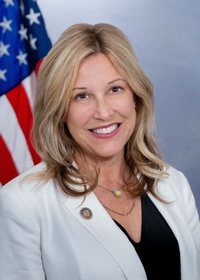
Photo of Melissa Shusterman
D Pennsylvania House · District 157 On the 2026 ballot

Rep. Melissa Shusterman

Compare
Total votes
5,531
all sessions
Attendance
100%
of floor votes
Near the chamber average
With party
99%
of cast votes
Higher than 80% of chamber peers
Bipartisan score
0%
crosses aisle rarely
Lower than 85% of chamber peers
Sponsored
1,809
bills & resolutions
Higher than 86% of chamber peers
Committees
7
assignments
1,809 bills and resolutions

Sponsored bills

Total
1,809
Primary
199
Co-sponsor
1,610
This page
1,809
matching current filters
Co-sponsor HB 2359
Passed · Pennsylvania House · Co-sponsor
An Act amending the act of March 4, 1971 (P.L.6, No.2), known as the Tax Reform Code of 1971, in computer data center equipment incentive program, further providing for definitions, for application for certification, for eligibility requirements relating to sales and use tax refund program, for notification, for eligibility requirements relating to sales and use tax exemption program and for notification and records.

Maddy summaryThis bill amends Pennsylvania's Right-to-Know Law to ban government agencies from signing nondisclosure agreements related to data centers. The law prohibits any contract that restricts the public from accessing information about the construction, development, or location of these facilities. If an agency signs such an agreement, the contract is considered void and unenforceable. The bill defines a data center as a facility used to process, store, or transmit data using computers and software.

Passed Jul 10, 2026 1 co-sponsor
Co-sponsor HB 2558
Passed · Pennsylvania House · Co-sponsor
An Act prohibiting enforcement of covenants not to compete in broadcast employment agreements.

Maddy summaryThis bill, titled the Broadcast Freemarket Agreement Act, prohibits employers in the radio, television, and digital media industries from enforcing non-compete clauses in employment contracts. It declares such agreements void if they stop workers from moving to other companies or performing services within a specific geographic area after leaving their current job. The law also ensures that employees cannot be forced to sign away these protections, while still allowing employers to maintain confidentiality agreements regarding trade secrets.

Passed Jul 9, 2026 1 co-sponsor
Co-sponsor HB 2146
Passed · Pennsylvania House · Co-sponsor
An Act amending Title 65 (Public Officers) of the Pennsylvania Consolidated Statutes, in open meetings, further providing for notification of agency business required and exceptions.

Maddy summaryHB 2146 modifies Pennsylvania's open meetings law to clarify when government agencies can take action on unlisted agenda items. It creates specific exceptions for minor administrative approvals that arise unexpectedly, such as urgent legal filings, small purchases under $10,000 (based on current thresholds), grant applications with deadlines, or minor permit approvals. Agencies must obtain and publicly disclose a legal opinion confirming an item qualifies under these exceptions before acting. This directly affects state and local agencies holding public meetings, ensuring transparency while allowing limited flexibility for time-sensitive matters. The bill does not change core meeting notice requirements but adds defined exceptions for minor, non-financial actions.

Passed Jul 9, 2026 1 co-sponsor
Co-sponsor HB 1239
Passed · Pennsylvania House · Co-sponsor
An Act amending Title 68 (Real and Personal Property) of the Pennsylvania Consolidated Statutes, in general provisions relating to condominiums, further providing for definitions; in management of the condominium, further providing for powers of unit owners' association; in general provisions relating to planned communities, further providing for definitions; and, in management of planned communities, further providing for power of unit owners' association.

Maddy summaryHB 1239 updates Pennsylvania's rules for condominiums and planned communities under Title 68. It clarifies definitions for these properties and strengthens the authority of homeowners' associations (HOAs) to manage common areas and enforce rules. The bill directly affects residents in condominiums and planned communities by giving their HOAs clearer powers over maintenance, finances, and governance. These changes aim to streamline management without altering core ownership rights or adding new taxes or fees.

Passed Jul 9, 2026 1 co-sponsor
Co-sponsor HR 584
In committee · Pennsylvania House · Co-sponsor
A Resolution directing the Joint State Government Commission to study suicide prevention and data collection efforts in this Commonwealth and make recommendations for improving existing prevention and data collection efforts.

Maddy summaryThis resolution directs the Joint State Government Commission to study suicide prevention and data collection efforts in Pennsylvania and provide recommendations for improvement. The study will specifically examine how well the state has met eight existing suicide prevention goals and analyze the Pennsylvania Violent Death Reporting System to identify barriers like lack of mandatory reporting and insufficient funding. The commission is tasked with proposing legislative actions to ensure medical examiners, coroners, and law enforcement agencies consistently report violent death data to the Department of Health.

In committee Jul 6, 2026 1 co-sponsor
Co-sponsor HB 2649
In committee · Pennsylvania House · Co-sponsor
An Act amending the act of May 17, 1921 (P.L.682, No.284), known as The Insurance Company Law of 1921, in casualty insurance, providing for coverage for certain fertility preservation services.

Maddy summaryThis Pennsylvania bill requires health insurance companies to cover fertility preservation services for individuals facing medically necessary cancer treatments that could cause infertility. The law mandates that insurers include at least three years of egg, sperm, or ovarian tissue storage at an in-network facility, with a minimum lifetime benefit of $100,000 per person. While the coverage must follow standard policy rules like deductibles and copayments, religious employers are allowed to request exemptions if the services conflict with their beliefs, provided they notify patients and allow them to buy separate supplemental insurance.

In committee Jul 2, 2026 1 co-sponsor
Co-sponsor HB 2549
In committee · Pennsylvania House · Co-sponsor
An Act amending Title 75 (Vehicles) of the Pennsylvania Consolidated Statutes, in registration of vehicles, providing for contributions for the deaf and hard of hearing, for contributions for the Shriners Hospitals for Children, for contributions to Fire Company Grant Program and for contributions to Emergency Medical Services Grant Program.

Maddy summaryThis bill allows Pennsylvania residents to voluntarily donate $5 when they renew their driver's licenses or vehicle registrations online. The funds collected will go exclusively to the Office for the Deaf and Hard of Hearing to help provide communication access services for those individuals. The donation is optional and will be added to the regular renewal fee, with annual reports required to track how much money is raised and how it is spent.

In committee Jul 1, 2026 1 co-sponsor
Co-sponsor HB 2154
In committee · Pennsylvania House · Co-sponsor
An Act amending Title 61 (Prisons and Parole) of the Pennsylvania Consolidated Statutes, establishing the Prison Industry Enhancement Authority; providing for employment of incarcerated individuals by private industry and for subcontracts with correctional agencies; establishing guidelines for incarcerated individual compensation; and providing for location of private sector prison industry.

Maddy summaryHB 2154 establishes Pennsylvania's Prison Industry Enhancement Authority to create job opportunities for incarcerated individuals in state correctional facilities through partnerships with private industry. The bill requires private companies to employ incarcerated people under specific guidelines, including setting fair wages (with deductions allowed for room/board, victim compensation, and family support), while explicitly prohibiting displacement of civilian jobs or privatization of prisons. It mandates that private sector prison industry programs must operate within the state's "open market" and cannot create competitive advantages for participating businesses. The law aims to develop work skills for post-release employment and strengthen family ties through structured compensation mechanisms.

In committee Jul 1, 2026 1 co-sponsor
Co-sponsor HR 208
Passed · Pennsylvania House · Co-sponsor
A Resolution directing the Legislative Budget and Finance Committee to conduct a performance audit and issue a report on the services, processes and wait times in the Bureau of Blindness and Visual Services within the Department of Labor and Industry.

Maddy summaryHouse Resolution 208 directs Pennsylvania's Legislative Budget and Finance Committee to study wait times, service processes, and operational challenges at two state offices: the Office of Vocational Rehabilitation and the Bureau of Blindness and Visual Services within the Department of Labor and Industry. The committee must examine current wait times for services, assess how delays affect individuals seeking support, and explore solutions like contracting with nonprofit organizations to improve efficiency. The study requires a report to the General Assembly within 180 days, focusing on concrete findings about service delivery rather than mandating policy changes. This resolution does not alter existing services but aims to inform potential improvements for Pennsylvanians with vision impairments who rely on these programs.

Passed Jul 1, 2026 1 co-sponsor
Co-sponsor HB 151
In committee · Pennsylvania House · Co-sponsor
An Act amending the act of November 23, 2010 (P.L.1264, No.119), known as the Children in Foster Care Act, further providing for definitions; providing for RSDI benefits; and imposing duties on the Joint State Government Commission and the Department of Human Services.

Maddy summaryThe context provided does not include the specific provisions, definitions, or benefit changes proposed in HB 151. While the bill title indicates it amends the Children in Foster Care Act regarding definitions and benefits, the details of these amendments are not described in the available information. Without knowing the exact changes to definitions or the nature of the benefits being provided, a factual summary of the bill's policy impact cannot be created. The referral to the Children & Youth committee indicates it relates to foster care policy, but concrete provisions remain unspecified in the provided context.

In committee Jul 1, 2026 1 co-sponsor
Showing 21 to 30 of 1,809 bills
Previous 1 2 3 4 181 Next