

Maddy summaryThis bill (HB 2024) requires Pennsylvania's Office of the Deputy Adjutant General for Veterans' Affairs to create a mandatory training program for county veterans affairs directors. The program must cover specific topics like trauma-informed care, military sexual trauma, PTSD, and traumatic brain injury, developed in collaboration with the State Association of County Directors of Veterans Affairs. It directly affects county-level veterans' service staff who assist veterans across Pennsylvania. The training program becomes effective 180 days after the bill's passage.
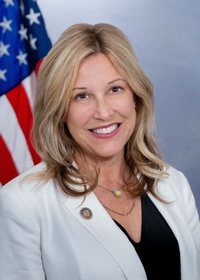
Rep. Melissa Shusterman
Sponsored bills
Maddy summaryThis bill requires corporations and unincorporated associations in Pennsylvania to report the number of single-family or low-density residential properties they own in their annual filings. It establishes a new chapter in state law that restricts certain entities from owning residential real estate and mandates a waiting period for purchases by covered investors. The legislation allows the Department of State to dissolve or cancel the registration of an entity that violates these property ownership rules at least 10 times within a three-year period. Additionally, the bill grants municipalities specific powers to enforce these restrictions and creates a private right of action for individuals to sue entities that violate the new ownership prohibitions.
Maddy summaryThis bill directs Pennsylvania state agencies to conduct a comprehensive study on how artificial intelligence will affect the state's workforce and submit the findings to the General Assembly within 18 months. The report must identify which industries and worker demographics are most at risk of job displacement, outline the skills and education needed to adapt to this technology, and assess how much relevant workforce data is currently available or privately owned. By requiring collaboration with various stakeholders, the legislation aims to create a proactive plan that ensures access to necessary training and expertise for all segments of the current and future workforce.
Maddy summaryThis bill establishes legal protections for individuals and nonprofit organizations that donate menstrual products to those in need. It grants immunity from civil and criminal liability to donors and nonprofits if the products appear fit for use, covering issues like age, packaging, or condition. However, this protection does not apply if the injury or death of the recipient results from gross negligence, recklessness, or intentional misconduct by the donor or organization. The legislation defines key terms such as "menstrual product" and "nonprofit organization" to clarify who and what are covered under these rules.
Maddy summaryThis bill establishes a new Pennsylvania tax credit program designed to help residents who pay for child and dependent care. It allows eligible taxpayers to claim a state tax credit based on the amount they already claim for the same expenses on their federal tax returns. The credit rate changes over time, starting at 30% for tax years ending before 2023, increasing to 100% for years between 2023 and 2026, and returning to 100% for years after 2026. The maximum credit is calculated on up to $3,000 of expenses for one child or $6,000 for two or more children.
Maddy summaryThis bill updates Pennsylvania's Equal Pay Law to require employers with fifteen or more workers to share specific wage and benefit details in job advertisements and job offers. Under the new rules, companies must list costs for health insurance, life insurance, and retirement plans in job postings or provide a direct link to this information online. When making a job offer, employers must also state the salary or hourly wage, clarify overtime rules, and include summaries of employee benefit plans. The legislation applies to positions performed in Pennsylvania, including remote roles, and establishes penalties for employers who knowingly fail to provide this required information.
Maddy summaryThis bill updates Pennsylvania's laws regarding advance health care directives to replace the outdated living will system with a more flexible framework that combines written instructions with the appointment of a trusted agent. It directly affects individuals who wish to plan for their future medical care, as well as healthcare providers who must follow these new rules. Key provisions include defining new terms like "cohabitant" and "end-stage medical condition," clarifying how to handle conflicting directives, and establishing specific guidelines for when a health care agent can make decisions. The legislation also addresses mental health care planning, outlines the duties of physicians, and sets standards for the validity and form of these legal documents.
Maddy summaryThis bill is a House Resolution that officially recognizes September 2026 as 'International Underground Railroad Month' within Pennsylvania. It does not create new laws or change how the state operates, but rather serves as a formal acknowledgment of the state's historical role in the Underground Railroad network. The resolution honors the individuals who helped enslaved people escape to freedom and highlights the significance of related historical sites across the Commonwealth.
Maddy summaryThis bill is a ceremonial resolution that designates July 5, 2026, as "Venezuelan Independence Day" in Pennsylvania to honor the nation's 1811 declaration of independence from Spain. The text highlights historical connections between Philadelphia and the Venezuelan independence movement, noting that the city has long served as a hub for revolutionary ideas and hosts a statue gifted by Venezuela. Additionally, the resolution acknowledges the current Venezuelan community in the state, which numbers over 6,500 residents. As a symbolic measure, the bill does not alter laws or policies but serves to recognize historical ties and celebrate cultural heritage.
Maddy summaryHB 1961 authorizes Pennsylvania to join the PA Licensure Compact, a mutual recognition agreement with other states. This would allow licensed professionals (like nurses, teachers, and contractors) in participating states to practice across state lines without obtaining separate licenses in each state. The bill establishes the legal framework for Pennsylvania’s participation and outlines responsibilities for the Governor and Secretary of the Commonwealth. The bill passed the House on November 17, 2025, and is now under review by the Consumer Protection & Professional Licensure committee.