

Maddy summaryHB 335, the Child Day-Care Center Protection Act, requires new child day-care centers in Pennsylvania to obtain two certifications before licensure: an indoor contamination assessment (if the building was previously a high-hazard business like a dry cleaner or nail salon) and an environmental quality certification confirming remediation. It directly affects new day-care centers seeking licensure, particularly those operating in older buildings or sites previously used for industrial or high-hazard purposes. The bill establishes a grant program funded by the Hazardous Sites Cleanup Fund to help offset certification costs and imposes fines up to $50,000 for false statements or failure to comply. Existing licensed centers are exempt from these new certification requirements.
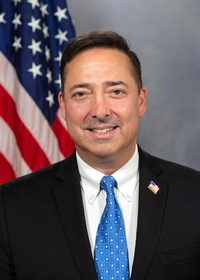
Rep. Chris Pielli
Sponsored bills
Maddy summaryHB 342 would require all Pennsylvania public schools (including charter and cyber schools) and qualifying nonpublic schools to provide 15 minutes daily of mindfulness instruction for students in kindergarten through grade 12. The bill mandates that schools adopt policies for this instruction, defines "mindfulness" as present-moment awareness of body, mind, and feelings, and explicitly prohibits religious content. The Pennsylvania Department of Education must develop and distribute model policies, curricula, and best-practice guidelines for schools to use. This bill directly affects all K-12 students and school entities across the state.
Maddy summaryHB 334 creates a $2,500 Pennsylvania Individual Recruitment and Retention Tax Credit for specific new professionals who move to the state after December 2024. It directly affects qualifying taxpayers certified in teaching (e.g., instructional or special education certificates), law enforcement (e.g., police academy graduates), or healthcare (e.g., registered nurses) who become Pennsylvania residents and secure employment in those fields. The credit reduces their state income tax bill for wages earned in qualifying roles, available for three consecutive years (including the first qualifying year), and requires proof of certification to the Department of Revenue. The credit expires December 31, 2030, and applies only to individuals becoming qualifying taxpayers between 2025 and 2027.
Maddy summaryHB 317 requires creators and distributors of AI-generated content in Pennsylvania to watermark at least 30% of images, text, simulations, or videos with 50% opacity and the label "Artificial Intelligence Generated Material." It directly affects individuals and businesses producing AI content, with exceptions for film/TV productions using AI for visual effects without involving specific individuals or with their written consent. Violations carry a $1,000 fine for a first offense and $10,000 for repeat offenses within five years. The law takes effect 60 days after enactment.
Maddy summaryHB 360 requires Pennsylvania colleges and universities to adopt clear written policies addressing sexual harassment and sexual violence. These policies must inform victims of their legal rights, meet or exceed a state model, include specific investigation timelines, and provide protections for victims and witnesses during investigations. The bill directly affects all postsecondary institutions in Pennsylvania by mandating standardized, legally compliant procedures for handling such incidents. It does not change criminal law or provide new victim services, but sets requirements for institutional policy and process. The bill is pending in the Education Committee as introduced in January 2025.
Maddy summaryHB 341 requires Pennsylvania public schools to install certified point-of-use filters on all drinking water outlets by January 1, 2027, and replace older fountains without filters with bottle-filling stations or filtered fountains (at least one per 100 students/staff). It establishes a $10 million annual Safe Schools Drinking Water Fund to provide grants for filter installation and fountain replacement, prioritizing schools built before 2014 and those serving prekindergarten students. The bill also mandates schools to publicly report their compliance plans, filter maintenance schedules, and lead risk information online, while new outlets must meet strict lead-leaching standards (NSF 61). This directly affects all Pennsylvania public school entities, focusing on reducing lead exposure in drinking water.
Maddy summaryHB 277 allows victims of sex trafficking to sue individuals or entities that recruit, profit from, or advertise for sex trade activities. The bill amends Pennsylvania's criminal code to create a civil legal pathway for victims to seek remedies in court, specifically targeting those who recruit victims, maintain them in sex trade acts, or cause bodily harm during such acts. It directly affects victims of sex trafficking and those who exploit them through recruitment, advertising, or financial gain. The law does not change criminal penalties but adds a civil remedy for victims to pursue compensation.
Maddy summaryHB 329 modifies Pennsylvania's school funding formula to adjust how state funds are distributed to school districts starting in fiscal year 2025-2026. It creates a new "Senior Citizen Tax Freeze" program (Section 504.1), allowing eligible seniors (65+ who own their homes) to freeze school property taxes at their base payment level, preventing increases beyond that amount. Seniors must apply within 45 days of tax due dates, provide proof of ownership and payment, and the state will reimburse school districts for tax increases above the base amount starting April 2025. The program is funded through the existing Property Tax Relief Reserve Fund, with payments made annually from that fund. This directly affects seniors owning homesteads in Pennsylvania school districts.
Maddy summaryHB 323 requires nonprofit corporations (both domestic and foreign with 200+ Pennsylvania employees) to meet specific conditions to receive state contracts, funding, or grants. Key provisions include: prohibiting eligibility if the nonprofit violated federal labor laws in the past five years, was found guilty of unfair labor practices in Pennsylvania within five years, or fails to submit bylaws requiring at least 20% of board members to be current employees elected by staff. Healthcare-related funding (like Medicaid reimbursements) and past violations occurring before the law's effective date are exempt. The law applies to new state contracts, funding, or grants approved on or after its effective date, which is 60 days after enactment.
Maddy summaryHB 356 requires Pennsylvania public and private schools serving grades 6-12 to provide annual, evidence-based training on youth suicide awareness and prevention (at least one hour per school year), along with violence prevention training (also one hour annually). For grades K-12, schools must also offer social inclusion training (one hour yearly) focused on identifying social isolation and building peer connections. The Pennsylvania Department of Education must develop and publish a list of approved, no-cost training materials within one year of the law's effective date. These requirements apply directly to all school entities in the state, mandating specific content for students and staff on mental health, violence prevention, and social inclusion.