

Maddy summaryHB 431 creates a new criminal offense in Pennsylvania for sharing AI-generated images or voice recordings that impersonate real people without their consent. It specifically targets artificially generated content (like deepfakes) that mimics an individual's appearance or voice, defining it as a crime distinct from other impersonation methods. The offense is a misdemeanor of the first degree, or a felony if committed to defraud or harm someone. This law directly affects anyone who shares such AI-generated impersonations within Pennsylvania, protecting individuals from non-consensual misuse of their likeness. The bill provides clear definitions for "artificial intelligence" and "artificially generated impersonation" to ensure the law applies only to AI-created content, not human mimicry.
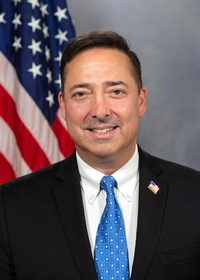
Rep. Chris Pielli
Sponsored bills
Maddy summaryHB 423 establishes Pennsylvania's Future Voter Program, allowing high school students aged 16-17 to preregister to vote before turning 18. The bill requires schools to hold voter registration events during Constitution and Citizenship Day (September 17), providing applications and online registration opportunities for eligible students. Students who preregister will not be added to the voter registry until they reach age 18. The program mandates school entities to coordinate these events, with the Secretary of Education and Secretary of the Commonwealth overseeing implementation. This directly affects all high school students in Pennsylvania who are 16 or 17 years old.
Maddy summaryThis bill requires judges to ban convicted individuals of riot or disorderly conduct offenses from owning, possessing, or caring for animals for at least two years. It mandates completion of violence prevention counseling as part of sentencing, with failure to comply considered a separate offense. Violating the animal ownership ban results in escalating misdemeanor charges: third-degree for the first violation (adding one year to the ban), second-degree for a second violation (adding five years), and first-degree for third or subsequent violations (adding ten years). The law applies only to those convicted under specific provisions of Title 18, directly affecting offenders in these cases.
Maddy summaryHB 432 establishes Pennsylvania's Maternal Care Access Program under the Department of Health to address gaps in maternal healthcare. The bill identifies counties as "maternal care access zones" using the Maternal Vulnerability Index (based on social factors like poverty, education, and healthcare access) and the Social Vulnerability Index. It requires the Department to develop regulations for improving access to obstetric care, birth centers, and providers in areas classified as "maternity care deserts" (regions lacking hospitals, birth centers, or specialized providers within 25 miles). The program directly affects underserved communities and the Department of Health, focusing on concrete policy changes to expand maternal health resources.
Maddy summaryHB 421 prohibits Pennsylvania employers from requiring employees to sign training repayment agreements as a condition of employment. The bill directly affects workers who might otherwise be forced to repay training costs if they leave a job, excluding government employers and agreements under collective bargaining. It makes such agreements void and unenforceable, with the Department of Labor and Industry empowered to investigate violations. Employers violating the law face civil penalties of up to $25,000 per violation, increasing to $25,000 per affected employee for repeat offenses. The law takes effect 60 days after enactment.
Maddy summaryHB 370 amends Pennsylvania's Public School Code to set new requirements for school start dates and daily schedules. It prohibits most school districts from starting the school year before the day after Labor Day (with limited exceptions for emergencies like natural disasters or major construction), and specifies that daily sessions must begin at 9 a.m. and end at 4 p.m. with required lunch breaks (30 minutes for staff and 1 hour total for students). The bill also clarifies that existing school calendars in contracts with employees remain valid until those contracts expire. This directly affects all Pennsylvania public school districts and their staffing and scheduling plans.
Maddy summaryHB 391 requires all school buses in Pennsylvania to install video monitoring systems by July 1, 2026. The system must include internal cameras covering every seat and either an external camera or a forward-facing camera to monitor the road ahead. School bus operators, including school districts and transportation contractors, will be directly affected by this requirement. The state Department of Transportation will create specific regulations to implement the law. This bill focuses on enhancing safety monitoring during school bus operations.
Maddy summaryHR 41 is a resolution directing Pennsylvania's Joint State Government Commission to study emergency child care needs and develop recommendations. The study will examine current availability (including Pennsylvania's 12 crisis nurseries), staffing challenges (like low wages averaging $12.43/hour), funding sources (including federal programs), and how other states license facilities. It requires the Commission to form an advisory committee with child care providers, parents, health/human services officials, and county representatives. The Commission must submit its report to the House within 18 months. This resolution does not create new laws but aims to inform future policy decisions.
Maddy summaryHB 358 requires newly constructed apartment buildings and condominiums that are at least two stories above grade to have a minimum of two elevators within one year of the regulations taking effect. Owners must ensure at least one elevator remains operational unless the outage was beyond their control. The law applies only to buildings constructed on or after the effective date of the new regulations, affecting developers and property owners of new multi-story residential projects. The bill defines "apartment building" as a structure housing three or more separate households and references existing condominium definitions in Pennsylvania law.
Maddy summaryHB 357 amends Pennsylvania's 1971 Tax Reform Code to exempt specific property transfers from realty transfer tax. It directly affects surviving spouses and minor children of public safety personnel (police, firefighters, etc.) who died while performing official duties, as defined by the 1976 Emergency and Law Enforcement Personnel Death Benefits Act. The key provision excludes transfers where the property was the deceased's principal residence, and the transfer occurs within five years of death under defined conditions (e.g., the surviving spouse married within one year before the death, or the property was the deceased's residence regardless of the child's current residence). This creates a tax exemption for these specific family transitions without altering the broader tax structure. The bill takes effect 60 days after enactment.