

Maddy summaryHB 1237 amends Pennsylvania law to expand problem-solving courts, such as drug, mental health, and veterans courts, in courts of common pleas. It allows these courts to be established using available funds and creates a Statewide Coordinator to help with funding, coordination, and evaluation of such programs. The bill also changes sentencing rules: for technical probation violations (like missing a meeting), courts must consider a defendant’s employment status and may allow up to 30 days of confinement to enter a problem-solving court. This directly affects defendants on probation who might be referred to treatment programs instead of jail, as well as the courts administering these programs. The law takes effect in 60 days.
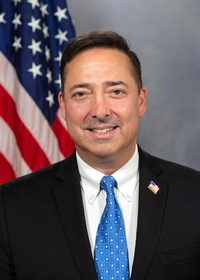
Rep. Chris Pielli
Sponsored bills
Maddy summaryHB 1209 requires cyber charter schools in Pennsylvania to ensure all professional staff members hold state certification, including special education certification for those providing special education services. This amendment to the Public School Code directly affects cyber charter school employees and their employers by establishing standardized qualification requirements. The new rule takes effect 60 days after the bill is enacted, aligning cyber charter school staffing standards with those of traditional public schools.
Maddy summaryHB 1192 establishes a "Mothers Treatment Court Pilot Program" within Pennsylvania's minor courts, targeting mothers involved in the criminal justice system who require substance abuse or mental health treatment. The bill requires the Administrative Office of Pennsylvania Courts to create guidelines within six months for identifying eligible mothers, addressing their specific needs, and collecting data on program outcomes. Counties implementing the program must track participant referrals, charges, outcomes, and report annually - without personally identifiable information - to a public website. This pilot program, initially limited to minor courts, aims to provide court-supervised treatment alternatives rather than standard criminal penalties for qualifying mothers.
Maddy summaryHR 190 is a resolution designating April 7-11, 2025, as "Health Equity Week" in Pennsylvania. It aims to raise public awareness about health inequities affecting marginalized communities, including those based on race, ethnicity, disability, socioeconomic status, and geographic location. The resolution encourages Pennsylvanians to support efforts advancing health equity across all communities and sectors. As a symbolic measure, it does not create new laws or allocate funding but formally recognizes the need for systemic change in health access.
Maddy summaryHB 31 proposes a constitutional amendment to replace Pennsylvania's current Legislative Reapportionment Commission - which includes legislative leaders - with an Independent Redistricting Commission. The new commission would draw state legislative and congressional district boundaries after each federal census, following specific redistricting criteria outlined in the amendment. This change aims to reduce partisan influence by removing direct legislative control over redistricting. The bill does not detail the exact criteria but requires the commission to adhere to them when creating district maps.
Maddy summaryHB 156 requires child care centers and family child care homes in Pennsylvania that use fossil-fuel heaters, fireplaces, or have attached garages to install operational carbon monoxide alarms. Specifically, alarms must be placed within 15 feet of these hazards and on every level of the facility, with full compliance needed within 18 months of the law's effective date. The Department of Human Services must notify all affected facilities within 12 months of the law taking effect. This bill amends the Human Services Code to add these safety standards, referencing existing carbon monoxide alarm definitions from the 2013 Carbon Monoxide Alarm Standards Act. It does not change the Department of Labor and Industry's authority under the Pennsylvania Construction Code Act.
Maddy summaryHB 411 adds a new supplemental annuity for eligible Pennsylvania state retirees, starting July 2025. It applies to retirees who retired before July 2, 2001, have specific service credit (excluding certain classifications), and are receiving monthly payments on July 1, 2025. The amount equals a percentage (ranging from 15% to 24.5%) of their July 2025 monthly annuity, based on their retirement date. The benefit is paid automatically unless retirees opt out, and the cost will be funded over 10 years starting July 2026. This bill does not apply to survivors or retirees with certain service types.
Maddy summaryPennsylvania's HB 1188 bans state-owned electronic devices and networks from using artificial intelligence applications controlled by "foreign adversaries" as defined by federal law (10 U.S.C. § 4872(d)(2)). It directly affects Pennsylvania government agencies, local municipalities, and schools (via "local education agencies") by prohibiting the installation of such AI apps on state devices or access through state networks. Exceptions include law enforcement, security research, and risk mitigation activities. Violations require referral to the State Ethics Commission for investigation under existing ethics laws. The bill takes effect 60 days after enactment.
Maddy summaryHB 1170 allows Pennsylvania corrections officers to use electronic control gloves - gloves with electrodes emitting under 500 volts to temporarily immobilize individuals - in specific prison units. It requires these gloves only for officers assigned to units housing inmates who received disciplinary sanctions and are segregated from the general population. The department must create public policies on glove use, training, and maintenance, and officers must complete department-approved training before use. The bill also mandates compliance with existing use-of-force laws (18 Pa.C.S. § 508) and defines the gloves’ technical specifications.
Maddy summaryHR 181 is a symbolic resolution recognizing April 11-17, 2025, as "Black Maternal Health Week" in Pennsylvania. It aims to raise awareness about racial disparities in maternal health outcomes, specifically highlighting that Black women in Pennsylvania face maternal mortality rates twice as high as White women (148 vs. 74 deaths per 100,000 live births in 2020) and that 93% of pregnancy-related deaths in the state are preventable. The resolution does not create new laws or funding but uses official recognition to spotlight these inequities, citing data on higher rates of complications and preventable deaths among Black mothers across Pennsylvania. It directly focuses attention on Black women in the state, particularly in high-impact areas like Philadelphia and Allegheny County.