

Maddy summaryHB 316 allows Pennsylvania municipalities to deny building permits to property owners with specific unpaid debts or unaddressed violations. It directly affects owners of real property, particularly corporations or LLCs, who owe unpaid taxes, water/sewer bills, or have serious uncorrected code violations (like failing to fix blight) after six months of notification. The bill requires municipalities to specify the property address and court details in denial notices, prohibits denying permits needed to correct violations, and imposes a $1,000 fine on corporations that fail to disclose such delinquencies when applying for permits. It aims to prioritize blight remediation by linking permit access to property maintenance compliance.
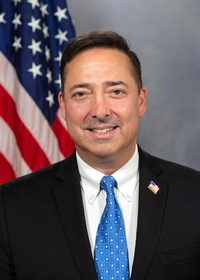
Rep. Chris Pielli
Sponsored bills
Maddy summaryHB 543 modifies Pennsylvania's electric utility regulations to strengthen energy efficiency program oversight. It requires the Public Utility Commission to review utility efficiency plans within 120 days, provide detailed reasons for disapproval, and allow utilities 60 days to revise plans addressing commission concerns. The bill specifically protects cost-effective mechanical insulation (used in heating/cooling systems) from disapproval solely based on its inclusion, requiring the commission to use a total resource cost test. This directly affects electric distribution companies and the commission, with the changes taking effect 60 days after enactment.
Maddy summaryHB 1293 amends Pennsylvania's Housing Authorities Law (1937) to update the policy declaration section (Section 2), reaffirming that unsafe housing conditions harm public health, safety, and the economy, and that housing authorities are necessary to provide safe housing for low and moderate income residents. The bill does not change operational procedures for housing authorities, such as tenant selection, rental rates, or property management, but revises the foundational policy statement justifying their existence. This update directly affects housing authorities by modernizing the legal basis for their work under state law. The bill focuses on clarifying legislative intent without altering existing mechanisms for housing projects or tenant eligibility.
Maddy summaryHB 1210 requires crypto-mining operations in Pennsylvania exceeding five megawatts of power consumption to report detailed data - including location, equipment usage, energy sources, and electricity timing - to the Department of Environmental Protection (DEP). The bill also mandates the DEP to conduct a comprehensive study analyzing environmental impacts (like electronic waste and cooling water use), grid stress, fossil fuel reliance, and potential rate-design solutions related to these operations. The study’s findings must be published online and shared with state officials, including the Governor and relevant legislative committees. This applies specifically to large-scale mining operations (over 5MW) and aims to inform future policy through data-driven analysis.
Maddy summaryHouse Resolution 176 honors law enforcement officers who have died while serving, specifically commemorating Philadelphia Police Officer Jaime Junior Roman, who lost his life on September 10, 2024. The resolution expresses the House of Representatives' deepest sympathy to his family and all families of officers who have made the ultimate sacrifice in protecting public safety. It serves as a formal expression of respect for fallen officers, without creating new legal requirements or altering policies.
Maddy summaryHB 503 establishes the Pennsylvania Climate Emissions Reduction (PACER) Program, creating a state-run "cap-and-invest" system to reduce carbon dioxide emissions from the power sector. The program requires the Department of Environmental Protection to conduct Pennsylvania-run auctions for CO2 allowances, with specific rules for eligible participants, such as electricity generators and financial institutions. Revenue from these auctions will be directed into several designated accounts, including those for consumer protection, energy transformation, workforce enhancement, and low-income support. Upon the program's establishment, Pennsylvania would cease participation in other carbon auction programs related to the electric generation sector.
Maddy summaryHB 1281 establishes clear duties for Pennsylvania law enforcement, prosecutors, and courts (referred to as "certifying agencies") when processing certification forms required for U visas. The bill directly affects crime victims seeking U visas (which require certification that they were helpful to investigations), their legal representatives, and the agencies handling these requests. Key provisions require certifying officials to respond to petitions, develop and publicly post a detailed processing protocol (including online), and maintain records of all certifications. This bill does not change U visa eligibility but standardizes how Pennsylvania agencies handle the certification process for victims of qualifying crimes.
Maddy summaryHB 1284 amends Pennsylvania's Insurance Company Law of 1921 to expand dental coverage for uninsured children. The bill requires that frenectomies and other surgical procedures to treat lip-ties or tongue-ties be included as part of the minimum emergency, preventive, and routine dental care package for eligible children. It also mandates that dental providers contracting with insurers for these services offer frenectomies as a covered routine dental service. This legislation directly affects uninsured children receiving care through state contracts and the dental providers who serve them.
Maddy summaryHB 1285 prohibits Pennsylvania Commonwealth government entities, law enforcement agencies, peace officers, and political subdivisions from cooperating with out-of-state investigations related to abortion. These entities are forbidden from providing information or using resources to assist investigations that seek to impose civil or criminal liability for abortion services or related activities that are legal in Pennsylvania. This includes actions like providing, seeking, receiving, or assisting with abortion or related inquiries. The bill does not apply if the out-of-state investigation itself would violate Pennsylvania law.
Maddy summaryHB 1279 requires Pennsylvania colleges and universities, as well as private licensed schools, to implement evidence-based education programs on sexual misconduct (including consent, bystander intervention, and risk prevention) for all students and staff. The bill mandates staff training, establishes confidential resource advisors for victims, and requires institutions to create online reporting systems and conduct annual climate surveys. It also sets data reporting requirements for schools to track incidents, creates a Task Force on Postsecondary Sexual Misconduct, and provides academic waivers for student victims to avoid penalties related to incidents. These provisions aim to standardize prevention, response, and support across institutions.