

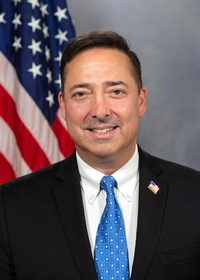
Photo of Chris Pielli
D Pennsylvania House · District 156 On the 2026 ballot

Rep. Chris Pielli

Compare
Total votes
3,688
all sessions
Attendance
100%
of floor votes
Near the chamber average
With party
99%
of cast votes
Near the chamber average
Bipartisan score
0%
crosses aisle rarely
Lower than 76% of chamber peers
Sponsored
1,149
bills & resolutions
Higher than 94% of chamber peers
Committees
6
assignments
1,149 bills and resolutions

Sponsored bills

Total
1,149
Primary
53
Co-sponsor
1,096
This page
1,149
matching current filters
Co-sponsor HR 213
In committee · Pennsylvania House · Co-sponsor
A Resolution recognizing June 19, 2025, as "Juneteenth Independence Day" in Pennsylvania in commemoration of June 19, 1865, the date on which slavery was abolished finally in all regions of the United States.

Maddy summaryThis Pennsylvania House Resolution (HR 213) designates June 19, 2025, as "Juneteenth Independence Day" to commemorate June 19, 1865 - the date Union troops in Galveston, Texas, announced the end of slavery nationwide. It encourages Pennsylvania residents to observe the day through educational events and activities. As a commemorative resolution, it does not create new laws or establish a paid holiday, but formally recognizes the historical significance of the date when slavery was finally abolished in all U.S. regions.

In committee Apr 30, 2025 1 co-sponsor
Co-sponsor HB 1345
In committee · Pennsylvania House · Co-sponsor
An Act amending the act of June 13, 1967 (P.L.31, No.21), known as the Human Services Code, in public assistance, providing for medical assistance coverage for menopause treatments.

Maddy summaryHB 1345 would expand Pennsylvania's medical assistance program to cover FDA-approved treatments for menopause symptoms, including hormonal and non-hormonal drugs, devices, and behavioral therapy, for eligible low-income residents. The bill specifically requires coverage for all defined menopausal symptoms - such as hot flashes, bone density loss, and sleep disturbances - as well as treatments for menopause following a hysterectomy. It mandates that the state seek federal approval via a plan amendment or waiver to implement these changes. This policy directly affects enrolled medical assistance recipients experiencing menopausal symptoms, ensuring they receive covered care without additional out-of-pocket costs.

In committee Apr 30, 2025 1 co-sponsor
Co-sponsor HB 308
Passed · Pennsylvania House · Co-sponsor
An Act providing for workplace health and safety standards for public employees; providing for powers and duties of the Secretary of Labor and Industry; establishing the Pennsylvania Occupational Safety and Health Review Board; providing for workplace inspections; and imposing penalties.

Maddy summaryHB 308 establishes new workplace health and safety standards specifically for public employees in Pennsylvania, including those working for the Commonwealth, counties, cities, schools, and public institutions. It creates the Pennsylvania Occupational Safety and Health Review Board, grants the Secretary of Labor new enforcement powers for workplace inspections, and requires public employers to meet safety standards comparable to those in the private sector under federal OSHA. The bill imposes penalties for violations, prohibits employer retaliation against employees reporting safety concerns, and mandates recordkeeping and reporting procedures. This legislation directly affects all public employees across Pennsylvania who previously lacked consistent state-level safety protections.

Passed Apr 30, 2025 1 co-sponsor
Co-sponsor HB 1301
In committee · Pennsylvania House · Co-sponsor
An Act requiring health insurance policies to provide coverage for pre-exposure prophylaxis and post-exposure prophylaxis HIV medication and associated laboratory tests and patient visits.

Maddy summaryHB 1301 requires all health insurance policies sold in Pennsylvania to cover pre-exposure prophylaxis (PrEP) and post-exposure prophylaxis (PEP) HIV medications, along with associated lab tests and doctor visits for counseling or prescription, with no copays, deductibles, or coinsurance. It prohibits insurers from placing PrEP/PEP services in specialty tiers for profit and bans requiring specialist counseling unless medically necessary. The law applies to all health insurance policies issued or renewed in Pennsylvania after its effective date (60 days from passage), including group and individual plans regulated under state insurance laws. This directly affects Pennsylvanians with health insurance who need HIV prevention or treatment services, ensuring full coverage without out-of-pocket costs.

In committee Apr 28, 2025 1 co-sponsor
Co-sponsor HB 1321
In committee · Pennsylvania House · Co-sponsor
An Act amending Title 51 (Military Affairs) of the Pennsylvania Consolidated Statutes, in Pennsylvania National Guard, Pennsylvania Guard and militia, providing for leaves of absence for military spouses, for anti-retaliation protection and for employment protection.

Maddy summaryHB 1321 creates a new "Military Spouse Leave and Employment Protection Act" in Pennsylvania law. It requires employers with 20+ employees to provide up to 14 paid days per year of leave for employees when their spouse is deployed to a combat zone or during a declared emergency, and up to 14 unpaid days for training deployments. The law prohibits employers from retaliating against employees who request this leave and mandates that employers maintain an employee's position, title, and accrued benefits during the leave. This directly affects Pennsylvania employees with military-connected spouses working at qualifying employers.

In committee Apr 28, 2025 1 co-sponsor
Co-sponsor HB 1302
In committee · Pennsylvania House · Co-sponsor
An Act providing for limitation on medical debt interest, for a penalty and for right to equitable relief.

Maddy summaryHB 1302, the Medical Debt Interest Act, caps the interest rate on unpaid medical bills at 6% for healthcare providers (like hospitals and doctors) and medical debt collectors in Pennsylvania. The bill prohibits charging more than 6% interest on medical debt and classifies violations as unfair business practices under existing consumer protection law, allowing individuals to seek court enforcement. It takes effect 60 days after enactment.

In committee Apr 28, 2025 1 co-sponsor
Co-sponsor HB 1327
In committee · Pennsylvania House · Co-sponsor
An Act amending the act of June 3, 1937 (P.L.1333, No.320), known as the Pennsylvania Election Code, in penalties, further providing for the offense of bribery at elections and providing for the offense of payment for registration.

Maddy summaryHB 1327 amends Pennsylvania's Election Code to strengthen penalties for election bribery and create a new offense for paying to induce voter registration. It makes offering money, goods, or lottery chances to influence voting a felony (with penalties up to $15,000 or seven years), while paying someone to register to vote becomes a misdemeanor (up to $10,000 or five years). This bill directly affects individuals who attempt to bribe voters or pay for registration to influence election participation. The provisions aim to deter improper election practices by criminalizing financial incentives tied to voting behavior or voter registration.

In committee Apr 28, 2025 1 co-sponsor
Co-sponsor HB 1305
In committee · Pennsylvania House · Co-sponsor
An Act amending the act of June 13, 1967 (P.L.31, No.21), known as the Human Services Code, establishing the Office of Child Advocate; and imposing penalties.

Maddy summaryHB 1305 establishes an independent Office of Child Advocate within Pennsylvania's Department of Human Services to champion children's interests across state care systems. The bill sets qualifications for the Child Advocate (requiring six years in child advocacy/social work, a bachelor's degree, and no conflicts of interest), mandates a four-year term with reappointment options, and requires staff training in trauma-informed care, crisis intervention, and mandated reporter protocols. This office directly affects children in foster care, juvenile justice, early intervention programs, and residential facilities by independently monitoring their welfare and advocating for systemic improvements. The bill amends Pennsylvania’s Human Services Code to formalize this oversight role, ensuring accountability without direct program changes to existing services.

In committee Apr 28, 2025 1 co-sponsor
Co-sponsor HB 881
Passed · Pennsylvania House · Co-sponsor
An Act amending the act of September 2, 1965 (P.L.490, No.249), referred to as the Money Transmission Business Licensing Law, further providing for title of act and for definitions; providing for short title; and further providing for license required, for exemptions, for qualifications for a license, for fee, financial statement and security, for liability of licensees, for licensee requirements and for agents.

Maddy summaryHB 881 updates Pennsylvania's 1965 Money Transmission Business Licensing Law to include virtual currency under the same regulatory framework as traditional money transmission. The bill requires businesses transmitting virtual currency (e.g., cryptocurrency) for a fee to obtain a license from the Department of Banking and Securities, similar to existing rules for money orders or checks. Key provisions define "virtual currency," clarify that self-hosted wallets (where users control their own digital assets) are exempt from licensing, and exclude business-to-business transactions from requirements. This directly affects crypto service providers and payment platforms, while exempting regular banks, credit unions, and personal wallet users who don’t operate as service businesses.

Passed Apr 28, 2025 1 co-sponsor
Co-sponsor HB 1317
In committee · Pennsylvania House · Co-sponsor
An Act amending the act of March 4, 1971 (P.L.6, No.2), known as the Tax Reform Code of 1971, in entertainment production tax credit, further providing for limitations.

Maddy summaryHB 1317 increases Pennsylvania's annual cap on entertainment production tax credits from $100 million to $125 million. It also establishes new rules allowing the Department of Revenue to carry forward unused credits: up to 30% for the next fiscal year, 20% for the year after, and 10% for the third year. This directly affects film and entertainment producers seeking tax credits under the Tax Reform Code of 1971. The changes apply to fiscal years beginning July 1, 2025.

In committee Apr 28, 2025 1 co-sponsor
Showing 481 to 490 of 1,149 bills
Previous 1 … 48 49 50 … 115 Next