

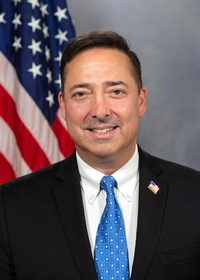
Photo of Chris Pielli
D Pennsylvania House · District 156 On the 2026 ballot

Rep. Chris Pielli

Compare
Total votes
3,688
all sessions
Attendance
100%
of floor votes
Near the chamber average
With party
99%
of cast votes
Near the chamber average
Bipartisan score
0%
crosses aisle rarely
Lower than 76% of chamber peers
Sponsored
1,149
bills & resolutions
Higher than 94% of chamber peers
Committees
6
assignments
1,149 bills and resolutions

Sponsored bills

Total
1,149
Primary
53
Co-sponsor
1,096
This page
1,149
matching current filters
Co-sponsor HR 165
In committee · Pennsylvania House · Co-sponsor
A Resolution directing the Joint State Government Commission to conduct a study and issue a report on the status of the pretrial detention practices and pretrial detainee populations in this Commonwealth.

Maddy summaryThis resolution directs the Joint State Government Commission to study pretrial detention practices and the number of people held before trial in the Commonwealth. It requires the commission to issue a report on the current status of these practices and populations. The study will inform future policy decisions but does not change existing laws or affect individuals directly. This is a procedural resolution, not a legislative measure with immediate effects.

In committee Jun 26, 2026 1 co-sponsor
Co-sponsor HB 2621
Passed · Pennsylvania House · Co-sponsor
An Act amending the act of April 9, 1929 (P.L.177, No.175), known as The Administrative Code of 1929, in powers and duties of the Department of Health and its departmental administrative and advisory boards, establishing the Pennsylvania Maternal and Infant Outcome Measures Survey Program.

Maddy summaryThis bill establishes the Pennsylvania Maternal and Infant Outcome Measures Survey Program within the Department of Health to collect data on the health experiences of mothers and babies. The program will conduct surveys of individuals who have recently had a live birth to gather information on their behaviors, attitudes, and experiences before, during, and after pregnancy. The Department of Health is authorized to use available funding, including federal money, and may hire outside contractors to run the survey while ensuring all personal data remains confidential. Additionally, the bill allows the department to share de-identified survey results with researchers and publish them in public reports to help improve maternal and child health outcomes.

Passed Jun 25, 2026 1 co-sponsor
Co-sponsor HB 2224
Passed · Pennsylvania House · Co-sponsor
An Act amending Title 66 (Public Utilities) of the Pennsylvania Consolidated Statutes, in rates and distribution systems, providing for return on equity; in service and facilities, further providing for billing procedures; and, in restructuring of electric utility industry, further providing for revenue-neutral reconciliation.

Maddy summaryThis bill establishes a new framework for Pennsylvania public utilities to earn a return on their equity investments, directly affecting investor-owned electric, gas, and water companies regulated by the state commission. It creates a competitive auction process where utilities can bid to set their own return rates based on market conditions, while also providing a default rate of the 10-year U.S. Treasury yield plus 2 percent if no auction occurs. To support this system, the legislation requires utilities to separate their services into distinct legal entities and mandates annual reporting to ensure transparency. Ultimately, the law aims to determine how much profit these utility companies can make on their investments while maintaining oversight through the state commission.

Passed Jun 25, 2026 1 co-sponsor
Co-sponsor HB 2207
Passed · Pennsylvania House · Co-sponsor
An Act amending Title 12 (Commerce and Trade) of the Pennsylvania Consolidated Statutes, in small business first, further providing for capital development loans.

Maddy summaryHB 2207 increases the maximum loan amount for small businesses in Pennsylvania seeking capital development loans (for land, buildings, machinery, and equipment) from $400,000 to $2,000,000, or 50% of total project costs, whichever is lower. It clarifies that costs incurred during the 12 months before applying are included in the total project costs calculation. The bill directly affects small businesses applying for these state-backed loans through Pennsylvania's capital development program. The changes take effect 60 days after enactment.

Passed Jun 25, 2026 1 co-sponsor
Co-sponsor HB 2162
Passed · Pennsylvania House · Co-sponsor
An Act amending the act of December 14, 1992 (P.L.1116, No.145), known as the Wholesale Prescription Drug Distributors License Act, further providing for definitions and for license application.

Maddy summaryHB 2162 amends Pennsylvania's Wholesale Prescription Drug Distributors License Act to clarify definitions and license application requirements. It specifically defines "virtual manufacturer" as a business that doesn't physically handle drugs in Pennsylvania but has FDA approval processes underway, including submitting or planning to submit FDA applications within 12 months. The bill adds new application requirements: manufacturers of unapproved drugs must state they've applied to or plan to apply to the FDA within 12 months, and virtual manufacturers must provide similar documentation. Crucially, it states the state department cannot require FDA approval as a condition for licensure. This directly affects drug distributors operating under the "virtual manufacturer" model and unapproved drug manufacturers seeking state licenses.

Passed Jun 25, 2026 1 co-sponsor
Co-sponsor HB 75
Passed · Pennsylvania House · Co-sponsor
An Act amending the act of October 5, 1978 (P.L.1109, No.261), known as the Osteopathic Medical Practice Act, further providing for definitions.

Maddy summaryHB 75 amends Pennsylvania's Osteopathic Medical Practice Act to update the definition of "primary supervising physician" to include medical doctors (MDs) licensed by the State Board of Medicine, alongside osteopathic physicians (DOs). This change allows physician assistants to have either an MD or a DO as their primary supervising physician under a written agreement, expanding oversight options beyond current restrictions. The amendment takes effect 60 days after enactment and does not alter other provisions of the law.

Passed Jun 25, 2026 1 co-sponsor
Co-sponsor HB 76
Passed · Pennsylvania House · Co-sponsor
An Act amending the act of December 20, 1985 (P.L.457, No.112), known as the Medical Practice Act of 1985, further providing for definitions.

Maddy summaryHB 76 amends Pennsylvania's Medical Practice Act of 1985 to update two key definitions: it revises the term "doctor of osteopathy" to reference the State Board of Osteopathic Medicine (replacing outdated language) and clarifies that a "primary supervising physician" for physician assistants must be licensed by either the State Board of Medicine or the State Board of Osteopathic Medicine. This change directly affects osteopathic doctors, physician assistants, and the licensing boards by aligning the law with current regulatory structures. The bill makes no substantive changes to medical practice rules but ensures definitions accurately reflect the oversight bodies responsible for licensing. It takes effect 60 days after enactment.

Passed Jun 25, 2026 1 co-sponsor
Co-sponsor HB 1127
Passed · Pennsylvania House · Co-sponsor
An Act authorizing the Commonwealth of Pennsylvania to join the Dentist and Dental Hygienist Compact; and providing for the form of the compact.

Maddy summaryHB 1127 authorizes Pennsylvania to join the Dentist and Dental Hygienist Compact, enabling dentists and dental hygienists licensed in Pennsylvania to practice in other participating states without obtaining separate licenses. The bill establishes a "Compact Privilege" that allows qualified professionals to practice across state lines while maintaining each state's regulatory authority over scope of practice and disciplinary actions. Key mechanisms include streamlined licensure pathways, shared disciplinary information between states, and protection of public health standards. This affects licensed dental professionals seeking to work in multiple compact states, particularly addressing workforce mobility and access to care.

Passed Jun 25, 2026 1 co-sponsor
Primary HB 426
Passed · Pennsylvania House · Lead sponsor
An Act providing for duties of Commonwealth agencies regarding native plants and for duties of Department of Conservation and Natural Resources regarding pollinator habitats and native plants.

Maddy summaryHB 426, the Native Habitats at Commonwealth Facilities Act, requires Pennsylvania state agencies to prioritize native plants (untreated with systemic insecticides) in landscape projects at state facilities. Agencies must consider environmental benefits like supporting pollinators, reducing soil erosion, and conserving water when planning such projects. The bill defines a "pollinator meadow" as an area with at least 50% native wildflowers, including milkweed seed, and protected from insecticides. This applies to Commonwealth agencies (e.g., state departments and offices) but excludes judicial and legislative bodies, and also sets duties for the Department of Conservation and Natural Resources regarding pollinator habitats.

Passed Jun 25, 2026 0 co-sponsors
Co-sponsor HB 1925
In committee Jun 25, 2026 1 co-sponsor
Showing 41 to 50 of 1,149 bills
Previous 1 4 5 6 115 Next