

Maddy summaryHB 721 amends Pennsylvania's Construction Workplace Misclassification Act to strengthen protections for construction workers who are incorrectly classified as independent contractors instead of employees. The bill allows affected workers to file lawsuits against companies for misclassification and imposes criminal penalties for repeated violations, while also adding safeguards against employer retaliation for reporting violations. It expands administrative penalties for misclassification and requires that penalty funds be used to support enforcement efforts. This directly affects construction companies that misclassify workers and construction workers who lose benefits like overtime pay, health insurance, or workers' compensation due to improper classification.
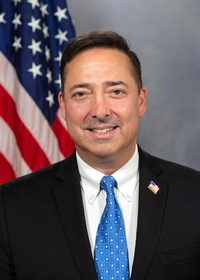
Rep. Chris Pielli
Sponsored bills
Maddy summaryHB 818 creates a program allowing first-time homebuyers in the Commonwealth to open state-backed savings accounts for down payments and closing costs. It establishes a dedicated First-time Homebuyer Savings Account Fund and requires the Treasury Department to manage the program and allocate funds. The bill directly affects eligible first-time homebuyers by providing a new savings mechanism for housing costs. Key provisions include the fund's creation, Treasury's administrative duties, and the structure for account access.
Maddy summaryHB 433 requires health insurance plans to cover mammograms and breast imaging services without cost-sharing (like copays or deductibles) for policyholders. It directly affects women needing preventive breast cancer screenings and the insurance companies providing health coverage. The bill amends Pennsylvania’s 1921 Insurance Company Law to mandate this coverage for mammographic examinations and breast imaging under casualty insurance policies. This policy change ensures these essential preventive services are fully covered at no additional cost to patients.
Maddy summaryHB 1488 amends Pennsylvania's Election Code to change when proposed constitutional amendments must be voted on by voters. It requires that such amendments be submitted at the first general election occurring at least three months after both legislative chambers approve the amendment, removing the option for municipal elections. This affects state lawmakers who propose constitutional amendments and voters who will cast ballots on these measures. The bill does not alter the content of amendments or voting rules, only the timing and type of election used for their submission.
Maddy summaryHB 1486 would change bail rules for defendants charged with illegal firearm offenses in Pennsylvania's largest cities (like Philadelphia and Pittsburgh). It requires defendants to pay only 10% of the full bail amount for a first offense, 50% for a second offense, and 100% for third or subsequent offenses to be released while awaiting trial. The bill applies specifically to charges under Pennsylvania's firearm laws (18 Pa.C.S. § 61) in cities of the first class. It does not alter the underlying firearm laws but modifies the bail payment structure for these cases. The bill is currently pending in committee and has not yet become law.
Maddy summaryHB 1484 increases Pennsylvania jury compensation to a flat $40 per day for all days jurors serve, replacing the previous tiered rate ($9 for first three days, $25 after). It also sets a travel allowance of 17¢ per mile circular (with no allowance in the first judicial district) and allows county commissioners to choose how jurors receive payments (e.g., check, debit card), without changing the compensation amount. The bill directly affects all Pennsylvanians summoned to serve on juries statewide. It makes no changes to eligibility or jury service requirements, only to payment structure and methods.
Maddy summaryHB 789 amends Pennsylvania's Property Assessed Clean Energy Program to include electric vehicle charging infrastructure as a qualifying project for financing. It defines "electric vehicle charging infrastructure project" as equipment for charging electric vehicles and expands the program to cover such installations alongside energy efficiency, renewable energy, and water conservation projects on commercial, agricultural, and industrial properties. The bill requires local governments to notify the Department of Revenue upon project completion, providing details and property owner contact information to ensure proper tax collection for electric vehicle charging. This update aims to streamline financing access for clean energy improvements while clarifying administrative requirements for local and state agencies.
Maddy summaryHB 193 requires Pennsylvania state buildings to install automated external defibrillators (AEDs) - devices that can restart heartbeats during cardiac arrest - in all regularly occupied facilities. It mandates at least one AED per building, plus one additional AED for every 70,000 square feet, with all devices clearly visible and accessible. The law applies to buildings owned by the Commonwealth and maintained by the Department of General Services, excluding unoccupied storage facilities, maintenance sheds, and temporary structures. The Department of General Services must implement and maintain these devices, with the law taking effect in 60 days.
Maddy summaryHB 820 creates Pennsylvania's "Working Pennsylvanians Tax Credit," which provides a state tax credit equal to 30% of a taxpayer's federal Earned Income Tax Credit (EITC) for the same year. This credit directly affects low-to-moderate income Pennsylvania residents who qualify for the federal EITC, applying it against their state tax bill. The credit is refundable, meaning taxpayers receive a cash refund if the credit exceeds their state tax liability. The bill takes effect for taxable years beginning after December 31, 2024.
Maddy summaryHB 630 amends Pennsylvania's Equal Pay Law to strengthen protections against wage discrimination based on sex, race, or ethnicity. It adds definitions for "comparable work" (requiring similar skill, effort, responsibility, and working conditions) and clarifies that "wages" include all compensation like fringe benefits. The bill explicitly bans employers from requiring employees to refrain from discussing wages, using salary history to set pay, or asking about prior wages during hiring. It also establishes an Equal Pay Enforcement Fund to support enforcement efforts and clarifies that job titles alone cannot determine if jobs are comparable.