

Maddy summaryHB 355 amends Pennsylvania's criminal code to strengthen protections for minors by updating the offenses of "corruption of minors" and "unlawful contact with minor." The bill specifically targets adults who exploit or sexually exploit minors through interactions like grooming or inappropriate contact, making these acts clearer and more severe under state law. It directly affects minors (ages 12-17) and adults who engage in prohibited conduct with them, including online interactions. The law increases penalties for these offenses by clarifying prohibited behaviors and strengthening sentencing guidelines, now effective as Act No. 5 of 2025.
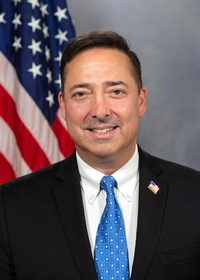
Rep. Chris Pielli
Sponsored bills
Maddy summaryHR 173 is a non-binding resolution urging Congress to establish a National Infrastructure Bank. It does not create new laws or funding but formally requests Congress take action to create this bank, which would provide financing for infrastructure projects. The resolution directly affects Congress itself, as it calls on the legislative body to initiate this specific action. This is a procedural measure with no immediate policy impact, as it only expresses a recommendation.
Maddy summaryHB 1610 amends Pennsylvania's corporate tax rules to change how businesses with multiple related entities (unitary businesses) calculate their state tax liability. Starting in 2026, these businesses will determine Pennsylvania tax based on their total sales within the state relative to their nationwide sales, using a new "water's-edge" apportionment method. The bill specifically revises definitions and tax calculation rules for corporations, including adjustments to how income from intercompany transactions is treated and how nonbusiness income is allocated. This primarily affects large corporations operating across state lines as unified business groups. The changes aim to align Pennsylvania's tax calculation with federal reporting requirements for such entities.
Maddy summaryHB 1445 requires health insurers in Pennsylvania to cover medically necessary health services provided in schools - such as mental health care, behavioral health services, and speech therapy - without denying coverage solely because the service occurs in a school setting. It prohibits insurers from excluding coverage based on location (e.g., through "school setting" or "place of service" exclusions), applying to public, charter, cyber charter, and private schools. Exceptions allow denials if services are provided by unlicensed individuals, are not medically necessary per insurer policies, or conflict with existing legal obligations (like IEPs). This law directly affects students receiving school-based care, insurers, and school entities, ensuring coverage parity for services delivered on school premises.
Maddy summaryHR 263 is a noncontroversial resolution expressing condolences and honoring Alec Campbell, a park resource ranger with the Department of Conservation and Natural Resources who died while on duty. It does not create new laws or policies but formally recognizes his service and sacrifice. The resolution directly affects the memory of Alec Campbell and his family by providing a formal expression of respect from the legislative body. It is purely ceremonial and does not impose any obligations or changes on government operations.
Maddy summaryThis resolution designates June 8, 2025, as "Lieutenant Colonel George Hardy Day" in Pennsylvania to honor his military service and community leadership. It specifically recognizes Lieutenant Colonel George Hardy, a Tuskegee Airmen veteran who flew 21 combat missions in WWII, later served in the Korean and Vietnam Wars, and received the Distinguished Flying Cross and Congressional Gold Medal. The resolution commemorates his 100th birthday and his post-military work mentoring pilots and supporting community organizations. As a ceremonial resolution, it has no policy impact beyond this symbolic recognition.
Maddy summaryThis resolution urges Pennsylvania school districts to consider later start times for secondary schools (high schools), citing studies showing teens need 8-10 hours of sleep but 98% of PA schools begin before 8:30 a.m. It references CDC and AAP research linking later start times to improved academic performance, reduced absenteeism, and better mental health outcomes. The bill encourages districts to collaborate with health professionals and educators to develop schedules that maintain educational activities while adopting later start times, and asks state agencies to provide resources and public education on adolescent sleep needs. As a non-binding resolution, it does not require policy changes but recommends action based on existing evidence.
Maddy summaryHB 1669 requires Pennsylvania public schools serving kindergarten through grade five to provide at least 30 minutes of daily supervised, unstructured free-play recess for all students. This means students cannot replace recess with extra classwork, and schools cannot withhold recess as punishment for behavior or missed assignments. The bill mandates that recess occur outdoors when weather and facilities permit, while allowing exceptions based on medical advice or a student's individualized education plan. It defines "free-play recess" as time away from structured learning for physical activity or social play, excluding scheduled physical education classes. The law takes effect 60 days after enactment.
Maddy summaryHB 1670 requires health insurance plans in Pennsylvania, including Medicare and Medicaid coverage, to provide hearing aid benefits. Specifically, it mandates that insurers offer at least $2,500 in coverage every three years for hearing aids sold under state registration rules, with benefits applicable to either hearing aid sellers or contracted fitters. This applies to most health insurance policies but excludes dental, vision, Medicare supplements, and other specified plans. The law takes effect 90 days after enactment, impacting insurers and enrollees in covered health plans across the state.
Maddy summaryHB 506 amends Pennsylvania's Human Services Code to establish a state-funded Child Care Staff Recruitment and Retention Program. It directly affects licensed child care providers and their staff by creating a new program to address staffing shortages. The key mechanism provides state funding for recruitment incentives and retention support, such as signing bonuses or professional development, for child care workers. The bill passed final passage on June 25, 2025, and was referred to the Health & Human Services committee.