

Maddy summaryHB 1311 amends Pennsylvania's criminal code by revising the definition of "serious provocation" in cases involving danger to the person. The amendment explicitly states that this term does not include the discovery, knowledge, or potential disclosure of a victim's gender identity, expression, or sexual orientation, nor does it cover unwanted nonforcible romantic or sexual advances by the victim or a prior romantic relationship between the victim and defendant. This change affects criminal cases where defendants might otherwise claim "serious provocation" as a defense, particularly in incidents involving LGBTQ+ individuals or relationship dynamics. The bill takes effect 60 days after enactment.
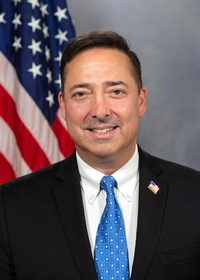
Rep. Chris Pielli
Sponsored bills
Maddy summaryHR 348 is a resolution designating November 2025 as "Native American Heritage Month" in Pennsylvania. It formally recognizes and honors the history, culture, and contributions of Native American communities within the state. The resolution does not create new laws or funding but serves as a symbolic acknowledgment by the Pennsylvania legislature. It directly affects Pennsylvania residents through this official state-level observance.
Maddy summaryThis Pennsylvania bill updates state regulations on cigarette sales and retailer licensing by adding new definitions for youth centers and recreational places. It establishes stricter requirements for new cigarette retailers starting January 1, 2027, prohibiting stores from opening within 500 feet of schools, day-care centers, youth centers, recreational facilities, or other licensed cigarette retailers. The law also clarifies rules for transferring cigarette vending machine licenses and maintains existing requirements for accurate tax reporting and compliance with state pricing rules.
Maddy summaryThis bill amends Pennsylvania's Pharmacy Audit Integrity and Transparency Act to update definitions for "specialty drug" and "spread pricing" while establishing a new role for a State pharmacy benefits manager. The updated definitions clarify which prescription medications qualify as specialty drugs based on cost, handling requirements, and patient needs, while defining spread pricing as when a pharmacy benefits manager charges more than it pays pharmacists. The bill requires the Department of Human Services to select a single third-party administrator to manage all pharmacy benefits for Medicaid recipients by July 2026, ensuring all managed care organizations contract with this designated manager. The procurement process mandates competitive selection with strict conflict-of-interest disclosures to prevent conflicts between the manager and other healthcare entities like pharmacies, drug distributors, or managed care organizations.
Maddy summaryThis bill amends Pennsylvania's tax code to establish a new licensing requirement for tobacco retailers, mandating that applicants meet specific criteria to obtain or renew their retail licenses. The law introduces a distance restriction effective January 1, 2027, prohibiting tobacco retailers from operating within 1,000 feet of any school property line, while also requiring applicants to demonstrate adequate premises for revenue protection, maintain accurate tax reporting, and have no history of tax violations. The measure directly affects tobacco retailers and applicants seeking to sell tobacco products in Pennsylvania, adding compliance steps to the existing licensing process.
Maddy summaryThis bill amends Pennsylvania's obstruction of governmental operations laws to create a specific exception for healthcare facilities. It allows nonviolent obstruction of law enforcement entry at hospitals and emergency departments unless officers have probable cause and a judicial warrant for a specific individual. The law defines key terms like "health care facility," "emergency department," and "judicial warrant" to clarify when this protection applies. The changes would take effect 60 days after enactment and apply to all law enforcement officers within the state.
Maddy summaryHB 554 would authorize Pennsylvania to join the Social Work Licensure Compact, a multi-state agreement that allows social workers licensed in one member state to practice in others without additional exams. The bill provides Pennsylvania with the legal framework to adopt the compact's standard terms, directly affecting licensed social workers seeking to practice across state lines. Key provisions include aligning Pennsylvania's licensing requirements with the compact's uniform standards, simplifying the process for social workers to obtain reciprocal licenses in participating states. This change would streamline professional mobility for social workers while maintaining consistent regulatory oversight.
Maddy summaryHB 80 would authorize Pennsylvania to join the Audiology and Speech-Language Pathology Interstate Compact. This compact allows licensed audiologists and speech-language pathologists to practice in other participating states without obtaining separate licenses for each state. The bill directly affects these healthcare professionals and their patients, streamlining cross-state practice for providers. It creates a standardized process for reciprocity among member states, eliminating redundant licensing requirements.
Maddy summaryThis bill requires online platforms in Pennsylvania to inform users when their content may be used to train artificial intelligence systems. It applies to websites and apps that collect user-created content like posts, videos, or images for AI training purposes. The law mandates that platforms must provide a clear, separate disclosure at sign-up and require users to acknowledge receiving this notice before they can post content. The bill defines key terms like "artificial intelligence" and "platform" to ensure consistent application of the disclosure requirement.
Maddy summaryThis bill establishes a fee system for Pennsylvania municipalities that receive patrol services from the State Police, requiring towns without their own full-time police forces to pay for those services. The legislation creates new definitions for different types of patrol services and sets fee amounts based on the difference between 2021-2022 and current Motor License Fund appropriations to the State Police. Small municipalities with limited local police hours and those that have existing patrol agreements with the State Police are exempt from paying fees. The bill also requires the State Police to submit annual reports on these services and includes provisions for penalties and intermunicipal police response coordination.