

Maddy summaryThis House Resolution directs the Legislative Budget and Finance Committee to study whether Pennsylvania could eliminate property taxes for some seniors. The study will examine options like exempting low-income seniors from property taxes, creating a graduated tax scale based on income, and identifying ways to prevent fraud. It also requires the committee to find alternative funding sources for local governments if property tax relief is implemented. The committee must submit its findings to the General Assembly within 120 days. The resolution does not change any laws but initiates a review of potential property tax relief for older Pennsylvanians.
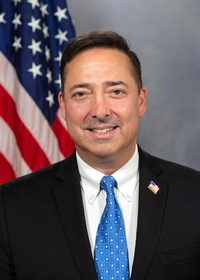
Rep. Chris Pielli
Sponsored bills
Maddy summaryThis bill, HB 2312, would automatically increase Pennsylvania's minimum wage starting December 1, 2026, and every December 1 thereafter. The adjustment would match the percentage increase applied to state officials' salaries under the Public Official Compensation Law, rather than setting a specific dollar amount. Employers across the state would be required to pay workers at least the adjusted minimum wage, with the Department of Labor and Industry overseeing compliance. The law takes effect 60 days after being signed into legislation.
Maddy summaryThis bill amends Pennsylvania's Tax Reform Code to increase personal income tax rates for taxable years beginning after December 31, 2025. It raises the tax rate for residents and nonresidents from 3.7% to 9.7% on all income, while maintaining a 3.7% rate for specific income categories. The legislation also clarifies how trust income is taxed by aligning Pennsylvania rules with federal Internal Revenue Code provisions regarding grantor trusts.
Maddy summaryThis Pennsylvania House resolution designates March 21, 2026, as "Rosie the Riveter Day" to honor women who worked in factories during World War II, particularly those in Pennsylvania. It specifically recognizes the contributions of women who filled critical manufacturing roles - like building ships, aircraft, and weapons - as Pennsylvania became known as "The Arsenal of America." The resolution coincides with the 100th birthday of Mae Krier, a WWII worker and advocate for the Congressional Gold Medal honoring all "Rosie the Riveters." As a commemorative resolution, it has no legal effect but serves to publicly acknowledge this historical workforce.
Maddy summaryHB 300 amends Pennsylvania's Human Relations Act to add explicit protections for religious exercise alongside existing anti-discrimination rules. It directly affects employers, housing providers, and businesses offering public accommodations by prohibiting discrimination based on religion in employment, housing, and public services. The bill updates the law to include religious freedom as a protected category under anti-discrimination provisions. It also clarifies the Pennsylvania Human Relations Commission's authority to enforce these protections. The amendment does not create new enforcement mechanisms but integrates religious exercise protections into the existing framework of the 1955 Act.
Maddy summaryHouse Resolution 395 designates March 17, 2026, as "St. Patrick's Day" in Pennsylvania. It formally celebrates the historical contributions of Irish Americans to the founding of the United States, including their roles in the Revolutionary War and the signing of the Declaration of Independence. The resolution is a symbolic gesture by the Pennsylvania House of Representatives to honor Irish American heritage and history.
Maddy summaryHB 289 requires all Pennsylvania public, charter, and private schools to test for radon gas in existing buildings starting with the 2026-2027 school year. If radon levels reach 4 picocuries per liter or higher, schools must install mitigation systems and retest until levels fall below that threshold, with new schools required to use radon-resistant construction. Testing must be done by certified professionals using specific protocols, and results must be shared with school boards, parents, teachers, and health officials. Schools with low radon levels must retest every five years, while those needing mitigation must retest every two years. This law directly affects all Pennsylvania school entities and aims to reduce exposure to radon, a radioactive gas linked to lung cancer.
Maddy summaryHB 64 prohibits Pennsylvania employers from punishing employees (including firing, discipline, or threatening adverse actions) for refusing to attend or participate in employer-sponsored meetings about political matters (like elections or party support) or religious matters (like religious affiliation). Employers must post a notice of these rights within 30 days of the law taking effect, and employees can sue for violations like lost wages or retaliation within one year. The bill does not apply to required legal communications, job-related meetings, or voluntary participation in such matters. It allows employees to report violations without fear of retaliation and provides remedies like reinstatement, back pay, or attorney fees.
Maddy summaryHB 678 requires labor brokers who supply construction workers to employers in Pennsylvania to register with the Department of Labor and Industry. It mandates brokers to pay fees, maintain registration validity, verify worker placements, and report changes, with the Department establishing a dedicated registration account for these fees. The bill imposes penalties for operating without registration or violating its requirements, directly affecting labor brokers in the construction industry. Key provisions include a verification system for worker placements, annual renewal of registration, and specific definitions clarifying which entities qualify as labor brokers versus subcontractors. This legislation aims to increase oversight of labor brokers handling construction workers, with penalties for noncompliance.
Maddy summaryHB 501 amends Pennsylvania's Alternative Energy Portfolio Standards Act to update definitions and clarify requirements for renewable energy compliance. It specifically adds "advanced reactor" (including small modular reactors) to eligible energy sources, refines criteria for low-impact hydropower, and updates definitions for biomass, biogas, and alternative energy credits. The bill affects electric utilities required to meet portfolio standards by specifying which energy sources count toward compliance and how credits are calculated. These changes aim to modernize the framework for renewable energy reporting and incentives without altering current percentage targets. The bill is currently in committee review (Environmental & Natural Resource Protection).