

Maddy summaryHB 2544 updates Pennsylvania's Public School Code to establish a formal framework for negotiating compensation and benefits plans for school administrators, including principals and assistant principals. The bill requires school boards to meet with administrators in good faith to create written agreements covering salary schedules, fringe benefits, and performance evaluation processes. These agreements must remain in effect for at least one school year but no longer than five, and they include a nonbinding mediation step for resolving disputes before potential legal appeals. The legislation applies to all public school entities in the state and maintains existing restrictions on strikes while clarifying the definitions of administrative roles and employer responsibilities.
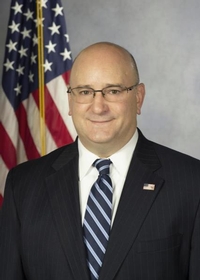
Rep. Ben Sanchez
Sponsored bills
Maddy summaryThis bill modifies how Pennsylvania distributes fees collected from unconventional gas wells, specifically directing 25% of those funds to a state account for bridge improvements. The legislation allows counties and municipalities to use these monies to repair or upgrade bridges regardless of whether they qualify for federal funding assistance. Additionally, it permits larger counties to allocate these funds toward improving bridges owned by public transportation authorities. The changes take effect 60 days after the bill becomes law.
Maddy summaryThis bill removes outdated Pennsylvania laws regarding insurance that are no longer in effect. It specifically repeals the Flood Insurance Education and Information Act of 1996 and certain sections of the Insurance Company Law of 1921. The changes take effect immediately upon passage, streamlining the state's insurance code by eliminating expired provisions.
Maddy summaryHB 2234 creates a tax credit for Pennsylvania breweries that donate spent grain byproduct (leftover grain from brewing) to local farms. Breweries can claim a credit of $0.16 per pound of dry weight donated, up to $30,000 annually or their total tax liability, if the grain is delivered to farms within 100 miles. The credit applies to donations made to "eligible agricultural operations" engaged in normal farming activities under Pennsylvania law. Applications must be submitted by February 1 each year for the prior year's donations, with the Department of Revenue reviewing eligibility and coordinating with the Liquor Control Board. This directly benefits breweries and farms participating in the program by reducing brewery tax bills while repurposing brewing waste.
Maddy summaryHB 2162 amends Pennsylvania's Wholesale Prescription Drug Distributors License Act to clarify definitions and license application requirements. It specifically defines "virtual manufacturer" as a business that doesn't physically handle drugs in Pennsylvania but has FDA approval processes underway, including submitting or planning to submit FDA applications within 12 months. The bill adds new application requirements: manufacturers of unapproved drugs must state they've applied to or plan to apply to the FDA within 12 months, and virtual manufacturers must provide similar documentation. Crucially, it states the state department cannot require FDA approval as a condition for licensure. This directly affects drug distributors operating under the "virtual manufacturer" model and unapproved drug manufacturers seeking state licenses.
Maddy summaryHB 75 amends Pennsylvania's Osteopathic Medical Practice Act to update the definition of "primary supervising physician" to include medical doctors (MDs) licensed by the State Board of Medicine, alongside osteopathic physicians (DOs). This change allows physician assistants to have either an MD or a DO as their primary supervising physician under a written agreement, expanding oversight options beyond current restrictions. The amendment takes effect 60 days after enactment and does not alter other provisions of the law.
Maddy summaryHB 76 amends Pennsylvania's Medical Practice Act of 1985 to update two key definitions: it revises the term "doctor of osteopathy" to reference the State Board of Osteopathic Medicine (replacing outdated language) and clarifies that a "primary supervising physician" for physician assistants must be licensed by either the State Board of Medicine or the State Board of Osteopathic Medicine. This change directly affects osteopathic doctors, physician assistants, and the licensing boards by aligning the law with current regulatory structures. The bill makes no substantive changes to medical practice rules but ensures definitions accurately reflect the oversight bodies responsible for licensing. It takes effect 60 days after enactment.
Maddy summaryHB 1127 authorizes Pennsylvania to join the Dentist and Dental Hygienist Compact, enabling dentists and dental hygienists licensed in Pennsylvania to practice in other participating states without obtaining separate licenses. The bill establishes a "Compact Privilege" that allows qualified professionals to practice across state lines while maintaining each state's regulatory authority over scope of practice and disciplinary actions. Key mechanisms include streamlined licensure pathways, shared disciplinary information between states, and protection of public health standards. This affects licensed dental professionals seeking to work in multiple compact states, particularly addressing workforce mobility and access to care.
Maddy summaryHB 426, the Native Habitats at Commonwealth Facilities Act, requires Pennsylvania state agencies to prioritize native plants (untreated with systemic insecticides) in landscape projects at state facilities. Agencies must consider environmental benefits like supporting pollinators, reducing soil erosion, and conserving water when planning such projects. The bill defines a "pollinator meadow" as an area with at least 50% native wildflowers, including milkweed seed, and protected from insecticides. This applies to Commonwealth agencies (e.g., state departments and offices) but excludes judicial and legislative bodies, and also sets duties for the Department of Conservation and Natural Resources regarding pollinator habitats.
Maddy summaryHB 138 amends Pennsylvania laws governing adoption proceedings and juvenile cases. It changes the legal grounds for ending parental rights before an adoption petition is filed and updates how courts handle children deemed dependent (in need of care). The bill specifically targets procedures in domestic relations (Title 23) and court processes (Title 42) related to these cases. No specific new provisions or changes are detailed in the provided context beyond the title's description of its scope. The bill is currently under review by the Children & Youth committee.