

Maddy summaryHB 95 amends Pennsylvania's Unfair Trade Practices and Consumer Protection Law to require clear disclosure when AI-generated content (like text, images, or videos) is created, distributed, or published. It directly affects businesses, creators, and platforms using AI tools to produce content for consumers in Pennsylvania. The bill adds new definitions, including that "artificial intelligence" means technology creating new content via predictive algorithms, and specifies that disclosures must be "clear and conspicuous" - meaning they must be visible upfront, easy to understand, and match the content's medium (e.g., visible text, audible audio). This change updates existing consumer protection rules to address AI-generated content transparency.
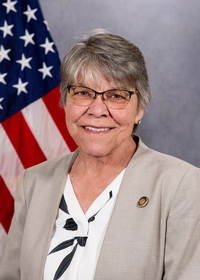
Rep. Nancy Guenst
Sponsored bills
Maddy summaryHB 2013 amends Pennsylvania's Board of Vehicles Act to require that vehicle manufacturers and distributors have continuously offered electric vehicles for at least 12 months before owning, operating, or controlling up to five electric vehicle dealerships. This rule applies specifically to dealerships that trade solely in electric vehicles and are not part of an existing franchise arrangement with a manufacturer. The bill does not change existing franchise requirements but adds a new condition for expanding electric vehicle dealership ownership. The amendment takes effect 60 days after the bill becomes law.
Maddy summaryHB 1262 amends Pennsylvania's Election Code to update campaign finance reporting rules for candidates and political committees. It requires electronic filing of reports for campaign activity exceeding $250 (instead of paper filings for smaller amounts), mandates electronic signatures for all submissions, and imposes a 24-hour deadline for reporting late contributions or independent expenditures over $500. The bill replaces "perjury" penalties with "unsworn falsification" penalties under state law for false filings and clarifies that political committees must submit candidate-signed affidavits confirming compliance with election laws. These changes primarily affect candidates, political committees, and campaign treasurers managing campaign finances.
Maddy summaryThis bill creates a new chapter in Pennsylvania law to regulate medical devices by banning specific toxic chemicals known as ortho-phthalates, with a primary focus on DEHP. The legislation targets manufacturers of intravenous solution containers and tubing, which currently use these chemicals to make plastic flexible. By prohibiting the intentional addition of these substances, the bill aims to prevent the chemicals from leaching into patient fluids and reducing the effectiveness of cancer treatments. The law is based on findings that these compounds can act as endocrine disruptors, potentially harming reproductive health and contributing to drug resistance in cancer cells.
Maddy summaryThis Pennsylvania House resolution designates June 19, 2026, as 'Korean-American Citizenship Day' to honor the 1890 naturalization of Philip Jaisohn, the first Korean-American citizen. The measure directly affects the state legislature and the Korean-American community by formally recognizing this historical milestone. It encourages citizens to observe the day and acknowledges the contributions of naturalized Korean Americans to Pennsylvania and the nation.
Maddy summaryThis Pennsylvania House Resolution designates June 19, 2026, as "Juneteenth Independence Day" within the state to honor the anniversary of the final abolition of slavery in the United States. The measure formally recognizes the historical significance of June 1865, when Union troops announced freedom to enslaved people in Texas, and encourages residents to observe the day with ceremonies and educational programs. As a commemorative resolution, it does not create a paid state holiday or alter employment laws but serves to acknowledge the legacy of the transatlantic slave trade and the resilience of African American descendants.
Maddy summaryThis House Resolution honors the life of Pennsylvania State Police Corporal Timothy J. O'Connor, Jr., who died in the line of duty in March 2026, and extends condolences to his family. The document details his 15-year career, numerous awards, and community service, while formally recognizing his sacrifice as the 105th state police officer to die in service. It directs that a copy of the resolution be presented to his wife, Casey O'Connor, as a gesture of respect and support.
Maddy summaryHB 1905 amends Pennsylvania law to expand the offense of assault to explicitly include "ethnic intimidation" under Title 18, making bias-motivated harassment a specific criminal charge. It also strengthens protections under Title 42 by prohibiting civil rights violations related to discriminatory conduct. The bill directly affects victims of bias-based crimes and law enforcement handling such cases, requiring specific legal procedures for these offenses. Key provisions clarify that assault charges can now be filed when harassment targets a person's ethnicity, religion, or other protected characteristics. The bill remains pending before the Judiciary committee after its referral on September 30, 2025.
Maddy summaryThis bill designates September 2026 as Prostate Cancer Awareness Month in Pennsylvania to highlight the importance of screening and education for men. The resolution includes background information on prostate cancer statistics, symptoms, and recommended screening ages based on risk factors. It does not change laws or allocate funding but serves as a symbolic gesture to encourage awareness and early detection.
Maddy summaryThis bill amends Pennsylvania law to allow the Governor to permit the voluntary display of the Green Star Service Banner on state-owned property. The banner is intended to honor the surviving families of military members and veterans who died by suicide during specific observances. This change adds a new provision to an existing statute that currently gives the Governor authority over how the U.S. flag is displayed on public grounds. The new rule requires that any display of the banner follows existing security and policy guidelines for state property.