

Maddy summaryHB 779 establishes a three-year pilot program to increase salaries for Head Start teachers in Pennsylvania. It targets Head Start programs located in school districts with at least 20% poverty or census tracts with 80% or lower median poverty. The program calculates a salary supplement by comparing Head Start teachers' qualifications to public elementary school teachers in the same district, then provides funds to align their pay. The Department of Education will select participating programs, collect data, and report findings to the legislature after one year.
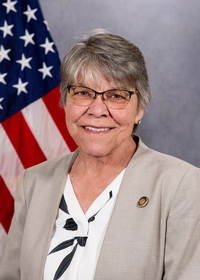
Rep. Nancy Guenst
Sponsored bills
Maddy summaryHB 741 allows senior hunters (65+ years old with valid licenses) to harvest antlered deer meeting specific size criteria. The bill permits taking deer with at least two points on one antler or a spike antler three inches or longer. This change modifies existing hunting rules under Pennsylvania's Game Code by establishing new, more lenient harvest standards for senior license holders. The bill directly affects eligible senior hunters participating in deer hunting seasons.
Maddy summaryHB 769 requires Pennsylvania public schools (excluding fully online cyber charters) to provide dedicated physical space for libraries or information centers and maintain a library collection of at least 1,000 items per grade served, including print and nonprint materials like audio-visual equipment, starting in the 2026-2027 school year. The State Board of Education will establish building standards for library spaces and review these requirements every ten years. School boards must design spaces following the State Board's guidance, and the Secretary of Education can deny approval for construction projects that fail to meet the standards. This bill amends the Public School Code to ensure schools have adequate library resources for student learning.
Maddy summaryHB 744 amends Pennsylvania's ethics laws to restrict gifts to public officials. It prohibits public officials, employees, nominees, or candidates from accepting cash gifts or non-cash gifts exceeding $50 in value from a single source in a year (Section 1103.1). Key exceptions include gifts from family members (excluding cash for candidates), lobbyists for major life events like weddings, and election contributions made under state law (Section 1103.2). The bill aims to prevent undue influence by clarifying what constitutes a prohibited gift under the state's financial disclosure framework.
Maddy summaryHB 740 designates a specific segment of Pennsylvania Route 232 within the Borough of Rockledge, Montgomery County, as the "PFC Helmut Boehm Memorial Road." The bill honors Private First Class Helmut Boehm, a WWII veteran who served as an ambulance orderly in the European theater and was awarded a Bronze Star. The key provision requires the Pennsylvania Department of Transportation to install and maintain directional signs naming the road. This is a purely commemorative act with no policy changes or direct impact on residents or laws.
Maddy summaryHB 739 amends Pennsylvania's 1951 Professional Nursing Law to modernize terminology and clarify roles for advanced practice nurses. It replaces "certified registered nurse practitioner" with "APRN-CNP" throughout the law, defines "collaboration" requirements for new APRN-CNPs (requiring 3,600 practice hours before independent work), and updates definitions for "medical nutrition therapy" and "population focus areas." The bill explicitly removes the State Board of Nursing's authority to license APRN-CNPs, shifting that responsibility elsewhere. These changes directly affect registered nurses seeking advanced practice certification and the Board's regulatory role in nursing licensure.
Maddy summaryHB 738 designates a specific stretch of State Route 1006 (Ferry Road) in Doylestown Township, Bucks County, as the "Judge R. Barry McAndrews Memorial Highway." The bill honors Judge McAndrews' life and service, including his role as a Bucks County Court of Common Pleas judge and President Judge. The only concrete action is requiring the Pennsylvania Department of Transportation to install and maintain highway signs bearing the new name. This is a ceremonial designation with no substantive policy changes or direct impacts beyond the road signage.
Maddy summaryHB 698 would require all food and beverage containers sold in Pennsylvania to contain no more than 0.1 parts per billion of bisphenol A (BPA), directly affecting manufacturers, sellers, and distributors of such containers. The bill prohibits containers with BPA above this level and mandates that manufacturers replace BPA with the least toxic alternative, while banning substitutions with known carcinogens or reproductive toxicants identified by the EPA. Violations would be enforced under Pennsylvania’s existing Unfair Trade Practices and Consumer Protection Law, and the law would take effect 60 days after enactment. This focuses on setting a measurable safety standard for consumer products without advocating for specific outcomes.
Maddy summaryHB 614 establishes Pennsylvania's Shared Housing and Resource Exchange Program, designed to help residents aged 60 or older who need housing find shared living arrangements with approved hosts. The Department of Aging will operate the program, requiring hosts to have at least two bedrooms (with one exclusively for the participant), charge no more than 30% of the participant's gross monthly income in rent, and sign a home-sharing agreement. The department will match participants with hosts based on location, lifestyle, and preferences, then facilitate the agreements. The program will be funded by state appropriations and take effect 60 days after enactment.
Maddy summaryHB 669 amends Pennsylvania's Election Code to establish standardized early voting procedures for all county elections. The bill requires counties to offer in-person early voting for 30 days before each election (ending the day before Election Day), with specific operating hours: weekday mornings to mid-afternoon, extended hours on the final weekend, and additional holiday hours. It mandates county boards to set up permanent early voting locations based on population size (e.g., at least one location in each of the three largest municipalities in counties over 250,000 people). This directly affects all registered Pennsylvania voters by expanding access to early voting through structured, location-based provisions.