

Maddy summaryThis resolution designates March 2025 as "Women's History Month" in Pennsylvania. It is a ceremonial measure with no binding policy changes, funding, or new programs. The resolution invites all Pennsylvanians to reflect on women's contributions to the state's and nation's economic, cultural, and social development. It does not affect specific groups or create legal obligations, as it is purely symbolic recognition.
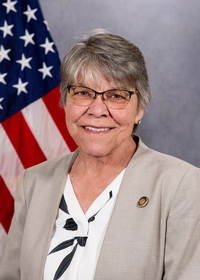
Rep. Nancy Guenst
Sponsored bills
Maddy summaryHB 1041 allows a single business to hold both a brewery license and a limited distillery license at the same physical location in Pennsylvania. The bill requires that the areas for each operation be clearly separated (though they may overlap), specifies that both licenses must operate within permitted hours, and states that citations for violations can apply to either or both licenses. This directly affects breweries and distilleries seeking to combine operations under one roof, particularly those allowing on-premise consumption. The law modifies existing Liquor Code provisions (Sections 446 and 505.4) to formalize these dual-license arrangements. The bill takes effect 60 days after enactment.
Maddy summaryHB 877 modifies Pennsylvania's Job Enhancement Act to create financial support for businesses significantly harmed by the January 31, 2025, air ambulance crash in Philadelphia. It establishes two programs: grants to community groups for technical assistance and training to affected businesses, and loans to those groups to fund direct loans to impacted businesses. The bill requires the administering authority to report to legislative committees within 180 days of implementation, detailing funds used and businesses served. Additionally, it mandates a study on best practices for small business recovery after emergencies, to be completed within 180 days. The programs expire five years after the bill's effective date.
Maddy summaryHB 118 amends Pennsylvania's Child Labor Act to increase penalties for employers violating child labor laws. It raises the fine for first-time violations from $500 to $1,000 per violation and increases penalties for repeat offenses to $3,000 per violation or up to 10 days in jail. The bill directly affects employers who hire minors in prohibited work situations. These changes are concrete policy adjustments to enforcement, not new work restrictions. The amendment takes effect 30 days after enactment.
Maddy summaryHB 618, the Health Insurance Access Protection Act, prohibits health insurers from denying coverage or charging higher premiums based on a person's health condition, including preexisting conditions. This law applies to both individual and group health insurance policies, protecting enrollees and their dependents from discrimination in enrollment or pricing. The Insurance Department and Commissioner are tasked with enforcing these rules, and the bill includes penalties for insurers that violate the prohibitions.
Maddy summaryHB 404 amends Pennsylvania's Insurance Company Law to extend health insurance coverage for children under family policies. It requires policies to cover dependent children up to age 26 (previously 19) and prohibits insurers from denying or restricting coverage based on a child's financial dependency, residency, marital status, school enrollment, or employment. The bill also allows group health plans to extend coverage for adult children up to age 29 if they meet specific conditions, such as not being married, having no dependents, and residing in Pennsylvania or attending school full-time. This affects all health insurance policies sold in Pennsylvania that provide dependent child coverage.
Maddy summaryHB 1003 establishes Pennsylvania's Veterans' Housing Assistance Program to provide rental assistance to homeless or at-risk veterans. It directly affects veterans who served honorably in the U.S. Armed Forces and are identified as homeless or facing imminent homelessness by the Department of Military and Veterans Affairs. The program provides rental vouchers (financial assistance) to cover monthly rent and utilities, while the Pennsylvania Housing Finance Agency coordinates housing ombudsman services to negotiate leases and resolve credit issues, and the Department of Military and Veterans Affairs identifies eligible veterans and sets implementation guidelines. Veterans must apply through the Department or Agency and may be required to participate in supportive services like mental health counseling or job training to receive assistance.
Maddy summaryThis bill amends Pennsylvania's Minimum Wage Act to establish new salary thresholds for employees classified as exempt in executive, administrative, or professional roles, affecting employers and workers in these positions. It defines "executive capacity" as requiring management duties, directing two or more employees, and having hiring/firing authority, with a minimum weekly salary starting at $844 (effective October 2027), rising to $1,128 by 2029, and then adjusting every three years based on Pennsylvania's 10th percentile wage for exempt workers. Employers may meet up to 10% of the salary requirement through nondiscretionary bonuses, incentives, or commissions paid annually. The bill does not alter minimum wage rates for non-exempt workers but clarifies exemption criteria for specific job classifications.
Maddy summaryThis bill proposes a constitutional amendment allowing counties (of first and second class) to create special property tax exemptions for longtime owner-occupants in neighborhoods where home values have risen significantly due to renovations or new construction nearby. It would let local governments establish uniform tax rules for these homeowners without increasing overall property tax rates to fund the exemptions. The amendment requires approval by the General Assembly and then a vote by Pennsylvania voters before taking effect.
Maddy summaryThis resolution designates March 17, 2025, as "Bayard Rustin Day" in Pennsylvania. It honors Bayard Rustin, a key organizer of the 1963 March on Washington for Jobs and Freedom and a prominent civil rights leader who advocated for nonviolent activism, racial equality, and LGBTQ+ rights. The resolution does not create new laws or policies; it is a ceremonial designation to recognize Rustin's historical contributions. It directly affects Pennsylvania residents through official recognition of this date in state government communications and public events.