

Maddy summaryHB 1066 amends Pennsylvania's Medical Practice Act to create a pathway for temporary medical licensees who graduated from international medical schools to obtain full, unrestricted licenses. To qualify, these individuals must have practiced medicine for at least three years outside the U.S., demonstrated competency to the State Board of Medicine, maintained good standing for two years after their temporary license was issued, and secured a job offer from a Pennsylvania healthcare facility. This provision applies only to eligible temporary licensees meeting all specified criteria, without altering general temporary license rules. The bill takes effect 60 days after enactment.
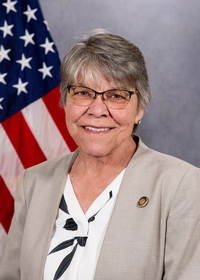
Rep. Nancy Guenst
Sponsored bills
Maddy summaryHB 1110 requires Pennsylvania's Department of Military and Veterans Affairs to implement a public awareness campaign about military sexual trauma (defined as sexual assault or harassment during military service). The campaign must promote survivor acceptance, encourage active military members to report incidents, and provide information about available support resources. The department must design accessible materials (multilingual, mobile-friendly, and culturally appropriate) for its website, consult with advocacy groups and veterans with lived experience, and submit detailed reports within 180 days and one year of implementation. This bill directly affects active military members, veterans, and the public by improving access to trauma support and raising community awareness.
Maddy summaryThis bill establishes a grant program to provide free menstrual products (such as pads and tampons) in Pennsylvania public schools. Schools with 25% or more students eligible for free or reduced-price lunch programs can apply for grants to purchase these products and install dispensers or disposal units. Recipients must report annual spending on products and dispenser maintenance to the state. The program is funded by a state appropriation for the 2025-2026 fiscal year.
Maddy summaryHB 1065 creates a new felony offense for selling unmarked firearm components in Pennsylvania. It specifically targets the sale of firearm frames/receivers, silencer frames, split/modular frames, or partially complete frames without serial numbers registered to a federal firearms licensee. The bill defines "privately made firearm" as one assembled by non-licensed individuals without federal serial markings. This law directly affects sellers of homemade or unlicensed firearm parts, making such sales a third-degree felony. It does not change laws regarding firearm ownership or purchase, only penalizing the sale of unmarked components.
Maddy summaryHB 1059 creates a reimbursement program for land trusts that purchase agricultural conservation easements (permanent restrictions on land use to protect farmland). It allows the state to reimburse land trusts up to $2,500 per acre or 50% of the appraised value for easement purchases (capped at $5,000 per easement) and up to $10,000 for transaction costs like appraisals and legal fees. To qualify, land trusts must register with the state, provide matching funds equal to the reimbursement amount, and meet requirements like securing easements on at least 10 acres with 50% cropland/pasture. The program is funded through an existing Agricultural Conservation Easement Purchase Fund, with $200,000 annually reserved for reimbursements, and unused funds revert to the fund by year-end.
Maddy summaryHB 1060 increases annual maintenance payments for municipalities that received highway transfers under Pennsylvania's State Highway Law. It raises the base payment from $4,000 to $12,500 per mile for these transferred highways. Starting February 1, 2028, payments will automatically adjust every two years based on the Consumer Price Index (inflation rate), with the department calculating and publishing these adjustments. The bill directly affects municipalities managing highways transferred under Chapter 92 of the State Highway Law.
Maddy summaryThis bill requires all Pennsylvania public and private (nonpublic) schools to integrate Holocaust, genocide, and human rights violations instruction into social studies and language arts courses starting with the 2027-2028 school year. The state education department must create curriculum guidelines within 12 months of the bill's effective date, covering specific topics like the Holocaust's history, global genocides (including Rwanda), and human rights violations such as systemic discrimination and torture. Schools must provide teacher training on these topics, and the state board will track compliance through a study, potentially requiring mandatory instruction if less than 90% of schools currently offer it. This applies to all public school districts, charter schools, cyber charters, intermediate units, and nonpublic schools upon request.
Maddy summaryHB 1055 creates a new criminal offense in Pennsylvania for threatening healthcare workers, specifically targeting threats intended to interfere with their duties. It defines the crime as knowingly making oral/written threats against healthcare practitioners, technicians, or hospital security officers, with penalties escalating from a minor violation for a first offense to a third-degree misdemeanor for repeat offenses. The law requires healthcare facilities to post clear notices about this offense at all public entrances, and a person cannot be convicted if the notice wasn’t displayed (unless they knew about the offense). This bill directly affects anyone making threats against covered healthcare workers in Pennsylvania, aiming to protect them from intimidation during work.
Maddy summaryHB 60 amends Pennsylvania's Pharmacy Act to clarify rules for transferring prescriptions between pharmacies. It specifies that prescriptions can only be transferred if the drug is not excluded by federal law, specifically referencing 21 CFR 1306.08 (which governs electronic prescriptions). This change directly affects pharmacies that transfer prescriptions, ensuring state procedures align with federal electronic prescription requirements. The bill updates existing permit rules for pharmacies but does not alter who qualifies for a pharmacy permit.
Maddy summaryThis bill establishes a three-year pilot program (starting 2026-2027) within Pennsylvania public schools to teach students about the political, economic, and social contributions of LGBTQ+ individuals. School districts, charter schools, and nonpublic schools may apply to participate by submitting proposals to the Department of Education by May 15, 2026. The Department must develop guidelines by March 15, 2026 in consultation with LGBTQ+ organizations and prioritize curricula from groups with at least 50% LGBTQ+ leadership. Participating schools must submit annual reports on implementation, and the Department will contract an independent evaluation to assess the program's effectiveness, with results published online.