

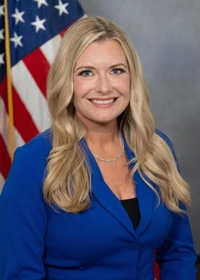
Photo of Missy Cerrato
D Pennsylvania House · District 151 On the 2026 ballot

Rep. Missy Cerrato

Compare
Total votes
3,235
all sessions
Attendance
100%
of floor votes
Near the chamber average
With party
99%
of cast votes
Higher than 83% of chamber peers
Bipartisan score
0%
crosses aisle rarely
Lower than 82% of chamber peers
Sponsored
1,308
bills & resolutions
Higher than 90% of chamber peers
Committees
5
assignments
1,308 bills and resolutions

Sponsored bills

Total
1,308
Primary
24
Co-sponsor
1,284
This page
1,308
matching current filters
Co-sponsor HB 719
In committee · Pennsylvania House · Co-sponsor
An Act prohibiting discriminatory practices against applicants and enrollees under certain insurance policies based on claims or prescriptions involving prophylaxis HIV medication.

Maddy summaryHB 719 prohibits Pennsylvania insurance companies from denying coverage, limiting benefits, or charging higher rates to applicants or policyholders solely because they use FDA-approved HIV prevention medications (PrEP for pre-exposure or PEP for post-exposure prophylaxis). The bill directly affects individuals seeking or maintaining insurance coverage who are prescribed these medications for HIV prevention. It bans specific "adverse actions" like coverage denial, reduced benefits, or discriminatory pricing based solely on PrEP or PEP use. The law takes effect 60 days after enactment and enforces violations through existing insurance fraud and unfair practice laws.

In committee Feb 24, 2025 1 co-sponsor
Co-sponsor HB 705
In committee · Pennsylvania House · Co-sponsor
An Act amending Title 66 (Public Utilities) of the Pennsylvania Consolidated Statutes, in restructuring of electric utility industry, providing for development of grid infrastructure.

Maddy summaryHB 705 requires Pennsylvania's Public Utility Commission to issue grid security guidelines within 180 days, mandating electric distribution companies to develop and file detailed infrastructure plans within one year. These plans must address grid security against cyber/physical threats, electrify public infrastructure (like transit and emergency services), deploy modern technologies (energy storage, EV chargers), and ensure equitable coverage in underserved areas. Companies must evaluate impacts on grid reliability, economic development, customer rates, and low-income households before submitting plans for commission approval. The bill directly affects all electric distribution companies operating in Pennsylvania, requiring them to coordinate with state agencies and community representatives to modernize the grid for growing demand.

In committee Feb 24, 2025 1 co-sponsor
Primary HB 698
In committee · Pennsylvania House · Lead sponsor
An Act providing for bisphenol A-free container products.

Maddy summaryHB 698 would require all food and beverage containers sold in Pennsylvania to contain no more than 0.1 parts per billion of bisphenol A (BPA), directly affecting manufacturers, sellers, and distributors of such containers. The bill prohibits containers with BPA above this level and mandates that manufacturers replace BPA with the least toxic alternative, while banning substitutions with known carcinogens or reproductive toxicants identified by the EPA. Violations would be enforced under Pennsylvania’s existing Unfair Trade Practices and Consumer Protection Law, and the law would take effect 60 days after enactment. This focuses on setting a measurable safety standard for consumer products without advocating for specific outcomes.

In committee Feb 21, 2025 0 co-sponsors
Co-sponsor HB 614
In committee · Pennsylvania House · Co-sponsor
An Act establishing the Shared Housing and Resource Exchange Program; and imposing powers and duties on the Department of Aging.

Maddy summaryHB 614 establishes Pennsylvania's Shared Housing and Resource Exchange Program, designed to help residents aged 60 or older who need housing find shared living arrangements with approved hosts. The Department of Aging will operate the program, requiring hosts to have at least two bedrooms (with one exclusively for the participant), charge no more than 30% of the participant's gross monthly income in rent, and sign a home-sharing agreement. The department will match participants with hosts based on location, lifestyle, and preferences, then facilitate the agreements. The program will be funded by state appropriations and take effect 60 days after enactment.

In committee Feb 20, 2025 1 co-sponsor
Co-sponsor HR 80
In committee · Pennsylvania House · Co-sponsor
A Resolution urging the Department of Agriculture and the Department of Education to collaborate on conducting a Statewide study of school cafeteria services provided to every school district.

Maddy summaryThis resolution urges Pennsylvania's Department of Agriculture and Department of Education to jointly conduct a statewide study of school cafeteria services across all school districts. The study would establish meal quality standards (including portion sizes and vegetarian/vegan options by grade level), compare current meals to those standards, analyze preparation and student meal costs, and recommend legislative actions to improve nutrition. It requires the departments to issue a public report with findings and recommendations within one year. The resolution directly affects all Pennsylvania public school districts by initiating a formal review of meal services and costs.

In committee Feb 20, 2025 1 co-sponsor
Co-sponsor HB 658
In committee · Pennsylvania House · Co-sponsor
An Act amending Title 53 (Municipalities Generally) of the Pennsylvania Consolidated Statutes, in employees, providing for temporary police assistance in certain cities and townships.

Maddy summaryHB 658 allows first-class cities and townships in Pennsylvania to temporarily hire retired police officers back for up to five years to address staffing shortages. Police departments must establish a program where retired officers complete an eight-week training course and agree not to have disciplinary records. Retired officers must choose between keeping their full retirement benefits or temporarily pausing them during participation, with credited service for retirement benefits applied upon return. The program expires six years after implementation and only applies to officers retiring before the bill's effective date.

In committee Feb 20, 2025 1 co-sponsor
Co-sponsor HB 669
In committee · Pennsylvania House · Co-sponsor
An Act amending the act of June 3, 1937 (P.L.1333, No.320), known as the Pennsylvania Election Code, providing for early voting in elections.

Maddy summaryHB 669 amends Pennsylvania's Election Code to establish standardized early voting procedures for all county elections. The bill requires counties to offer in-person early voting for 30 days before each election (ending the day before Election Day), with specific operating hours: weekday mornings to mid-afternoon, extended hours on the final weekend, and additional holiday hours. It mandates county boards to set up permanent early voting locations based on population size (e.g., at least one location in each of the three largest municipalities in counties over 250,000 people). This directly affects all registered Pennsylvania voters by expanding access to early voting through structured, location-based provisions.

In committee Feb 20, 2025 1 co-sponsor
Co-sponsor HB 676
In committee · Pennsylvania House · Co-sponsor
An Act amending Title 35 (Health and Safety) of the Pennsylvania Consolidated Statutes, establishing the First Responder Resilience Grant Program and the First Responder Resilience Grant Program Fund; and imposing duties on the Pennsylvania Emergency Management Agency.

Maddy summaryHB 676 establishes the First Responder Resilience Grant Program to help first responder organizations (like police, fire, and emergency medical services) cover costs for embedding mental health resilience coaches. The program provides competitive grants to defray salaries and overtime for these coaches, who deliver evidence-based support such as stress reduction, peer mentoring, and suicide prevention services. The Pennsylvania Emergency Management Agency will administer the program and manage the dedicated First Responder Resilience Grant Fund. This bill directly affects first responder organizations by enabling them to access funding for mental wellness support tailored to the unique stressors of their work.

In committee Feb 20, 2025 1 co-sponsor
Co-sponsor HR 82
In committee · Pennsylvania House · Co-sponsor
A Resolution directing the Joint State Government Commission to conduct a study on the feasibility of establishing a low-emission and zero-emission vehicle program in this Commonwealth and to issue a report of its findings and recommendations to the Governor and the General Assembly.

Maddy summaryThis resolution directs Pennsylvania's Joint State Government Commission to study the feasibility of creating a statewide low-emission and zero-emission vehicle program. The study will examine other states' approaches (like Nevada's Clean Cars program), analyze economic impacts, identify infrastructure needs, and explore funding options. The Commission must consult relevant organizations and submit a report with recommendations to the Governor and General Assembly within 18 months. This bill does not create the program but sets up a study to inform future decisions about such a program.

In committee Feb 20, 2025 1 co-sponsor
Co-sponsor HR 78
In committee · Pennsylvania House · Co-sponsor
A Resolution directing the Joint State Government Commission to establish an advisory committee and conduct a comprehensive study regarding the effectiveness of the Commonwealth's multidisciplinary approach to infants born affected by substance use or withdrawal symptoms resulting from prenatal drug exposure or a fetal alcohol spectrum disorder, including the success with or barriers to developing plans of safe care as required by Federal and State law.

Maddy summaryHR 78 is a resolution directing Pennsylvania's Joint State Government Commission to study how effectively the state supports infants affected by prenatal substance exposure or fetal alcohol spectrum disorder. It requires forming an advisory committee - including health, human services, and substance use experts plus a parent with lived experience - to evaluate current "plans of safe care" implementation, including barriers like duplicate reporting requirements and gaps in tracking infant outcomes. The study will assess coordination between health, child welfare, and treatment systems, cost implications, and alignment of policies across agencies. The committee must issue findings within 18 months, focusing on improving support for infants and families without changing existing laws.

In committee Feb 20, 2025 1 co-sponsor
Showing 511 to 520 of 1,308 bills
Previous 1 … 51 52 53 … 131 Next