

Maddy summaryHB 829 amends Pennsylvania's Public School Code to require school districts to offer full-day kindergarten for children aged three to five, lowering the age limit from four years. It updates the definition of "compulsory school age" to explicitly allow children as young as three to attend kindergarten without tuition, while maintaining the upper age limit at 18. The bill also adjusts transportation provisions to include free bus service for full-day kindergarten students, similar to existing rules for other grade levels. These changes directly affect public school districts, early learning programs, and families with children aged three to five.
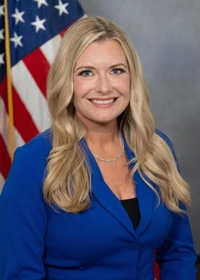
Rep. Missy Cerrato
Sponsored bills
Maddy summaryHB 838 creates a program allowing qualified health care facilities - such as hospitals, medical specialist centers, and physical therapy centers - to issue temporary disability parking placards valid for up to six months. Individuals seeking a temporary placard must apply directly to an enrolled facility and sign a statement confirming they meet the disability criteria. The facility then requires a health care provider to certify the disability and submit the application electronically to the state department to update records. This change streamlines access to temporary parking permits without requiring individuals to go through the state’s standard application process.
Maddy summaryHB 831 establishes a 24-month moratorium on transferring hospital ownership to for-profit entities in Pennsylvania. It directly affects hospitals and health systems seeking to change ownership structures, pausing approvals for such transactions. The bill also requires the Joint State Government Commission to study for-profit hospital ownership patterns, including causes for their rise, cost/benefit comparisons with non-profits, and policy recommendations. The Commission must issue a report to state leaders within 18 months of the law's effective date. The moratorium and study requirements expire 24 months after the bill takes effect.
Maddy summaryHB 841 requires Pennsylvania state agencies to complete an annual survey of all Commonwealth-owned real property by March 1 each year. Agencies must identify surplus land and, in consultation with the Department of Community and Economic Development, assess each surplus parcel's potential for affordable housing development for very low-income, low-income, and middle-income households. The Department of Community and Economic Development will compile these surveys, report to the legislature, and evaluate whether surplus properties can be transferred to other agencies for more appropriate use. This bill amends the Administrative Code of 1929 to establish these annual requirements for managing state-owned property.
Maddy summaryThis resolution directs Pennsylvania's Joint State Government Commission to study Housing First programs across the U.S. and their potential application in Pennsylvania. The study must examine program costs, effectiveness in reducing homelessness (especially among chronically unhoused individuals and veterans), comparisons with traditional shelter models, and impacts of recent events like the pandemic. The commission will compile a report within 18 months covering specific aspects, including Pennsylvania's homeless population demographics and academic effects on unhoused children. This study aims to inform future housing policy decisions without mandating program implementation.
Maddy summaryHB 826 amends Pennsylvania's Human Relations Act to require public venues (like theaters, sports arenas, and events charging admission) to provide free admission for personal care attendants accompanying eligible individuals with disabilities. It defines "attendant care services" to include daily living support such as bathing, mobility assistance, and managing transportation, and specifies that "eligible individuals" are those needing such services due to a disability. The bill prohibits venues from charging personal care attendants for entry when their presence is necessary for the eligible individual to access the event. This directly affects people with disabilities who rely on attendants to participate in public activities and the venues hosting those events.
Maddy summaryHB 827 creates a state-mandated Cross-age Tutoring Program within Pennsylvania's public schools. It requires the Department of Education to publish evidence-based guidelines enabling 11th and 12th grade students (under teacher supervision) to volunteer as tutors for younger students. The program must include tutor qualifications, tutee eligibility, academic credits for tutors, training, and session structure, while ensuring tutoring supplements - rather than replaces - existing instructional services. This directly affects all Pennsylvania public school entities (districts, charter schools, etc.) and students in grades 11-12 who participate as tutors or receive tutoring.
Maddy summaryHB 823 amends Pennsylvania's Public School Code to replace annual fire drills with "school security drills" in all public school buildings. It requires schools to conduct one security drill per year (after the first 90 days of school), with specific rules: drills must be age-appropriate, avoid violent simulations (like fake weapons or injuries), include mental health professionals, and require 7 days' advance notice to parents. Schools must also hold a debriefing period with mental health support immediately after each drill. This bill directly affects all Pennsylvania public schools and their students, shifting focus from fire safety to comprehensive security planning.
Maddy summaryHB 824 amends Pennsylvania's Conservation and Natural Resources Act to require the Department of Conservation and Natural Resources to prioritize grant applications for playgrounds, playground equipment, and recreation areas that address accessibility for people with disabilities. The bill specifies that projects must include features like ramped play areas, accessible swings, wheelchair-friendly tables, and adaptations for blind or visually impaired individuals to receive priority. It mandates that the department favor universally designed recreation areas - where all equipment and the space itself are fully accessible - over projects with only partial accessibility. This change directly affects communities applying for state grants to build or improve local playgrounds, ensuring new facilities meet inclusive design standards from the start.
Maddy summaryHB 814 creates a tax credit for Pennsylvania residents who are spouses of first responders (including police, firefighters, EMTs, or emergency rescue personnel) killed while performing their duties. The credit equals 100% of the real property tax paid on the couple's primary residence, up to the amount of personal income tax due for the year. Spouses who remarry after their partner's death or who claim other property tax rebates are ineligible. The Department of Revenue may require documentation to verify the residence qualifies as the principal home. This bill directly affects surviving spouses of eligible first responders by reducing their state income tax liability.