

Maddy summaryThis bill is a ceremonial resolution that designates the week of September 12 through 18, 2026, as "Neonatal Nurses Week" in Pennsylvania. It aims to honor the work of neonatal nurses who provide specialized care to newborn infants, particularly those in intensive care units with complex health needs. The measure does not change any laws or policies but serves to publicly acknowledge the skills and dedication of these healthcare professionals.
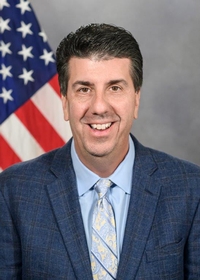
Rep. Joe Ciresi
Sponsored bills
Maddy summaryThis resolution formally recognizes August 2026 as "National Breastfeeding Month" within the state of Pennsylvania. It serves as a symbolic gesture to raise awareness about the health benefits of breastfeeding for infants and mothers, citing recommendations from major medical organizations. The text does not alter any laws or create new programs, but rather acknowledges existing state protections and insurance coverage related to lactation support.
Maddy summaryThis Pennsylvania House Resolution designates the week of September 14 through 20, 2026, as "Birth Center Week" to highlight the role of birth centers in maternal healthcare. The measure aims to raise public awareness about these facilities, which offer low-risk, culturally competent care in a home-like setting and are noted for potentially lower costs and reduced cesarean section rates. While the resolution does not alter laws or funding, it formally acknowledges the value of birth centers in addressing maternal health disparities and improving access to care for mothers and newborns.
Maddy summaryThis bill designates the week of September 21 through 27, 2026, as "Rail Safety Week" throughout Pennsylvania. The measure aims to raise public awareness about the dangers of train collisions and trespassing on railroad tracks. It does not create new laws or funding but serves as a symbolic resolution to encourage safety education during the specified period. Copies of the resolution will be sent to the Governor, the U.S. Department of Transportation, and the nonprofit organization Operation Lifesaver.
Maddy summaryThis Pennsylvania House Resolution urges the U.S. Congress to pause efforts to pass federal laws that would block states from regulating artificial intelligence. The bill highlights both the economic benefits and potential risks of AI, noting that Pennsylvania has already enacted state-level protections for issues like deepfakes and AI-generated harmful content. It asserts the state's authority to create its own AI regulations and asks federal officials to stop threatening legal action against state AI laws or withholding funding from states that pass such regulations. The resolution directs Pennsylvania's congressional delegation to advocate for a regulatory approach that respects state authority while protecting public welfare.
Maddy summaryThis bill requires Pennsylvania electric distribution companies to create and implement virtual power plant programs by July 1, 2027, which allow customers with eligible energy technologies like solar panels or batteries to participate in grid services. The Pennsylvania Public Utility Commission will review and approve these proposals within 180 days, requiring companies to set enrollment targets and include mechanisms for existing demand response programs. Participants can receive compensation for providing services such as peak load reduction, voltage support, and emergency grid services, with special provisions for low-income customers and disadvantaged communities to receive enhanced upfront payments. The program will establish operational rules for when and how often grid events can occur, including limits on event duration and advance notice requirements, while allowing customers to disenroll without penalties for nonperformance.
Maddy summaryThis Pennsylvania House Resolution designates September 11, 2026, as "25th Anniversary of the Terrorist Attacks of September 11, 2001, Day" in the state. The measure formally recognizes the victims of the 2001 attacks, including civilians, military personnel, and first responders who lost their lives. It serves as a commemorative acknowledgment rather than establishing new laws or funding. The resolution aims to honor the memory of those affected and reaffirm the state's commitment to remembering the events and their legacy.
Maddy summaryHB 1460, the Health System Protection Act, requires health care entities (like hospitals and clinics) and certain investors (such as private equity firms) to obtain pre-approval from Pennsylvania's Department of Health and Attorney General before completing major transactions. This applies to sales of assets worth $10 million or more, ownership changes, or large financial distributions that could affect competition, costs, or access to care. The law prohibits transactions deemed "against the public interest," such as those reducing competition, raising prices, or limiting services in rural or low-income areas. Health care entities must either file a notification with a waiting period or get written approval before proceeding.
Maddy summaryThis bill amends Pennsylvania's Unfair Trade Practices and Consumer Protection Law to specifically define "dynamic pricing" and regulate its use in physical retail stores. It defines dynamic pricing as prices that change in near real-time based on fluctuating conditions, while explicitly excluding standard promotional discounts or loyalty program benefits. Under the new rules, retailers cannot use electronic displays in their brick-and-mortar locations to show prices that can be remotely altered by automated systems using this method. The legislation aims to clarify what constitutes deceptive pricing practices for the Attorney General and District Attorneys to enforce, and it will take effect 60 days after being signed into law.
Maddy summaryHB 2377 requires Pennsylvania retail food facilities to clearly label any beverage containing 80 milligrams or more of caffeine per serving as 'high caffeine' on their menus. This labeling must appear directly next to the drink's name and can use approved text, icons, or symbols. If a business fails to comply after receiving a written warning, it may face penalties under existing food protection laws. The bill applies to both permanent and temporary menu items offered for sale.