

Maddy summaryHB 156 requires child care centers and family child care homes in Pennsylvania that use fossil-fuel heaters, fireplaces, or have attached garages to install operational carbon monoxide alarms. Specifically, alarms must be placed within 15 feet of these hazards and on every level of the facility, with full compliance needed within 18 months of the law's effective date. The Department of Human Services must notify all affected facilities within 12 months of the law taking effect. This bill amends the Human Services Code to add these safety standards, referencing existing carbon monoxide alarm definitions from the 2013 Carbon Monoxide Alarm Standards Act. It does not change the Department of Labor and Industry's authority under the Pennsylvania Construction Code Act.
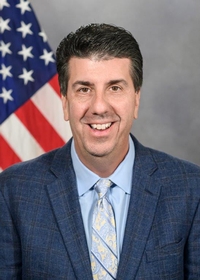
Rep. Joe Ciresi
Sponsored bills
Maddy summaryHB 411 adds a new supplemental annuity for eligible Pennsylvania state retirees, starting July 2025. It applies to retirees who retired before July 2, 2001, have specific service credit (excluding certain classifications), and are receiving monthly payments on July 1, 2025. The amount equals a percentage (ranging from 15% to 24.5%) of their July 2025 monthly annuity, based on their retirement date. The benefit is paid automatically unless retirees opt out, and the cost will be funded over 10 years starting July 2026. This bill does not apply to survivors or retirees with certain service types.
Maddy summaryHB 764 establishes the Pennsylvania Fresh Food Financing Initiative, a program that provides grants to support the construction, renovation, or expansion of grocery stores, farmers' markets, and retail food businesses in underserved low-income and moderate-income communities across Pennsylvania. The initiative prioritizes projects located in, owned by, or primarily serving Black, Indigenous, and people of color (BIPOC) communities, as defined by population data from the Center for Rural Pennsylvania. The Pennsylvania Department of Agriculture will administer the program, develop eligibility guidelines, and ensure grants promote local food systems, job creation, and the use of Pennsylvania agricultural products. The bill also creates a dedicated "Fresh Food Financing Initiative Restricted Account" to hold program funds.
Maddy summaryHB 1177 amends Pennsylvania's Tax Reform Code of 1971 to clarify that specific government service income is excluded from the definition of "compensation" for personal income tax purposes. The bill explicitly removes from taxable compensation income earned from active duty with the U.S. armed forces outside Pennsylvania, the U.S. Public Health Service, NOAA, or Pennsylvania emergency duty (including under state emergency management laws). This change directly affects Pennsylvania residents who receive these government service payments, ensuring they are not classified as taxable compensation under current law. The bill does not alter tax rates or brackets but refines the tax code's definition of taxable income to align with federal and state service structures.
Maddy summaryHB 1170 allows Pennsylvania corrections officers to use electronic control gloves - gloves with electrodes emitting under 500 volts to temporarily immobilize individuals - in specific prison units. It requires these gloves only for officers assigned to units housing inmates who received disciplinary sanctions and are segregated from the general population. The department must create public policies on glove use, training, and maintenance, and officers must complete department-approved training before use. The bill also mandates compliance with existing use-of-force laws (18 Pa.C.S. § 508) and defines the gloves’ technical specifications.
Maddy summaryThis Pennsylvania House Resolution designates April 14-18, 2025, as "Local Government Week" and April 16, 2025, as "Local Government Day" within the state. It formally recognizes the role of local government units - such as counties, cities, townships, boroughs, and municipal authorities - by commending officials and employees who provide essential services to residents. The resolution highlights that Pennsylvania's local governments serve over 13 million people through nearly 166,000 employees and thousands of volunteer officials. It has no binding policy effect and serves solely as a symbolic acknowledgment of local government contributions.
Maddy summaryHB 1179, the Genetic Materials Privacy and Compensation Act, requires genetic testing entities (including medical facilities, genealogy services, and law enforcement) to clearly disclose to individuals what genetic data they collect, how it may be used, and with which third parties it will be shared. The bill mandates "prominent disclosure" in plain language before data collection, prohibiting misleading claims about data privacy or usage. It specifically requires testing entities to obtain explicit consent before sharing genetic material with third parties. The law directly affects individuals using genetic tests and the companies providing those services, focusing on transparency rather than compensation mechanisms.
Maddy summaryHB 32 amends Pennsylvania's Taxpayer Relief Act to clarify income definitions for senior citizens' property tax and rent rebate programs. It specifically adds a temporary exception: seniors who were already eligible for rebates as of December 31, 2012, may retain eligibility if their household income limit is exceeded solely due to Social Security cost-of-living adjustments (COLAs). This exception applies only to income increases from Social Security COLAs, not other income sources, and expires on December 31, 2016. The change directly affects seniors whose rebate eligibility was previously jeopardized by automatic Social Security payment increases.
Maddy summaryHB 1174 amends Pennsylvania law governing meetings for condominiums, cooperatives, and planned communities. It requires annual meetings to be scheduled with at least 21 days' notice (previously 10-60 days) and mandates written consent for electronic meeting notices. The bill also requires pre-election sessions for board candidates if more candidates apply than positions available, and allows meetings to be recorded with advance announcement, with recordings kept for six months. These changes directly affect all community associations and their unit owners by standardizing meeting procedures and enhancing transparency.
Maddy summaryHR 180 is a ceremonial resolution recognizing April 13-19, 2025, as "Public Safety Telecommunicators Week" in Pennsylvania. It honors telecommunicators who handle 911 calls, process approximately 14.5 million emergency requests annually, and provide critical support during crises. The resolution does not create new laws or funding but formally acknowledges their service through a designated week of recognition. This applies directly to Pennsylvania’s public safety telecommunicators, who serve as first responders during emergencies.