

Maddy summaryThis bill, known as the Victims of Violence Safe Employment Act, creates a new right for Pennsylvania employees and their family members to take unpaid leave after experiencing violence, sexual violence, stalking, or abuse of a vulnerable adult. The law allows victims to take this leave to seek medical care, attend court proceedings, or recover from the trauma of the incident, with employers prohibited from retaliating against them for using the leave. Employers are required to provide this leave without requiring the employee to prove the incident resulted in a criminal conviction, relying instead on documentation from law enforcement, healthcare providers, or victim advocates. Additionally, the bill establishes penalties for employers who violate these protections and creates a legal cause of action for employees to sue for damages if they face retaliation.
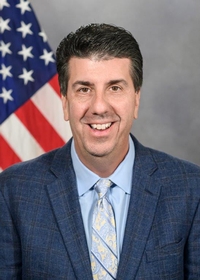
Rep. Joe Ciresi
Sponsored bills
Maddy summaryThis bill establishes new eligibility rules for nonprofit corporations in Pennsylvania that receive state contracts, funding, or grants. To qualify, these organizations must have at least 200 employees in the state and must not have violated federal fair labor standards or committed unfair labor practices within the last five years. Additionally, the nonprofit's bylaws must require that at least 20% of its governing board consists of current employees elected by the workforce. The law does not apply to healthcare-related state payments like Medicaid reimbursements and will take effect 60 days after passage.
Maddy summaryThis bill directs the Legislative Budget and Finance Committee to conduct a study on the services, processes, and wait times provided by the Office of Vocational Rehabilitation and the Bureau of Blindness and Visual Services in Pennsylvania. The investigation will examine how long individuals with visual impairments wait for essential support and analyze how these delays affect their lives and career prospects. Additionally, the study will look into ways to improve efficiency, such as exploring partnerships with outside agencies to reduce waiting lists. The committee is required to submit a report with its findings and recommendations to the General Assembly within 180 days.
Maddy summaryThis Pennsylvania bill expands stalking laws and introduces a new crime called unauthorized location tracking to address privacy concerns regarding digital surveillance. The stalking provisions clarify that repeated acts intended to cause fear or emotional distress are criminal offenses, with penalties increasing to a felony for repeat offenders or those with prior violent convictions. Additionally, the bill makes it a misdemeanor to use technology to monitor another person's location without permission, though it includes specific exceptions for law enforcement investigations, court-ordered supervision, and parents tracking their own children. These changes aim to provide clearer legal tools for protecting individuals from harassment and invasive tracking while allowing for legitimate uses like parental monitoring and fleet management.
Maddy summaryThis bill establishes a consumer data privacy framework that defines the responsibilities of data controllers and processors while setting penalties for non-compliance. It clarifies that controllers are entities that determine how personal information is used and requires them to implement reasonable safeguards to protect collected data. The legislation specifies that publicly available information and certain mathematical representations of data are excluded from the definition of personal information, and it includes exemptions for financial institutions. Additionally, the bill outlines procedures for consumers to opt out of data processing and grants them a 60-day window to correct errors in their data requests.
Maddy summaryThis bill updates Pennsylvania laws regarding off-road vehicles, specifically all-terrain vehicles and dirt bikes, within urban municipalities. It clarifies that cities of the second, second class A, and third class are considered urban municipalities for the purpose of these regulations. The legislation ensures that local governments retain the authority to create their own rules banning or restricting these vehicles within city limits and prevents the state law from being used to override local ordinances. Additionally, it confirms that operating these vehicles outside urban areas must still follow existing state and local laws. The changes take effect 60 days after the bill is enacted.
Maddy summaryThis bill amends the State Highway Law to update the definition of the most recent edition of the Department of Agriculture's geographic information system. Specifically, it sets the baseline for weather data to the 2012 edition covering the period from 1976 through 2005. The change allows the Department of Agriculture to update this definition through future regulations as needed. This adjustment directly affects how weather data is referenced when planning the construction, improvement, maintenance, and repair of state highways.
Maddy summaryThis Pennsylvania House Resolution designates the week of June 17 through 23, 2024, as "Sanitation Workers Week" to honor the state's waste and recycling employees. The measure does not alter laws or budgets but serves as a formal gesture of appreciation from the legislature to the approximately 6,000 residents employed in the sanitation industry. It highlights the physically demanding nature of the job, which involves collecting and disposing of refuse, and acknowledges the workers' essential role in keeping communities clean, particularly during the COVID-19 pandemic.
Maddy summaryThis bill creates the Pennsylvania Poet Laureate position and a dedicated nomination committee to oversee the selection process. The Governor will appoint the poet laureate from a shortlist of candidates provided by the committee, which includes representatives from state arts and education agencies. The appointed poet will serve a two-year term without pay but will receive reimbursement for travel expenses while performing official duties such as reading poems at the governor's inauguration and legislative sessions. The legislation also establishes a specific committee structure to determine candidate qualifications and submit up to three finalists for the Governor's consideration.
Maddy summaryThis bill updates Pennsylvania's Medicare Supplement Insurance Act to clarify definitions and establish rules for open enrollment. It defines "medicare supplement policies" to include specific group insurance plans while excluding those offered by certain employers, labor organizations, and professional associations. The legislation requires insurers to issue policies within one month of application and payment, prohibits discrimination based on health status or medical history, and limits preexisting condition exclusions for applicants with at least six months of prior coverage. These changes aim to standardize how these insurance products are sold and ensure broader access for eligible individuals.