

Maddy summaryThis bill is a concurrent resolution that officially recognizes July 4, 2026, as Independence Day in Pennsylvania to honor the 250th anniversary of the United States. It highlights Pennsylvania's historical significance in the nation's founding, including its role in the Declaration of Independence and the birth of the U.S. Navy and Marine Corps. The resolution serves as a formal acknowledgment of these events rather than creating new laws or funding.
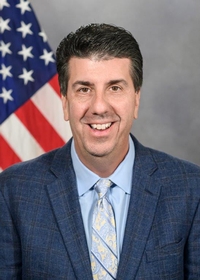
Rep. Joe Ciresi
Sponsored bills
Maddy summaryHB 95 amends Pennsylvania's Unfair Trade Practices and Consumer Protection Law to require clear disclosure when AI-generated content (like text, images, or videos) is created, distributed, or published. It directly affects businesses, creators, and platforms using AI tools to produce content for consumers in Pennsylvania. The bill adds new definitions, including that "artificial intelligence" means technology creating new content via predictive algorithms, and specifies that disclosures must be "clear and conspicuous" - meaning they must be visible upfront, easy to understand, and match the content's medium (e.g., visible text, audible audio). This change updates existing consumer protection rules to address AI-generated content transparency.
Maddy summaryHB 1941 amends Pennsylvania's vehicle code to clarify that drivers must obey authorized personnel directing traffic, such as police officers or emergency responders. This directly affects all drivers operating vehicles in Pennsylvania when encountering such personnel. The key provision specifies that drivers must comply with directions given by these authorized individuals to ensure traffic safety during emergencies or traffic control. The bill aims to strengthen existing traffic laws by making the requirement for obedience explicit and enforceable.
Maddy summaryHB 2013 amends Pennsylvania's Board of Vehicles Act to require that vehicle manufacturers and distributors have continuously offered electric vehicles for at least 12 months before owning, operating, or controlling up to five electric vehicle dealerships. This rule applies specifically to dealerships that trade solely in electric vehicles and are not part of an existing franchise arrangement with a manufacturer. The bill does not change existing franchise requirements but adds a new condition for expanding electric vehicle dealership ownership. The amendment takes effect 60 days after the bill becomes law.
Maddy summaryThis bill amends Pennsylvania's Radiation Protection Act to update definitions and establish new fees for nuclear facilities and radioactive material transport. It clarifies the definition of independent spent fuel storage installations and requires operators of nuclear power reactor sites to pay annual fees to the Department of Environmental Resources, with specific amounts set for sites that still store spent fuel. Additionally, the legislation mandates that shippers of spent nuclear fuel and other radioactive materials pay a fee for each vehicle, railroad, or barge shipment moving through the state. The bill also introduces a cost recovery mechanism for shut-down reactors, allowing the agency to charge owners for incident response costs if all spent fuel has been moved to approved dry cask storage. These changes aim to generate revenue for radiation safety programs and emergency preparedness without altering the core regulatory authority of the state.
Maddy summaryThis bill amends Pennsylvania vehicle laws to clarify how off-road vehicles like all-terrain vehicles and dirt bikes can be operated within urban municipalities. It establishes that existing state rules do not override local ordinances, allowing cities to create their own regulations that permit, restrict, or ban these vehicles within their boundaries. The legislation also preserves any pre-existing local rules that were in place before this law takes effect, ensuring cities retain control over off-road vehicle use in their areas. The changes become active 60 days after the bill is signed into law.
Maddy summaryThis bill requires drivers under 18 in Pennsylvania to view educational materials about distracted driving and work zone safety before taking their junior driver's license exam. It also mandates that the driver's license test include at least one question about safe driving in work zones and adds a corresponding section to the official driver's manual. The law applies to all minors seeking a junior license, including those applying for motorcycle permits. These changes aim to improve safety awareness during the licensing process without altering existing permit requirements or testing procedures.
Maddy summaryHB 2084 establishes the Pennsylvania Promise Program, providing scholarships for tuition, fees, and room and board to eligible Pennsylvania residents attending college. It directly affects two groups: students under 24 (or active military) who must be Pennsylvania residents, have a high school diploma, and complete the FAFSA; and adult learners 24 or older seeking reeducation with similar requirements. The Pennsylvania Higher Education Assistance Agency administers the program and a dedicated fund, covering tuition up to the state's maximum in-state rate and room and board based on agency standards. The program applies to community colleges, state-owned institutions, state-related universities, and Thaddeus Stevens College.
Maddy summaryHB 37 modifies Pennsylvania's Election Code to change how counties process absentee and mail-in ballots. It requires county election boards to pre-canvass all such ballots received before election day at least seven days prior, with 48-hour public notice posted online. The bill also mandates that counties begin reviewing ballots at 7 a.m. on election day without interruption until all ballots received by that time are processed. These changes directly affect county election offices, candidates, and voters who use absentee or mail-in ballots, while aligning with funding requirements for the Election Integrity Grant Program.
Maddy summaryHB 1262 amends Pennsylvania's Election Code to update campaign finance reporting rules for candidates and political committees. It requires electronic filing of reports for campaign activity exceeding $250 (instead of paper filings for smaller amounts), mandates electronic signatures for all submissions, and imposes a 24-hour deadline for reporting late contributions or independent expenditures over $500. The bill replaces "perjury" penalties with "unsworn falsification" penalties under state law for false filings and clarifies that political committees must submit candidate-signed affidavits confirming compliance with election laws. These changes primarily affect candidates, political committees, and campaign treasurers managing campaign finances.