

Maddy summaryThis bill amends Pennsylvania's vehicle code to strengthen window tinting regulations. It requires vehicles with tinted windows to pass a safety inspection using a tint meter, failing if they violate existing tint limits (67 Pa. Code Ch. 175). Additionally, it prohibits tinting businesses from failing to inform customers that modifications may violate these limits, classifying such omissions as deceptive under consumer protection law. The bill directly affects vehicle owners seeking tinted windows, tinting businesses, and inspection stations. It implements concrete policy changes by integrating tint compliance into safety inspections and enforcing consumer transparency.
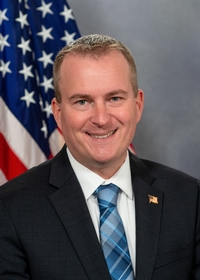
Rep. Brian Munroe
Sponsored bills
Maddy summaryHB 1152 requires insurance companies to directly reimburse non-network emergency medical services (EMS) agencies for 911 emergency calls within 45 days at 350% of the Medicare ambulance rate for the same service in the same area. EMS agencies must register with the state annually to qualify for direct payments, and insurers cannot demand contracts to facilitate this reimbursement. The insurer's payment covers the full service cost (excluding the patient's copay, coinsurance, or deductible), so EMS agencies cannot bill patients for the remaining amount. This law applies only to non-network EMS providers offering 911 emergency medical services, unless preempted by federal law.
Maddy summaryHB 1097 creates a new minor criminal offense in Pennsylvania for organizing or operating events where live pigeons are used as targets for shooting contests, either for amusement or skill testing. This applies to anyone who willfully runs such events at a designated location, including using mechanical aids to present pigeons to shooters. The bill explicitly excludes legal hunting under state game laws, dog training activities, or permitted special events. It takes effect 60 days after enactment.
Maddy summaryHB 1060 increases annual maintenance payments for municipalities that received highway transfers under Pennsylvania's State Highway Law. It raises the base payment from $4,000 to $12,500 per mile for these transferred highways. Starting February 1, 2028, payments will automatically adjust every two years based on the Consumer Price Index (inflation rate), with the department calculating and publishing these adjustments. The bill directly affects municipalities managing highways transferred under Chapter 92 of the State Highway Law.
Maddy summaryHB 1044 allows authorized entities like schools, childcare centers, or sports organizations to stock and use epinephrine delivery systems (e.g., auto-injectors) without requiring individual prescriptions for each person. It permits these entities to acquire devices under a single prescription from a healthcare provider, store them accessibly per FDA guidelines, and train designated staff to recognize anaphylaxis and administer the devices. Staff who complete approved training can use the devices in good faith for anyone showing signs of a severe allergic reaction, regardless of prior diagnosis or prescription. The bill also includes protections for individuals acting in good faith during emergencies.
Maddy summaryHB 404 amends Pennsylvania's Insurance Company Law to extend health insurance coverage for children under family policies. It requires policies to cover dependent children up to age 26 (previously 19) and prohibits insurers from denying or restricting coverage based on a child's financial dependency, residency, marital status, school enrollment, or employment. The bill also allows group health plans to extend coverage for adult children up to age 29 if they meet specific conditions, such as not being married, having no dependents, and residing in Pennsylvania or attending school full-time. This affects all health insurance policies sold in Pennsylvania that provide dependent child coverage.
Maddy summaryHB 777 requires Pennsylvania public school districts to pay education support professionals (like aides and clerical staff) a minimum hourly wage of $20 or a living wage based on cost-of-living adjustments, starting in the 2025-2026 school year. School districts must make supplemental payments to cover wage gaps for existing contracts below this rate through 2029-2030, with the Department of Labor setting and annually adjusting the living wage using the Consumer Price Index. The Department of Education will reimburse districts for these supplemental payments, adding the reconciled amount to their annual funding allocation. This applies directly to over 500 school districts and their education support staff, ensuring wage standards align with inflation.
Maddy summaryHB 936 modifies Pennsylvania's child care subsidy program by reducing copayments for parents who work in the child care field. It requires that families where a parent or caretaker is employed as a child-care worker or direct support professional (in either family child-care homes or licensed centers) pay no more than 15% of their annual income for subsidized care, regardless of their income level. This change applies to all qualifying child care settings defined in the bill, including family child-care homes (serving 4-6 unrelated children) and centers (serving 7+ children). The policy aims to lower financial barriers for child care workers seeking subsidized care for their own children.
Maddy summaryPennsylvania's House Resolution 125 is a petition to Congress requesting an Article V constitutional convention to propose amendments focused on three specific areas: imposing fiscal restraints on the federal government, limiting federal power and jurisdiction, and setting term limits for federal officials and members of Congress. The resolution specifies that any convention must be limited to these topics only, cannot consider changes to the Bill of Rights, and requires two-thirds of states to apply for the same purpose before Congress acts. It details Pennsylvania's delegate selection process (five members chosen by the legislature with voting rules) and includes conditions like Congress only setting the convention's time/place, states having equal voting power, and delegates disqualifying if accepting gifts. The resolution explicitly recommends ratification of any amendments through state legislatures rather than conventions.
Maddy summaryHB 894 establishes the Veterans Entering the Sustainability Sector Program (VETSS) to help veterans enter jobs in renewable energy and environmental sectors. The bill creates a Veterans Entering the Sustainability Sector Fund to provide grants to eligible employers - businesses focused on renewable energy (like solar, wind, or bioenergy) that hire veterans who completed approved apprenticeship training in fields such as electrician work, solar installation, or environmental maintenance. The Department of Community and Economic Development will administer the program, overseeing training development and grant applications. This directly affects veterans seeking sustainability-sector careers and employers in renewable energy who hire them, with the goal of addressing environmental concerns like climate change through workforce development.