

Maddy summaryHB 390 creates a $1,000 annual tax deduction for Pennsylvania health care providers who volunteer to supervise clinical training for students. It directly affects licensed physicians, nurses, physician assistants, and nurse anesthetists who provide uncompensated, volunteer-based clinical training (minimum 80 hours annually per student) to eligible students in approved programs. The bill establishes a Preceptor Certification Committee within the Department of Health to verify eligibility, process applications within 30 days, and issue certificates confirming the deduction. To claim the deduction, providers must submit this certificate with their tax return, and the deduction cannot exceed the tax owed. The policy change specifically targets volunteer clinical education support without altering tax rates or creating new tax credits.
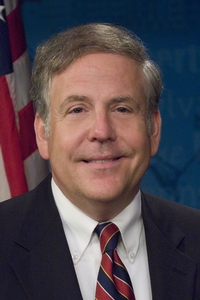
Rep. Bob Freeman
Sponsored bills
Maddy summaryHB 389 establishes the New Nursing Faculty Grant Program to support nursing education in Pennsylvania. It provides $10,000 grants to eligible nursing faculty members at accredited medical colleges who are PA residents, employed full-time (or have a pending offer), and have no more than three years of experience. The Pennsylvania Higher Education Assistance Agency (PHEAA) will administer the program, prioritizing positions historically difficult to fill, with applications submitted by nursing program deans. Grants cover professional expenses and aim to increase enrollment capacity at nursing programs.
Maddy summaryHR 42 is a resolution passed by the Pennsylvania House of Representatives urging Congress to exempt Puerto Rico and other noncontiguous territories (like Alaska and Hawaii) from the Jones Act. The Jones Act requires that goods shipped between U.S. ports be transported on vessels built, owned, and crewed by Americans. The resolution states this law imposes significant economic costs - $1.2 billion annually for Hawaii and $1.5 billion for Puerto Rico - by raising prices for goods and increasing the cost of living. It argues the current waiver process for emergencies, made more restrictive in 2023, hinders disaster response in these territories.
Maddy summaryHB 374 amends Pennsylvania's Election Code to strengthen reporting requirements for campaign finance. It requires any individual or organization (including 501(c) groups) making independent expenditures over $100 in a year to report the candidate or ballot question they support, using the same forms as political committees. Additionally, it mandates that candidates, political committees, or organizations making contributions or independent expenditures over $500 after the final pre-election report must file a report within 24 hours via fax, mail, or in-person appearance. This bill directly affects candidates, political committees, and entities making significant campaign expenditures. The changes aim to increase transparency around late contributions and independent spending.
Maddy summaryHR 41 is a resolution directing Pennsylvania's Joint State Government Commission to study emergency child care needs and develop recommendations. The study will examine current availability (including Pennsylvania's 12 crisis nurseries), staffing challenges (like low wages averaging $12.43/hour), funding sources (including federal programs), and how other states license facilities. It requires the Commission to form an advisory committee with child care providers, parents, health/human services officials, and county representatives. The Commission must submit its report to the House within 18 months. This resolution does not create new laws but aims to inform future policy decisions.
Maddy summaryHB 317 requires creators and distributors of AI-generated content in Pennsylvania to watermark at least 30% of images, text, simulations, or videos with 50% opacity and the label "Artificial Intelligence Generated Material." It directly affects individuals and businesses producing AI content, with exceptions for film/TV productions using AI for visual effects without involving specific individuals or with their written consent. Violations carry a $1,000 fine for a first offense and $10,000 for repeat offenses within five years. The law takes effect 60 days after enactment.
Maddy summaryHB 360 requires Pennsylvania colleges and universities to adopt clear written policies addressing sexual harassment and sexual violence. These policies must inform victims of their legal rights, meet or exceed a state model, include specific investigation timelines, and provide protections for victims and witnesses during investigations. The bill directly affects all postsecondary institutions in Pennsylvania by mandating standardized, legally compliant procedures for handling such incidents. It does not change criminal law or provide new victim services, but sets requirements for institutional policy and process. The bill is pending in the Education Committee as introduced in January 2025.
Maddy summaryHB 365 authorizes Pennsylvania to join the Cosmetology Licensure Compact, a multi-state agreement that allows cosmetologists licensed in one participating state to practice in other member states without obtaining separate licenses. The compact establishes uniform licensing standards and requires member states to share information about disciplinary actions against cosmetologists to protect public safety. This would primarily benefit cosmetologists moving across state lines, including military members and their spouses, by reducing the administrative burden of multiple licenses while maintaining consistent safety oversight.
Maddy summaryHB 320 amends Pennsylvania's public utility law to strengthen notice requirements for rate changes. It requires utilities to provide 60 days' advance notice to the Public Utility Commission and customers about proposed rate changes, using plain language in all customer communications. The bill mandates that rate change notices must clearly highlight the change on mail envelopes or exteriors, and all changes must be filed as new or updated tariffs. This directly affects utility companies (like gas, electric, and water providers) and their customers by increasing transparency around billing adjustments. The law takes effect 60 days after enactment.
Maddy summaryHB 319 modifies Pennsylvania's hunting license rules to simplify access for active-duty military personnel. It removes two previous requirements: military members no longer need to be assigned to a facility outside Pennsylvania or on temporary leave in the state to qualify for resident hunting licenses. The bill now allows any Pennsylvania resident serving full-time in the U.S. Armed Forces to obtain a resident hunting license by meeting only two criteria: residency and active duty status. This change directly affects active-duty military members stationed within Pennsylvania, streamlining their license process without altering fees or adding new restrictions.