

Maddy summaryHB 429 amends Pennsylvania's Fiscal Code to direct specific transfers from the Budget Stabilization Reserve Fund to address pension obligations. It requires $670 million to be transferred to the Public School Employees' Retirement Fund and $330 million to the State Employees' Retirement Fund by January 1, 2026, as one-time payments to reduce their unfunded pension liabilities. These transfers are separate from the fund's usual purpose of covering emergencies or economic downturns. The bill directly affects Pennsylvania's public employee pension systems, not general state programs or new legislation.
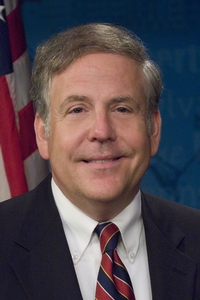
Rep. Bob Freeman
Sponsored bills
Maddy summaryHB 432 establishes Pennsylvania's Maternal Care Access Program under the Department of Health to address gaps in maternal healthcare. The bill identifies counties as "maternal care access zones" using the Maternal Vulnerability Index (based on social factors like poverty, education, and healthcare access) and the Social Vulnerability Index. It requires the Department to develop regulations for improving access to obstetric care, birth centers, and providers in areas classified as "maternity care deserts" (regions lacking hospitals, birth centers, or specialized providers within 25 miles). The program directly affects underserved communities and the Department of Health, focusing on concrete policy changes to expand maternal health resources.
Maddy summaryHB 421 prohibits Pennsylvania employers from requiring employees to sign training repayment agreements as a condition of employment. The bill directly affects workers who might otherwise be forced to repay training costs if they leave a job, excluding government employers and agreements under collective bargaining. It makes such agreements void and unenforceable, with the Department of Labor and Industry empowered to investigate violations. Employers violating the law face civil penalties of up to $25,000 per violation, increasing to $25,000 per affected employee for repeat offenses. The law takes effect 60 days after enactment.
Maddy summaryHB 419 creates special vehicle license plates in Pennsylvania for residents who have received specific military commendation or achievement medals. It allows holders of medals like the Army Commendation Medal or Joint Service Achievement Medal to apply for a plate by paying a $26 fee (in addition to regular registration costs). The plates display the specific medal type and its name, and can only be used on passenger cars or light trucks under 14,000 pounds gross weight. This bill directly affects Pennsylvania veterans or military personnel who qualify for these specific medals. The policy change is purely procedural, adding new plate options without altering military benefits or eligibility.
Maddy summaryHB 428 establishes the Pennsylvania Artist Fellowship Grant Program, providing $100,000 annual grants to up to 25 eligible artists in the state. The program directly affects Pennsylvania residents aged 18+ who are visual, media, film, or performing artists with regular creative practice, not enrolled in school, and who produce community-accessible work. Key provisions include the Pennsylvania Council on the Arts administering applications, disbursement, and record-keeping, with grants permitted for project costs (materials, travel, housing) but prohibited for political activities or lobbying. The bill appropriates $2.5 million for grants and $250,000 for administration from the General Fund, effective 60 days after enactment.
Maddy summaryThis resolution designates January 2025 as "School Director Recognition Month" in Pennsylvania. It honors the 4,500 locally elected school directors who volunteer to lead public school districts, set educational standards, manage budgets, and advocate for students. The resolution does not create new laws or funding; it is a symbolic gesture to acknowledge their service. The House will send a copy to the Pennsylvania School Boards Association to support the recognition effort.
Maddy summaryThis resolution designates January 23, 2025, as "Maternal Health Awareness Day" in Pennsylvania. It aims to recognize women who die from pregnancy or childbirth complications, highlighting Pennsylvania's maternal mortality rate of 82 deaths per 100,000 live births and the significantly higher rate (163 per 100,000) for Black women. The resolution does not create new laws or funding but seeks to increase public and healthcare awareness about maternal health risks. It references existing efforts like the Maternal Mortality Review Committee established under Act 24 of 2018.
Maddy summaryHB 370 amends Pennsylvania's Public School Code to set new requirements for school start dates and daily schedules. It prohibits most school districts from starting the school year before the day after Labor Day (with limited exceptions for emergencies like natural disasters or major construction), and specifies that daily sessions must begin at 9 a.m. and end at 4 p.m. with required lunch breaks (30 minutes for staff and 1 hour total for students). The bill also clarifies that existing school calendars in contracts with employees remain valid until those contracts expire. This directly affects all Pennsylvania public school districts and their staffing and scheduling plans.
Maddy summaryHB 383 prevents a spouse convicted of a personal injury crime against their partner from receiving alimony, unless a court determines it is necessary to avoid manifest injustice. It also allows victims to recover alimony paid before the conviction. The bill modifies Pennsylvania's alimony guidelines by excluding marital misconduct after separation but requires courts to consider abuse during marriage (defined under state law). This directly affects divorce cases involving domestic violence convictions.
Maddy summaryThis resolution designates the week of April 6-12, 2025, as "National Library Week" in Pennsylvania. It symbolically recognizes the role of libraries, librarians, and library workers in communities across the state. The resolution highlights libraries' contributions to promoting reading, providing technology access, and supporting programs for all ages. As a ceremonial resolution, it has no binding policy changes or direct impact on legislation.