

Maddy summaryThis bill (HB 866) expands free hunting and furtaking license access in Pennsylvania for eligible disabled veterans. It allows resident disabled veterans certified by the U.S. Department of Veterans Affairs as having a service-connected disability (such as loss of one or more limbs or 100% disability) to receive free licenses for 10 specific activities, including regular hunting, bear hunting, archery, and migratory bird hunting. The change modifies existing exemptions under Section 2706(b)(1) to include these additional license types without fee. This directly affects Pennsylvania residents who are disabled veterans meeting the VA certification criteria.
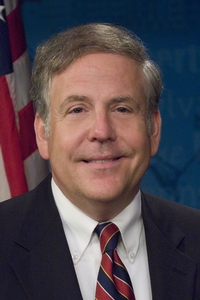
Rep. Bob Freeman
Sponsored bills
Maddy summaryHouse Resolution 103 designates April 2025 as "National Volunteer Month" in Pennsylvania. The resolution encourages all residents to engage in volunteer activities, highlighting community benefits such as building social connections, supporting local resilience, and providing personal fulfillment as outlined in the resolution's preamble. It does not create new laws or require specific actions, serving as a symbolic recognition of volunteerism's value.
Maddy summaryHB 850 requires hydraulic fracturing service providers and chemical vendors to include a specific tracer substance in the fluid used for unconventional oil and gas well fracturing. The Pennsylvania Department of Environmental Protection must specify tracers that are traceable to the operator and safe for public health and the environment. The Environmental Quality Board will create regulations to implement these requirements. The law applies to all fracturing activities performed on or after its effective date.
Maddy summaryHB 840 establishes the Targeted Industry Cluster Certificate Scholarship Program to provide financial assistance for Pennsylvania residents pursuing specific short-term education programs. The program, administered by the Pennsylvania Higher Education Assistance Agency, offers grants for eligible students enrolled in approved courses that take two to four years to complete, including nursing, public health, and community health bachelor's degrees. The Department of Education and Department of Labor and Industry will collaborate to identify workforce-focused programs and approve eligible educational providers. This bill directly affects students seeking credentials in high-demand fields and requires the agency to set grant awards based on available funding.
Maddy summaryHB 843 amends Pennsylvania's Manufactured Home Community Rights Act to strengthen residents' ability to purchase their community when it faces closure. It requires community owners to provide 120 days' written notice to residents, local authorities, and the Pennsylvania Housing Finance Agency before closing, with residents given at least 180 days to vacate. The bill mandates that owners negotiate in good faith with resident associations representing 25% of spaces or nonprofits acting on residents' behalf, and establishes a process for residents to match competing offers or use a mutually agreed appraiser to set purchase prices if negotiations fail. This ensures residents can prevent displacement by buying the community, with the option to assign purchase rights to local housing authorities to maintain affordable housing.
Maddy summaryHB 844 creates Pennsylvania's Housing Construction Loan Program and a dedicated Housing Construction Loan Fund under the Pennsylvania Housing Finance Agency. The program provides loans to eligible builders (those operating in Pennsylvania for at least three years) for constructing new homes sold to low- and moderate-income households, and to those households for financing such homes. Key provisions limit loans to 80% of a county’s median home price, cap terms at 15 years, and require all sales to remain affordable to target households. Funds for the program come from state appropriations, grants, and loan repayments, managed through the State Treasury.
Maddy summaryHB 829 amends Pennsylvania's Public School Code to require school districts to offer full-day kindergarten for children aged three to five, lowering the age limit from four years. It updates the definition of "compulsory school age" to explicitly allow children as young as three to attend kindergarten without tuition, while maintaining the upper age limit at 18. The bill also adjusts transportation provisions to include free bus service for full-day kindergarten students, similar to existing rules for other grade levels. These changes directly affect public school districts, early learning programs, and families with children aged three to five.
Maddy summaryHB 841 requires Pennsylvania state agencies to complete an annual survey of all Commonwealth-owned real property by March 1 each year. Agencies must identify surplus land and, in consultation with the Department of Community and Economic Development, assess each surplus parcel's potential for affordable housing development for very low-income, low-income, and middle-income households. The Department of Community and Economic Development will compile these surveys, report to the legislature, and evaluate whether surplus properties can be transferred to other agencies for more appropriate use. This bill amends the Administrative Code of 1929 to establish these annual requirements for managing state-owned property.
Maddy summaryHB 848 amends Pennsylvania's Solid Waste Management Act to allow criminal charges for violations of the law. The bill adds a provision enabling the state Attorney General or local district attorneys to file criminal cases when the act or its regulations are broken. This directly affects businesses, individuals, and facilities handling solid waste that fail to comply with waste management rules. The key change expands enforcement beyond civil penalties by introducing criminal prosecution as a tool for violations, such as improper disposal or non-compliance with waste regulations.
Maddy summaryHB 835 would allow Pennsylvania's Board of Probation and Parole to shorten an offender's parole supervision period by 90 days if they earn a high school diploma, college degree, or approved vocational certificate while on parole and stay in compliance with release terms. This applies to most parolees but excludes those convicted of violent crimes as defined under state law (42 Pa.C.S. § 9714(g)). The bill creates a direct incentive for parolees to pursue education and job training during supervision. It would take effect 60 days after enactment.