

Maddy summaryHB 1034 amends Pennsylvania's 1951 Landlord and Tenant Act to clarify utility payment rules for renters. It requires landlords who collect water, sewer, gas, or electricity payments directly from tenants to include a written notice in the lease about this obligation and provide a copy of the utility bill to the tenant within five days of a written request. The bill directly affects residential tenants and landlords in Pennsylvania rental agreements. Key provisions ensure transparency by mandating written notice and timely access to billing information, with the law taking effect 90 days after enactment.
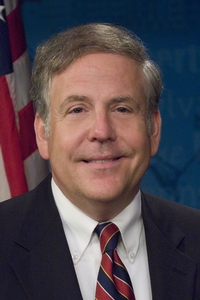
Rep. Bob Freeman
Sponsored bills
Maddy summaryHB 982 requires that all Pennsylvania vehicle registration cards and driver's license applications include a clear statement about littering laws. The statement explains that littering from vehicles - such as dropping trash on roads, public property, or waterways - is illegal and can result in fines up to $300 or community service for litter pick-up. This applies to every vehicle owner and driver during registration or licensing, ensuring they acknowledge these rules at the point of application. The bill does not change existing littering penalties but mandates this notice to inform applicants about Section 3709 of the Vehicle Code.
Maddy summaryHB 963 creates a new tax credit program in Pennsylvania for employers covering educational expenses of apprentices. It allows employers to claim tax credits for up to $3,500 per qualifying apprentice toward tuition, books, and lab fees at eligible PA schools. To qualify, apprentices must be PA residents, at least 16, enrolled full-time in a U.S. Department of Labor-registered apprenticeship program, and employed by the claiming employer in Pennsylvania. The Department of Revenue administers the program, requiring electronic applications and setting eligibility criteria for schools and apprentices. This policy directly affects PA employers in registered apprenticeship programs and their apprentices pursuing postsecondary training.
Maddy summaryHB 969, the Responsible Outdoor Lighting Control Act, requires Pennsylvania state buildings and properties to adopt outdoor lighting that minimizes light pollution and glare. It mandates new outdoor lighting must be fully shielded (directing light downward to prevent upward scatter), limit color temperature to warmer tones (reducing blue light that disrupts ecosystems), and incorporate features like motion sensors or dimming controls. The Department of General Services must manage and enforce these standards for all state-owned facilities. The bill sets a model for private businesses and residents to follow in adopting responsible lighting practices.
Maddy summaryHB 438 amends Pennsylvania's Local Tax Collection Law to allow taxpayers to remove a deceased spouse's name from real estate tax bills. It directly affects homeowners who are now required to submit a written request and a death certificate to both their tax collector and county assessment office. The key provision, added as Section 6.1, creates a formal process for this removal without requiring court action. The bill takes effect 60 days after enactment.
Maddy summaryThis resolution (HR 138) orders Pennsylvania’s Joint State Government Commission to study civic education in the state and develop cost-effective recommendations to improve it. It directly affects Pennsylvania students and schools by requiring an analysis of current civics assessments (under Act 35 of 2018), comparisons with high-performing states, and strategies to strengthen civic education across three pillars: knowledge, skills, and action. The study must include evaluations of existing assessment methods, successful models from other states, and approaches to boost student engagement, with a report due within 18 months. The resolution does not change laws but aims to inform future policy based on evidence.
Maddy summaryThis House Resolution designates March 18, 2025, as "Natural Gas Utility Worker Appreciation Day" in Pennsylvania. It formally recognizes natural gas utility workers for their role in maintaining infrastructure that provides energy to homes and businesses, including their work during the pandemic and in hazardous conditions. The resolution is purely ceremonial with no new laws or funding, serving only to honor these workers. It aligns with the existing national observance of "National Natural Gas Utility Workers' Day."
Maddy summaryThis resolution designates March 17, 2025, as "Bayard Rustin Day" in Pennsylvania. It honors Bayard Rustin, a key organizer of the 1963 March on Washington for Jobs and Freedom and a prominent civil rights leader who advocated for nonviolent activism, racial equality, and LGBTQ+ rights. The resolution does not create new laws or policies; it is a ceremonial designation to recognize Rustin's historical contributions. It directly affects Pennsylvania residents through official recognition of this date in state government communications and public events.
Maddy summaryThis bill allows housing authorities in specific Pennsylvania jurisdictions - including second-class counties, second-class cities, second-class A cities, and third-class cities - to appoint their own police officers. These officers would have the same authority as municipal police on housing authority properties and adjacent areas, including enforcing order under local laws. To qualify, officers must complete the same training and certification required for municipal police under state law and maintain that certification. The bill expands housing authorities' security capabilities without altering their core mission of providing low-income housing.
Maddy summaryHB 620 increases the recycling fee for waste processing facilities in Pennsylvania from $2 to $5 per ton. The bill directly affects operators of municipal waste landfills and resource recovery facilities, requiring them to pay this fee on all solid waste processed at their facilities or disposed of at landfills (excluding certain residues). The key provision amends Section 701(a) of the 1988 Municipal Waste Planning Act to set the new fee amount. The change takes effect 60 days after enactment.