

Maddy summaryHB 1068 creates a licensing program allowing family members (such as parents, grandparents, or adult siblings) to provide Medicaid-covered skilled care to children with medical needs. To qualify, applicants must complete training, pass background checks, and meet state nursing standards. The bill requires Medicaid agencies to cover the cost of training and licensure renewal, and it mandates that licensed family caregivers receive compensation for services like skilled monitoring. This directly affects Medicaid recipients (children under 21 with diagnosed conditions) and their eligible family caregivers, with oversight by the State Board of Nursing.
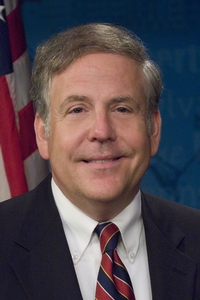
Rep. Bob Freeman
Sponsored bills
Maddy summaryHB 1065 creates a new felony offense for selling unmarked firearm components in Pennsylvania. It specifically targets the sale of firearm frames/receivers, silencer frames, split/modular frames, or partially complete frames without serial numbers registered to a federal firearms licensee. The bill defines "privately made firearm" as one assembled by non-licensed individuals without federal serial markings. This law directly affects sellers of homemade or unlicensed firearm parts, making such sales a third-degree felony. It does not change laws regarding firearm ownership or purchase, only penalizing the sale of unmarked components.
Maddy summaryThis House Resolution designates March 2025 as "Problem Gambling Awareness Month" in Pennsylvania and recognizes it as "National Problem Gambling Awareness Month." It symbolically urges state agencies (including the Gaming Control Board, Drug and Alcohol Programs, and Lottery) to collaborate on public awareness campaigns and treatment promotion. The resolution highlights that 6.5-10 million Americans experience problem gambling annually and emphasizes the need for accessible treatment resources. It has no binding effect but aims to increase public understanding of gambling-related issues.
Maddy summaryThis Pennsylvania House Resolution (HR 2) designates March 25, 2025, as "National Medal of Honor Day" within the state. It symbolically recognizes the Medal of Honor - the military's highest award for valor - as first presented on March 25, 1863, and highlights Pennsylvania's 379 Medal of Honor recipients (second-highest in the U.S.). The resolution has no binding effect or new policy requirements; it solely serves to honor recipients and their service through a ceremonial designation. It does not directly affect any individuals or alter existing laws.
Maddy summaryHR 44 is a ceremonial resolution recognizing March 2025 as "National Social Work Month" in Pennsylvania. It does not create new laws or allocate funding but formally acknowledges the social work profession's contributions to public well-being. The resolution highlights social workers' roles in supporting vulnerable populations, crisis response, mental health care, and community development, citing their growing numbers and impact. It urges Pennsylvanians to join the National Association of Social Workers in celebrating the profession during this month. This is a symbolic gesture with no direct policy or financial effect on residents or social workers.
Maddy summaryThis resolution designates February 14, 2025, as "Parkland School Shooting Victims Remembrance Day" in Pennsylvania to honor the 17 victims of the 2018 Marjory Stoneman Douglas High School shooting. It does not create new laws or allocate funds but serves as a formal observance for Pennsylvanians to reflect on the tragedy. The resolution expresses condolences to victims' families and references Pennsylvania's existing school safety programs, such as Safe2Say Something and the Office for Safe Schools.
Maddy summaryThis bill requires all Pennsylvania public and private (nonpublic) schools to integrate Holocaust, genocide, and human rights violations instruction into social studies and language arts courses starting with the 2027-2028 school year. The state education department must create curriculum guidelines within 12 months of the bill's effective date, covering specific topics like the Holocaust's history, global genocides (including Rwanda), and human rights violations such as systemic discrimination and torture. Schools must provide teacher training on these topics, and the state board will track compliance through a study, potentially requiring mandatory instruction if less than 90% of schools currently offer it. This applies to all public school districts, charter schools, cyber charters, intermediate units, and nonpublic schools upon request.
Maddy summaryHB 1055 creates a new criminal offense in Pennsylvania for threatening healthcare workers, specifically targeting threats intended to interfere with their duties. It defines the crime as knowingly making oral/written threats against healthcare practitioners, technicians, or hospital security officers, with penalties escalating from a minor violation for a first offense to a third-degree misdemeanor for repeat offenses. The law requires healthcare facilities to post clear notices about this offense at all public entrances, and a person cannot be convicted if the notice wasn’t displayed (unless they knew about the offense). This bill directly affects anyone making threats against covered healthcare workers in Pennsylvania, aiming to protect them from intimidation during work.
Maddy summaryHB 369 amends Pennsylvania's land bank law by updating two key definitions in the property code. It changes "land bank jurisdiction" to allow two or more small municipalities (each with fewer than 10,000 residents) to form a land bank together through an agreement. The bill also expands "municipality" to include home rule, optional plan, and optional charter municipalities. These changes clarify which local governments can establish land banks under current law. The bill takes effect 60 days after enactment.
Maddy summaryThis bill amends Pennsylvania's 1929 Administrative Code to clarify the maximum size of the Pennsylvania State Police (4,310 total officers and enlisted members) and specifies that personnel assigned to the Pennsylvania Turnpike Commission, Delaware River Bridge Commission, and gaming enforcement do not count toward this limit. It also repeals an outdated reference in the Fiscal Code (Section 1733-E(3)) to align with this clarification. The change directly affects the State Police's staffing structure and reporting requirements. The bill makes a technical correction to existing law without creating new policies or changing operational responsibilities.