

Maddy summaryHB 1968 proposes to amend Pennsylvania's Title 42 (Judiciary and Judicial Procedure) to clarify and expand legal rights for individuals in court proceedings, while establishing penalties for violations of these rights. It directly affects people involved in judicial cases, including plaintiffs, defendants, and legal entities, by altering the scope of their legal protections and consequences for breaches. The bill's key mechanism involves updating statutory language to define specific personal rights and prescribe enforcement penalties, though the exact rights and penalty levels are not detailed in the title. Without the full bill text, precise policy changes cannot be described beyond the title's scope.
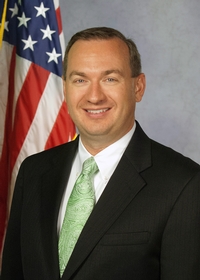
Rep. Pete Schweyer
Sponsored bills
Maddy summaryThis resolution designates September 15 through October 15, 2025, as "Hispanic Heritage Month" within Pennsylvania. It does not create new laws or affect individuals or groups directly; instead, it formally recognizes this period for commemorative purposes. The resolution was adopted by the Pennsylvania legislature on October 7, 2025, as a symbolic gesture to honor Hispanic heritage. It follows standard procedural practice for state-level observances without implementing policy changes.
Maddy summaryHB 589 creates a state-run insurance program and dedicated fund to cover property damage from landslides and sinkholes. It directly affects property owners in high-risk areas by providing a new insurance option when private coverage is unavailable or unaffordable. The bill establishes a Landslide and Sinkhole Insurance Board to manage the fund and program, while requiring the Auditor General to oversee financial accountability. It also includes a penalty provision for non-compliance and specifies fund transfers to support the program's operations. The bill passed final passage on September 29, 2025, and is now under review by the Community, Economic & Recreational Development committee.
Maddy summaryHB 1896 modifies bidding rules for Pennsylvania redevelopment projects funded through capital facilities programs. It requires at least three written bids for all projects under $25,000, while projects exceeding $25,000 must ensure workers earn the state's prevailing wage (per the Pennsylvania Prevailing Wage Act) and comply with steel procurement rules. The bill clarifies that all work on a single project site - whether through separate contracts or phases - is fully subject to prevailing wage requirements. This directly affects local governments and contractors managing redevelopment capital projects funded under the Capital Facilities Debt Enabling Act.
Maddy summaryHB 1407 updates Pennsylvania's teacher certification rules, effective July 1, 2027. It establishes new grade spans for certificates: "Primary" (pre-K through grade 6), "Secondary" (grades 7-12), and "Specialized" (pre-K through grade 12). Current teachers with early childhood certificates can add grades 5-6 by passing an assessment or earning continuing education credits, while those with elementary/middle certificates can expand to grades 7-12 using similar pathways. The bill also requires teacher preparation programs to adjust coursework and field placements for early childhood certification, and abrogates outdated regulations inconsistent with these changes.
Maddy summaryHB 1677 prohibits Pennsylvania government entities from taking action against parents, legal custodians, or guardians who provide minors with medically accurate and medically appropriate information or evidence-based medical services. It specifically protects these adults from being deemed to have committed child abuse when acting in this manner. The bill defines key terms like "medically accurate" (supported by peer-reviewed research or major medical organizations) and "evidence-based" (using current best medical practices). This law applies broadly to all minors' healthcare decisions, not limited to specific identities, and takes effect immediately upon enactment.
Maddy summaryHB 1216 amends Pennsylvania's 1968 Unfair Trade Practices and Consumer Protection Law to update definitions of prohibited business practices and clarify which acts are considered unlawful. It specifically adds new provisions targeting deceptive marketing tactics and strengthens exclusions for certain professional services. The bill directly affects businesses operating in Pennsylvania (particularly those in retail, finance, and professional services) and consumers who may encounter unfair practices. The legislation passed its final vote on June 23, 2025, and is now pending review by the Consumer Protection & Professional Licensure committee.
Maddy summaryHB 1403 modifies Pennsylvania's teacher certification rules to make it easier for educators between jobs to maintain their licenses. It creates "inactive certification" for teachers not employed by a school district, allowing them to reactivate their license by either completing 30 hours of professional development within 18 months or securing a job offer that guarantees 30 hours of training during their first two years. The bill directly affects currently licensed teachers who are not actively teaching but wish to preserve their certification status. Key provisions include eliminating cost for inactive status and establishing two clear pathways to reactivation, with specific guidelines for schools to follow. The changes take effect 60 days after enactment.
Maddy summaryHB 1404 amends Pennsylvania's teacher certification rules to create new pathways for career-changers and technical educators. It establishes a "Career and Technical Second Career Certificate" valid for up to five years while completing 18 semester hours in an approved program, and adds "Career and Technical Intern" and "Career and Technical Instructional" certificates for those with occupational experience. The bill replaces outdated regulations (22 Pa. Code Ch. 49) and requires postbaccalaureate programs to offer flexible training for candidates with bachelor's degrees in relevant fields. These changes directly affect individuals seeking teaching roles in career and technical education programs who lack traditional teaching credentials.
Maddy summaryHB 1402 reduces the maximum fee for reviewing teacher certification applications under Pennsylvania's Public School Code to $50. It also creates a special exemption for military service members, veterans, and their spouses, requiring them to pay no more than $10 for certification fees and $25 for professional discipline fees. These changes directly affect educators seeking or maintaining teaching credentials in Pennsylvania public schools. The bill modifies existing sections of the 1949 Public School Code to implement these specific fee caps and exemptions.