

Maddy summaryThis bill creates a program called the Linked Deposit Impact Pennsylvania Act to help small, for-profit businesses owned by Pennsylvania residents that employ 100 or fewer people and earn less than $10 million annually. Under the plan, the State Treasurer would place funds with approved local banks, which then agree to lend that same amount to eligible small businesses at a reduced interest rate. The legislation requires banks to follow standard lending practices to check borrower creditworthiness and prohibits them from charging fees for participating in the program. Ultimately, the State Treasurer manages the program by reviewing loan applications and deciding how much money to deposit with each participating bank.
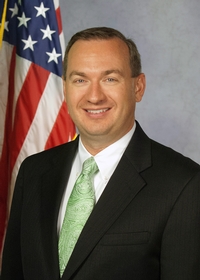
Rep. Pete Schweyer
Sponsored bills
Maddy summaryThis bill creates a new State Board of Higher Education to oversee and coordinate Pennsylvania's colleges and universities, aiming to reduce duplication and align education offerings with workforce needs. It establishes clearer rules for transferring credits between schools and requires institutions to be more transparent about student fees and financial aid. Additionally, the legislation sets up a new grant program to support dual credit courses and mandates regular reporting to the General Assembly to track how public funds are used.
Maddy summaryThis bill amends the Public School Code of 1949 to require schools to identify the September 11 anniversary as a day for a moment of silence. The change directs the Department of Education to specify how this observance should be integrated into the school curriculum. By updating the statutory language, the legislation ensures that the moment of silence is formally recognized within the state's educational framework.
Maddy summaryHB 2370 amends Pennsylvania's Public School Code to update regulations for public schools and charter schools, with specific new rules on advertising and funding. The bill requires public schools to clearly state that any advertised costs for tuition or technology are paid by taxpayers and prohibits schools from using taxpayer money to sponsor public events. It also establishes reporting requirements for school advertising expenditures and expands definitions related to charter school management and enrollment. Additionally, the legislation modifies how student-weighted basic education funding is calculated and introduces new accountability grants for the state.
Maddy summaryThis Pennsylvania House resolution expresses support for a proposed U.S. Constitutional amendment that would allow both state and federal governments to regulate election spending. The bill argues that current legal interpretations equating campaign money with free speech can silence ordinary residents and threaten democratic self-governance. If adopted, the amendment would explicitly permit laws to limit how money is used to influence elections while distinguishing between individual citizens and corporate or other legal entities.
Maddy summaryThis bill modifies Pennsylvania's Health Care Facilities Act to regulate abortion facilities similarly to ambulatory surgical centers. It requires these facilities to follow the same safety regulations and classification standards as surgical centers, while also granting them the ability to request specific exceptions to those rules. The legislation explicitly prohibits requiring abortion facilities to have transfer agreements with hospitals or for their staff to hold admitting privileges at hospitals. Additionally, the bill removes certain existing definitions that previously applied to these facilities and repeals a related state regulation.
Maddy summaryThis bill updates Pennsylvania election laws to allow the use of electronic poll books and establishes a funding mechanism through bonds to purchase election infrastructure equipment. It requires county election boards to adopt these digital systems for early voting locations and half of all polling places on election day starting in 2025, with full implementation across all precincts by 2026. The legislation mandates that these devices must securely connect to the statewide voter registration system, track voter participation in real-time, and maintain paper backups in case of technical failures. Additionally, the bill introduces same-day voter registration options on election day and during early voting periods while removing previous rules regarding voter registration transfers and party enrollment changes.
Maddy summaryThis bill creates the Office of New Pennsylvanians within the Department of Community and Economic Development to support immigrants and refugees in the state. The office will serve as a central hub for information, coordinate efforts among various agencies, and develop strategies to attract, retain, and integrate newcomers into the local economy. It also establishes a restricted funding account for the office and an advisory committee to guide its work, while providing resources for English language instruction, legal services, and business development.
Maddy summaryThis bill establishes minimum energy and water efficiency standards for a specific list of products sold or installed in Pennsylvania, including commercial kitchen equipment, lighting, and plumbing fixtures. It requires that these items meet performance benchmarks to reduce utility waste, lower costs for consumers and businesses, and decrease strain on energy and water infrastructure. The legislation mandates testing, certification, and labeling for compliance while imposing penalties for violations, though it excludes products manufactured in-state for out-of-state sale and those designed for recreational vehicles.
Maddy summaryThis bill modifies sentencing guidelines and parole rules for specific murder cases in Pennsylvania, including the killing of unborn children and law enforcement officers. It establishes new minimum prison terms for adult offenders, setting a floor of 50 years, and creates age-based minimums for juveniles, ranging from 20 to 30 years depending on their age at the time of the crime. Additionally, the legislation grants the Pennsylvania Board of Probation and Parole the authority to consider parole for these individuals after serving their minimum sentences, provided they meet specific criteria regarding public safety and victim impact. A key provision requires the board to notify victims of the crime and offer them the chance to speak during parole hearings before a decision is made.