

Maddy summaryHB 31 proposes a constitutional amendment to replace Pennsylvania's current Legislative Reapportionment Commission - which includes legislative leaders - with an Independent Redistricting Commission. The new commission would draw state legislative and congressional district boundaries after each federal census, following specific redistricting criteria outlined in the amendment. This change aims to reduce partisan influence by removing direct legislative control over redistricting. The bill does not detail the exact criteria but requires the commission to adhere to them when creating district maps.
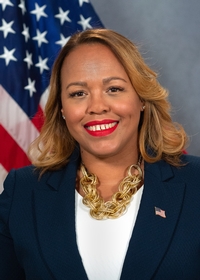
Rep. Johanny Cepeda-Freytiz
Sponsored bills
Maddy summaryHB 156 requires child care centers and family child care homes in Pennsylvania that use fossil-fuel heaters, fireplaces, or have attached garages to install operational carbon monoxide alarms. Specifically, alarms must be placed within 15 feet of these hazards and on every level of the facility, with full compliance needed within 18 months of the law's effective date. The Department of Human Services must notify all affected facilities within 12 months of the law taking effect. This bill amends the Human Services Code to add these safety standards, referencing existing carbon monoxide alarm definitions from the 2013 Carbon Monoxide Alarm Standards Act. It does not change the Department of Labor and Industry's authority under the Pennsylvania Construction Code Act.
Maddy summaryHB 764 establishes the Pennsylvania Fresh Food Financing Initiative, a program that provides grants to support the construction, renovation, or expansion of grocery stores, farmers' markets, and retail food businesses in underserved low-income and moderate-income communities across Pennsylvania. The initiative prioritizes projects located in, owned by, or primarily serving Black, Indigenous, and people of color (BIPOC) communities, as defined by population data from the Center for Rural Pennsylvania. The Pennsylvania Department of Agriculture will administer the program, develop eligibility guidelines, and ensure grants promote local food systems, job creation, and the use of Pennsylvania agricultural products. The bill also creates a dedicated "Fresh Food Financing Initiative Restricted Account" to hold program funds.
Maddy summaryPennsylvania's HB 1188 bans state-owned electronic devices and networks from using artificial intelligence applications controlled by "foreign adversaries" as defined by federal law (10 U.S.C. § 4872(d)(2)). It directly affects Pennsylvania government agencies, local municipalities, and schools (via "local education agencies") by prohibiting the installation of such AI apps on state devices or access through state networks. Exceptions include law enforcement, security research, and risk mitigation activities. Violations require referral to the State Ethics Commission for investigation under existing ethics laws. The bill takes effect 60 days after enactment.
Maddy summaryHB 1177 amends Pennsylvania's Tax Reform Code of 1971 to clarify that specific government service income is excluded from the definition of "compensation" for personal income tax purposes. The bill explicitly removes from taxable compensation income earned from active duty with the U.S. armed forces outside Pennsylvania, the U.S. Public Health Service, NOAA, or Pennsylvania emergency duty (including under state emergency management laws). This change directly affects Pennsylvania residents who receive these government service payments, ensuring they are not classified as taxable compensation under current law. The bill does not alter tax rates or brackets but refines the tax code's definition of taxable income to align with federal and state service structures.
Maddy summaryHB 1169 requires Pennsylvania legislators to hold public meetings in their districts for residents to comment on proposed constitutional amendments or other statewide ballot questions. For constitutional amendments, meetings must occur within eight months after the General Assembly first passes the amendment; for other statewide questions, meetings must happen after a plain-English summary is prepared but before the question goes to voters. All meetings must follow Pennsylvania's open meetings law (65 Pa.C.S. Ch. 7), ensuring transparency and public input before ballot questions are submitted to voters. The bill directly affects legislators, voters, and the ballot initiative process by adding a mandatory public engagement step.
Maddy summaryHR 181 is a symbolic resolution recognizing April 11-17, 2025, as "Black Maternal Health Week" in Pennsylvania. It aims to raise awareness about racial disparities in maternal health outcomes, specifically highlighting that Black women in Pennsylvania face maternal mortality rates twice as high as White women (148 vs. 74 deaths per 100,000 live births in 2020) and that 93% of pregnancy-related deaths in the state are preventable. The resolution does not create new laws or funding but uses official recognition to spotlight these inequities, citing data on higher rates of complications and preventable deaths among Black mothers across Pennsylvania. It directly focuses attention on Black women in the state, particularly in high-impact areas like Philadelphia and Allegheny County.
Maddy summaryThis bill is a symbolic resolution recognizing April 11, 2025, as "Black Doula Day" in Pennsylvania. It acknowledges Black doulas' role in improving maternal and infant health outcomes during pregnancy, birth, and postpartum care, including reducing C-sections and postpartum blues. The resolution does not create new laws or policies but formally honors this observance, aligning with International Day for Maternal Health and Rights. It directly affects Pennsylvania residents by designating a day for community recognition of Black doulas' contributions to maternal health. As a procedural resolution, it has no binding effect on legislation or funding.
Maddy summaryThis Pennsylvania House Resolution designates April 14-18, 2025, as "Local Government Week" and April 16, 2025, as "Local Government Day" within the state. It formally recognizes the role of local government units - such as counties, cities, townships, boroughs, and municipal authorities - by commending officials and employees who provide essential services to residents. The resolution highlights that Pennsylvania's local governments serve over 13 million people through nearly 166,000 employees and thousands of volunteer officials. It has no binding policy effect and serves solely as a symbolic acknowledgment of local government contributions.
Maddy summaryThis House Resolution (HR 144) symbolically recognizes April 14-20, 2025, as "National Osteopathic Medicine Week" in Pennsylvania. It directly affects Pennsylvanians by designating a week for public awareness about osteopathic physicians (DOs), who provide patient-centered care focusing on the whole person. The resolution urges Pennsylvanians to learn about and promote DOs, who make up over 11% of U.S. physicians and are prominent in primary care and Pennsylvania’s medical community. It has no binding effect or policy changes - it is purely a ceremonial observance.