

Maddy summaryHB 1222 amends Pennsylvania's Funeral Director Law by removing a requirement that applicants must be U.S. citizens. The bill changes qualification standards to require only that applicants are at least 21 years old and hold a Pennsylvania high school diploma or equivalent education. This change directly affects individuals seeking funeral director licenses in Pennsylvania who previously faced citizenship barriers. The amendment takes effect 60 days after enactment.
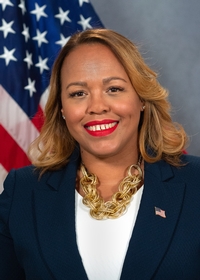
Rep. Johanny Cepeda-Freytiz
Sponsored bills
Maddy summaryHB 1225 amends Pennsylvania's Nursing Home Administrators License Act to clarify specific requirements for licensure and temporary permits. It explicitly states that candidates must be U.S. citizens (or have declared intent to become citizens) and meet age, moral character, and education standards under Section 6(a). The bill also clarifies that temporary permits for nursing home administrators require proof of citizenship, age, and good moral character, as outlined in Section 14(a). These changes affect individuals seeking nursing home administrator licensure or temporary permits in Pennsylvania.
Maddy summaryHB 1224 removes a citizenship requirement from Pennsylvania's pharmacist licensing rules. The bill amends the 1961 Pharmacy Act to delete the phrase "and is a citizen of the United States" from the eligibility criteria for pharmacists. This change directly affects individuals applying for pharmacist licenses in Pennsylvania who previously needed U.S. citizenship. The key provision modifies Section 3(a)(1) of the Pharmacy Act to allow licensure based solely on age (21+) and other existing requirements, without requiring U.S. citizenship. The bill takes effect 60 days after enactment.
Maddy summaryHB 1310 amends the Human Services Code to modify how medical assistance payments are determined for institutional care in nursing facilities. The bill specifically adjusts the application of a "revenue adjustment neutrality factor" to payment rates for county and nonpublic nursing facilities. Beginning July 1, 2025, the factor for nonpublic facilities must be equal to or greater than 0.90, while for county facilities, it will be 1.00 plus the percentage rate of change applied to nonpublic facilities. This change directly affects these nursing facilities and the eligible individuals receiving care within them.
Maddy summaryHB 1245 requires Pennsylvania's Department of Health to partner with healthcare providers - including obstetricians, gynecologists, urologists, and community health centers - to educate individuals about pelvic floor dysfunction and related conditions. The Department must create and distribute accessible informational materials (both online and in print) to people identified by healthcare providers as experiencing or at risk for these conditions, with specific focus on postpartum women. These materials must cover symptoms, treatments, biological processes, and include a recommendation for postpartum pelvic floor assessments. The bill adds this educational duty to the Department's existing responsibilities under the 1929 Administrative Code, without altering current healthcare services or funding.
Maddy summaryHB 1246 requires Pennsylvania public and charter schools to maintain indoor temperatures between 68°F and 79°F in occupied areas to support learning. If temperatures fall below 63°F or exceed 89°F, schools must relocate students/staff within two hours and report the incident to the Department of Environmental Protection within 24 hours. Schools with more than four such relocations in a year will face inspections to ensure compliance with indoor air quality standards. The bill also mandates reviewing short-term fixes (like portable heaters) and long-term solutions (like upgraded heating systems) for extreme temperatures. This applies to all school districts, charter schools, and career technical schools operating in Pennsylvania.
Maddy summaryHB 1253 amends Pennsylvania's Public School Code to strengthen school safety and student support systems. It updates definitions to include charter schools and nonpublic schools in reporting requirements, mandating standardized forms for schools to report incidents of violence and weapons on school property (including school-sponsored activities and transportation). The bill requires the School Safety and Security Committee to verify school compliance with reporting rules, publish an annual safety report by November 1, and develop a model agreement between schools and law enforcement that must be reviewed every three years. These changes directly affect public and nonpublic schools, their administrators, and local law enforcement agencies.
Maddy summaryThis bill (HB 1252) amends Pennsylvania's Credit Services Act to prohibit credit services organizations from discriminating against consumers based on sexual orientation, gender identity, or gender expression. It specifically bans denying credit, increasing fees, restricting credit amounts, or imposing different terms for these reasons. The law allows organizations to still consider credit history and apply community property laws. This directly affects all credit services providers and their customers in Pennsylvania.
Maddy summaryPennsylvania's House Resolution 193 urges the President to unfreeze federal funds already approved by Congress and stop future freezes of such funds. It specifically references over $700 million in federal infrastructure funding for Pennsylvania projects - like rail service between Pittsburgh and Harrisburg, new passenger routes, EV charging stations, and bridge repairs - that remain unspent due to the freeze. The resolution cites legal challenges (including two federal court orders blocking the freeze) and notes the President's administration has not restored these funds despite court rulings. It argues the freeze violates the Congressional Budget and Impoundment Control Act of 1974, which limits the President's authority to unilaterally withhold congressionally appropriated funds. This is a symbolic state-level resolution with no legal effect on federal policy.
Maddy summaryHB 1254 clarifies and updates Pennsylvania's laws regarding advance health care directives, specifically strengthening the legal framework for "Pennsylvania orders for life-sustaining treatment" (POLST) and out-of-hospital do-not-resuscitate (DNR) orders. The bill adds criminal penalties for falsifying, forging, or tampering with these documents, or for concealing a patient's revocation of them. It also specifies that emergency medical services must follow valid POLST or DNR orders when present, providing standard care only when no such order exists. This directly affects patients with advance directives, their families, and health care providers who must comply with these legal documents.