

Maddy summaryHB 1733 adds art therapy to Pennsylvania's regulated health professions by creating specific licensure requirements for "licensed professional art therapists" and "licensed associate art therapists." It defines "art therapy" as a clinical practice using art-based techniques to address mental health needs, requiring therapists to meet education standards from accredited institutions. The bill restricts the use of the title "licensed professional art therapist" to those holding a valid license, while "licensed associate art therapists" must work under supervision and cannot practice independently. This directly affects art therapists seeking to legally use the title or provide services in Pennsylvania, establishing new standards for training, supervision, and scope of practice.
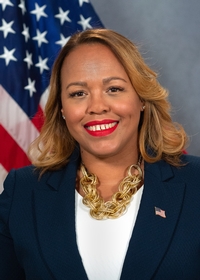
Rep. Johanny Cepeda-Freytiz
Sponsored bills
Maddy summaryHB 20 legalizes adult cannabis use in Pennsylvania for individuals aged 21 and older, replacing current medical-only rules with a new regulatory system. It creates the Keystone Cannabis Authority to license businesses, enforce rules for product safety and advertising, and establish the Community Opportunity Fund to support equity programs in communities disproportionately impacted by past cannabis enforcement. The bill imposes new sales and excise taxes on cannabis products and creates a Cannabis Regulation Fund to manage revenue. It also includes provisions for expunging certain past cannabis convictions ("Cannabis clean slate") and consolidates medical and recreational cannabis regulations under the new authority.
Maddy summaryHB 1575 creates a new tax credit program to revitalize vacant industrial properties in Pennsylvania. It directly affects building owners of pre-1973 factories or mills that have been at least 75% vacant for 24 months and are designated by their municipality for rehabilitation. The bill establishes a credit equal to 20% of qualified renovation costs (like structural repairs or equipment upgrades) that meet specific value thresholds, applied against certain business taxes. To qualify, properties must be rehabilitated for mixed commercial/residential use, and the program is administered by the Department of Community and Economic Development.
Maddy summaryHB 1532 updates Pennsylvania's Municipalities Planning Code to allow municipalities to create more tailored "specific plans" for defined areas (like downtowns or industrial zones), beyond general comprehensive plans. It clarifies definitions, streamlines the process for local governments to develop these targeted plans, and improves coordination for shared planning between municipalities and counties. This directly affects Pennsylvania towns and cities managing land use and development, giving them greater flexibility in planning for specific neighborhoods or projects. The bill passed in July 2025 and is now law.
Maddy summaryHB 1412 amends Pennsylvania's child custody laws to clarify and streamline the process for modifying existing custody orders. It directly affects parents, guardians, or custodians seeking changes to court-ordered custody arrangements. The bill establishes specific criteria and procedures for when and how custody modifications can be requested, including requirements for demonstrating a significant change in circumstances. This creates a more structured framework for courts to evaluate modification requests while maintaining focus on the child's best interests.
Maddy summaryHB 1719 creates the Individual Property Disaster Assistance Fund to help Pennsylvania residents and municipalities repair property damage from disasters not covered by federal aid. The fund provides grants for individuals (with restrictions for flood-prone properties without required insurance) and municipalities affected by declared local or state disasters. Applicants must submit detailed requests through the Pennsylvania Emergency Management Agency, including property damage dates and eligibility verification. Funds operate on a first-come, first-served basis with potential caps or usage restrictions set by the agency. This replaces the previous Public Disaster Assistance Grant Program and specifically targets unmet needs where federal disaster declarations are absent.
Maddy summaryHB 1711 creates a program that pays vendors who supply concrete with at least 20% lower carbon emissions than the regional average for state-funded construction projects. The concrete must be verified through an environmental product declaration, and vendors must deliver at least 50 cubic yards (or equivalent precast) for qualifying projects. The Pennsylvania Department of General Services will manage the payments, which are intended to incentivize lower-carbon concrete use. This bill directly affects state procurement agencies and concrete suppliers working on Commonwealth-funded projects.
Maddy summaryThis resolution designates the week of September 15-19, 2025, as "Clean Energy Week" in Pennsylvania. It is a ceremonial designation with no new policies, funding, or direct impact on residents or businesses. The resolution highlights Pennsylvania’s existing clean energy sector - including solar, wind, and geothermal resources - and notes the state’s growth in clean energy jobs and production. It does not alter laws or create new obligations; it solely aims to recognize ongoing efforts in the clean energy field.
Maddy summaryThis resolution designates October 24, 2025, as "World Polio Day" in Pennsylvania to honor global efforts against polio. It is a symbolic gesture with no binding policy changes or direct impact on individuals or organizations. As a commemorative resolution, it does not create new laws or alter existing policies. The bill was referred to the Health committee and later laid on the table without further action.
Maddy summaryHB 1709 amends the Public School Code of 1949 to require institutions of higher education to provide employment certification for adjunct and part-time faculty. This bill directly affects part-time and adjunct professors at colleges and universities, who often lack formal job security documentation. The key provision mandates that schools issue written certification confirming employment terms, such as hours and contract duration, for these faculty members. The bill aims to create clearer employment records for part-time educators under the state's higher education framework. It was referred to the Education committee on July 9, 2025.