

Maddy summaryHB 2135 requires Pennsylvania employers to reasonably accommodate employees experiencing pregnancy, childbirth, menopause, or related medical conditions (like lactation or managing vasomotor symptoms). Key provisions include prohibiting employers from refusing such accommodations unless it creates an "undue hardship" (considering cost and business size), banning forced leave when alternatives exist, and mandating written notices about these rights to all employees. Employers must provide accommodations like modified schedules, more breaks, or temporary position changes, while protecting employees from retaliation for requesting them. The bill applies to all Pennsylvania employers and takes effect 60 days after enactment.
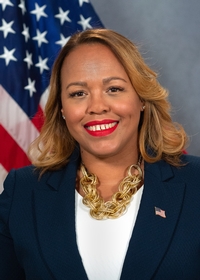
Rep. Johanny Cepeda-Freytiz
Sponsored bills
Maddy summaryHB 2133, the "Right to Disconnect Act," gives employees of Pennsylvania employers with 75+ workers the right to ignore work communications during nonworking hours (outside scheduled shifts). Employers must create written policies establishing this right, with exceptions for emergencies or last-minute schedule changes. Employees can file complaints with the Pennsylvania Department of Labor and Industry if an employer repeatedly violates this right (defined as three documented instances), with appeals potentially going to the Attorney General. The law aims to protect employees' personal time from work-related contact during nonwork hours.
Maddy summaryHB 2134 amends Pennsylvania's emergency services laws to update grant programs for fire companies and emergency medical services (EMS) providers. It creates a new "Fire Department Identification Number" (FDID) system requiring the State Fire Commissioner to assign unique five-character codes to fire departments, hazardous materials teams, and specialty teams. The bill repeals outdated COVID-19 emergency grant programs and establishes new funding streams for hazardous materials teams, specialty teams, and standard fire/EMS company grants, while clarifying how funds are allocated and requiring annual reports. These changes directly affect fire companies, EMS providers, and the State Fire Commissioner's office by modernizing administrative processes and funding mechanisms.
Maddy summaryHB 2132 updates Pennsylvania's Landlord and Tenant Act by replacing the term "justice of the peace" with "magisterial district judge" for courts handling landlord-tenant cases, excluding common pleas courts. It requires eviction orders (writs of possession) to be served within 48 hours and executed on the 11th day after service. The bill prohibits landlords from charging tenants for filing costs and voids any lease clause requiring tenants to pay such fees. These changes clarify court procedures and protect tenants from unexpected costs during eviction processes.
Maddy summaryHB 2129 repeals an existing provision about the expiration of unconventional gas well fees and establishes a new severance tax on natural gas extracted from unconventional gas wells. The tax applies to producers (companies or individuals extracting natural gas) starting July 1 of the year after the bill's effective date, calculated using base and additional tax rates. It creates a new tax administration framework in Chapter 43 of Pennsylvania's oil and gas statutes, including penalties for non-compliance. The bill explicitly states this new tax does not affect the existing collection and distribution of the unconventional gas well fee.
Maddy summaryHB 2126 requires Pennsylvania residents to obtain a new "firearm eligibility license" to purchase a firearm, making it illegal to possess a firearm without this license. The bill adds an exception allowing individuals with an expired carry license (within six months) to carry a firearm without penalty if eligible for renewal. It also ensures that individuals prohibited from possessing a firearm (including those without the eligibility license) cannot obtain a license to carry, affecting both firearm purchasers and carry license applicants.
Maddy summaryThis resolution designates February 2, 2026, as "Rheumatoid Awareness Day" in Pennsylvania. It aims to increase public understanding of rheumatoid arthritis, a chronic inflammatory disease affecting joints and organs that impacts over 1.3 million Americans and carries significant health risks like higher heart attack rates. The resolution is symbolic - meaning it does not create new laws or funding, but rather formally recognizes the day to highlight the disease's challenges and connect to broader health awareness efforts. It directly affects Pennsylvanians by encouraging community recognition of rheumatoid arthritis through official state acknowledgment.
Maddy summaryHB 2128 amends Pennsylvania's firearm licensing laws by updating the criteria for denying concealed carry permits and requiring detailed annual reporting from the Pennsylvania State Police. It specifies that sheriffs may deny licenses based on violations of federal weapon carriage rules (49 CFR 1540.111) as "good cause," directly affecting applicants seeking concealed carry permits. The bill also mandates the State Police to annually report to the General Assembly on firearm sales types, denied application statistics, background check processing times, license issuances/reversals, and other key metrics. These changes focus on clarifying denial standards and increasing transparency around firearm licensing data. The bill takes effect 60 days after enactment.
Maddy summaryThis bill (HB 2121) creates a provisional license pathway for international medical graduates (IMGs) seeking to practice medicine in Pennsylvania. To qualify, IMGs must provide evidence of at least three years of overseas practice, English proficiency, a foreign medical education credential, passing scores on required U.S. medical exams, verification of training, U.S. work authorization, and a full-time job offer from a Pennsylvania healthcare facility. The provisional license is valid for up to four years and requires supervised practice in underserved areas or approved specialties. After four years of good standing, IMGs may transition to a full, unrestricted license, and the board must report annually on license recipients, their practice locations, and specialties to the legislature.
Maddy summaryHB 2116 amends Pennsylvania's Taxpayer Relief Act to provide additional property tax relief for low-income senior citizens. It creates a 50% supplemental rebate on top of existing property tax rebates for seniors with household income ≤ $30,000 who live in cities other than first-class cities (e.g., Philadelphia), school districts, or second-class A cities. The bill changes income calculation by allowing property taxes paid on primary residences to reduce taxable income, and updates rebate schedules with annual inflation adjustments based on the Consumer Price Index. These changes directly affect seniors aged 65+ with low fixed incomes who qualify for base property tax or rent rebates.