

Maddy summaryThis bill updates Pennsylvania's Physical Therapy Practice Act to formally define "dry needling" and expand the scope of services available to licensed physical therapists. It mandates that only physical therapists who complete a board-approved certification program may perform dry needling, while explicitly excluding this practice from the duties of physical therapist assistants. The legislation also clarifies the definitions of physical therapy to include a broader range of interventions such as mechanical stimulation and wellness promotion. These changes aim to standardize training requirements and delineate the specific responsibilities of different therapy professionals within the state.
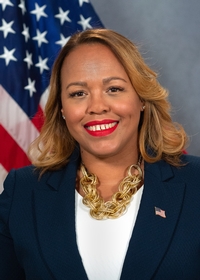
Rep. Johanny Cepeda-Freytiz
Sponsored bills
Maddy summaryThis bill amends Pennsylvania's Alternative Energy Portfolio Standards Act to update definitions and clarify rules for customer-owned renewable energy systems. It specifically expands the definition of "customer-generator" to include larger systems up to 3,000 kilowatts and establishes new requirements for large systems between 50 and 3,000 kilowatts, such as needing independent electric load and limiting system size to 200% of annual consumption. The legislation also adds precise definitions for terms like "avoided cost," "brownfield," and "commercial rooftop" to improve clarity within the existing energy framework. These changes directly affect electric utilities, renewable energy installers, and customers who generate their own power by standardizing how these systems connect to the grid and are compensated.
Maddy summaryThis bill updates Pennsylvania's Public School Code to clarify funding rules for cyber charter schools. It mandates that these schools cannot charge tuition to students who live in or outside the state, with one specific exception. Under this exception, a local school district does not have to pay the tuition for its own students if those students attend an outside cyber charter school instead of the district's own online program. To qualify for this exemption, the district's online program must meet specific standards set by the state department, such as offering in-person orientation, verifying residency, tracking attendance, providing technical support, and assigning case managers for special education needs. The changes will become effective 60 days after the bill is passed.
Maddy summaryThis bill is a House Resolution that formally recognizes May 2026 as "Sex Ed for All Month" in Pennsylvania. It does not change any laws or require new actions from schools or officials. The resolution highlights the importance of comprehensive, medically accurate sexuality education for young people. It aims to raise awareness about the benefits of such education, including improved health outcomes and reduced risks of unintended pregnancies and infections.
Maddy summaryThis bill would create a state-funded paid family and medical leave program for eligible workers needing time off for health issues, childbirth, or family care. It establishes a dedicated state fund to cover leave costs, creates an advisory board to guide implementation, and assigns oversight to the Department of Labor. The program would directly affect employees in the state who qualify for these leave types, requiring employers to provide the benefits. The bill also specifies penalties for businesses failing to comply with the new requirements.
Maddy summaryThis bill expands the legal definition of aggravated assault in Pennsylvania to include school staff members and crossing guards. Specifically, it adds teaching employees, school board members, licensed private school workers, parochial school employees, and school crossing guards to the list of individuals protected by aggravated assault laws. The change applies when these individuals are acting within the scope of their employment or due to their relationship with the school. If passed, the new provisions would take effect 60 days after the bill is enacted.
Maddy summaryThis bill amends Pennsylvania's Election Code to change the deadline for receiving absentee and mail-in ballots from election day to the seventh day following the election. It allows voters who declare under penalty of perjury that their ballot was timely submitted to have their ballots counted even if they lack a postmark or have an unreadable one. The changes apply to both traditional absentee voters and new mail-in voters, ensuring ballots received by the extended deadline are processed and counted. The legislation would take effect 60 days after passage.
Maddy summaryThis bill amends Pennsylvania's Professional Nursing Law to update the legal definitions and scope of practice for certified registered nurse anesthetists (CRNAs). It allows CRNAs to perform anesthesia services under the overall direction of a physician, podiatrist, or dentist who is present and available onsite during the procedure. The legislation grants CRNAs expanded authority to prescribe and administer certain medications, order and interpret diagnostic tests, and manage patient care throughout the anesthesia process, including preoperative preparation, induction, maintenance, and post-anesthesia care. These changes formalize the professional responsibilities of CRNAs within the state's nursing regulatory framework without altering the requirement for collaborative oversight by licensed medical professionals.
Maddy summaryThis bill creates a tax credit for Pennsylvania educators who purchase instructional materials or supplies for classroom use. Professional employees in public, charter, cyber, and nonpublic schools can claim a credit equal to the amount they spent on qualifying expenses, up to a maximum of $500 per year. The Department of Revenue will establish rules to determine which expenses qualify and must publish guidelines online while submitting annual reports on program usage. The credit applies to tax years beginning on or after January 1, 2025, and cannot be carried forward, carried back, sold, or assigned.
Maddy summaryThis bill amends Pennsylvania's Election Code to establish a standardized naming system for election districts across the state. It requires the Secretary of the Commonwealth to create and maintain a uniform naming convention for all election districts, while county boards of elections must assign and input district names according to this standard. The changes apply to both state and local election officials and are set to take effect 60 days after passage.