

Maddy summaryThis Pennsylvania House resolution designates September 2026 as "Healthy Hunger-Free Kids Month" to raise awareness about child hunger and food waste in the state. The document highlights statistics on food insecurity among students and discusses strategies like "share tables" to help reduce waste while providing extra meals. It serves as a symbolic gesture to focus attention on these issues rather than implementing new laws or funding changes.
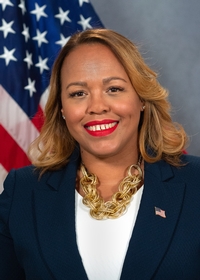
Rep. Johanny Cepeda-Freytiz
Sponsored bills
Maddy summaryThis bill requires school districts in Pennsylvania to follow specific guidelines when hiring vendors to create detailed maps of their campuses for emergency response purposes. The new rules mandate that these maps be accurate, include labeled floor plans and utility locations, and be compatible with existing public safety software without extra costs. Additionally, the data must be stored securely within the United States, and districts must obtain approval from local law enforcement before entering into such contracts.
Maddy summaryThis bill requires emergency medical services providers in Pennsylvania, including paramedics and nurses, to complete specific training on caring for individuals with dementia. The Department of Health must create a program covering how to communicate effectively with these patients, manage behavioral symptoms, and identify signs of abuse. New providers will need three hours of initial training, while all providers must complete one hour of continuing education annually. Those who already finished similar training within the last 18 months will be exempt from the initial requirement but must still take the annual course.
Maddy summaryThis Pennsylvania bill amends the Public School Code to clarify special education evaluation procedures for students enrolled in charter schools. Beginning in the 2026-2027 school year, the local school district of residence will conduct initial disability evaluations for these students rather than the charter school. The district or an intermediate unit must issue a report on eligibility and service recommendations to parents and the charter school entity. While intermediate units can charge fees for these evaluations, charter schools remain responsible for providing the special education services outlined in the report.
Maddy summaryHB 1706 requires Pennsylvania schools to integrate student mental health awareness into existing health education standards and school operations. It mandates the State Board of Education to update health standards, the Department of Health and Education to develop public guidelines on mental health warning signs for students and families, and schools to notify students and parents twice yearly about local mental health services. The bill also requires school entities to report student absences or injuries in activities to student assistance programs and directs the Pennsylvania Interscholastic Athletic Association to add mental health training to coach certification by the 2025-2026 school year. This bill directly affects all public, private, and parochial schools in Pennsylvania, their students, families, and athletic staff.
Maddy summaryHB 586 amends Pennsylvania's Solid Waste Management Act to update definitions, clarify department responsibilities, and revise permit requirements for waste management entities. It specifically adds new rules for handling food processing residuals (waste from food processing plants) and includes reporting obligations. The bill also establishes penalties for noncompliance with these updated provisions. These changes directly affect waste management companies, food processors, and local departments overseeing waste handling. The amendment focuses on modernizing regulatory processes rather than creating new programs.
Maddy summaryThis bill amends Pennsylvania's Pesticide Control Act to clarify that the state's pesticide regulations override any conflicting local laws or ordinances. It allows the state secretary to delegate enforcement duties to designated employees and establishes that pesticide registration, sale, and use are matters of statewide concern. While municipalities generally cannot regulate pesticides, the bill creates a specific exception that permits cities with a population density of at least 300 people per square mile to ban commercial pesticide applications on private property. Additionally, the Department of Community and Economic Development must create a sample ordinance within 120 days to help municipalities implement this new authority.
Maddy summaryThis bill authorizes Pennsylvania to join the Respiratory Care Interstate Compact, a legal agreement designed to allow licensed respiratory therapists to practice in other member states without needing separate licenses for each location. The legislation establishes a framework where a therapist's home state retains primary regulatory authority while granting temporary practice privileges in other states to improve patient access and support military families. Key provisions include creating a central data system to track licenses, defining strict rules for handling disciplinary actions across state lines, and setting requirements for criminal background checks and jurisprudence exams. By adopting this compact, the state aims to streamline administrative processes and address workforce shortages while maintaining public safety standards.
Maddy summaryThis Pennsylvania House resolution designates the week of April 13 through 17, 2026, as "Local Government Week" and April 22, 2026, as "Local Government Day" within the state. The measure aims to highlight the work of the Commonwealth's thousands of local officials and employees who provide essential services such as road maintenance, public safety, and utilities. By formally recognizing these contributions, the bill seeks to bring attention to the importance of local governance in daily community life.
Maddy summaryThis bill amends Pennsylvania's Price Gouging Act to specifically target price increases for petroleum products like gasoline, diesel, and heating oil during market emergencies. It defines a market emergency as disruptions caused by severe weather, supply shortages, strikes, or other extraordinary events and gives the governor authority to declare such emergencies for up to 30 days, with possible extensions. Under the new rules, businesses selling petroleum products cannot change prices more than once every 24 hours, and during a declared emergency, they are prohibited from charging prices that are grossly higher than those offered seven days prior. These measures apply to producers, wholesalers, distributors, and retailers of fuel and take effect 60 days after the bill is passed.