

Maddy summaryHB 2106 amends Pennsylvania's guardianship procedures for people alleged to be incapacitated. It requires courts to provide clear, simple-language notices to the person in question about the hearing's purpose, potential loss of rights, and their rights, along with the petition details. The bill specifies who must be notified (like relatives, service providers, and others with a genuine interest in the person's well-being) and clarifies hearing procedures, including when hearings can be closed or held at the person's residence. This directly affects individuals facing guardianship proceedings, their families, and service providers.
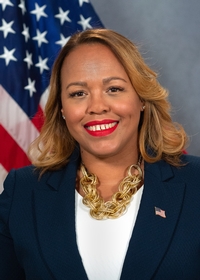
Rep. Johanny Cepeda-Freytiz
Sponsored bills
Maddy summaryThis bill amends Pennsylvania's Human Relations Act to clarify that religious or fraternal organizations cannot restrict membership based on race, color, national origin, or ancestry to deny equal access to housing, employment, or public accommodations. It specifically updates Section 5(h)(10) to explicitly prohibit such discrimination under the guise of religious or fraternal affiliation. The change directly affects religious institutions, fraternal organizations, and housing providers operating under existing exemptions. The amendment takes effect 60 days after passage.
Maddy summaryHB 558 caps residential rental application fees at $20 per applicant and restricts landlords from charging more for background checks that must include criminal history and credit score checks. It directly affects residential landlords and tenants in Pennsylvania by limiting fee amounts and specifying how fees may be used. The bill exempts commercial or nonresidential properties from these fee limits. The law takes effect 60 days after enactment.
Maddy summaryHB 1077 establishes the Commission on Children's Vision within Pennsylvania's Department of Education and Department of Health to address children's vision care needs. The commission will develop statewide plans and low-cost programs for vision screenings, follow-up exams, and glasses for students who need them, while coordinating with local vision care providers. It must issue annual reports by December 31 detailing program achievements, trends in unmet vision care needs, and recommendations for improving access. The commission, composed of state education/health officials and 12 vision care professionals, will not receive compensation but will receive administrative support from the departments. This bill directly affects Pennsylvania schoolchildren requiring vision care and the state departments responsible for health and education services.
Maddy summaryHB 1098 establishes a new program under Pennsylvania's Commission on Crime and Delinquency to combat internet crimes against children. It directs the Commission to provide grants to law enforcement task forces for investigating and prosecuting internet-related crimes against minors under 18, specifically violations of Pennsylvania laws covering sexual offenses, human trafficking, and child exploitation (18 Pa.C.S. §§ 30, 31, 6312, 6318, 6320). The grants will support local police teams, supplement federal child exploitation grants, and fund specialized training for investigators. This program operates alongside existing federal and state funding without replacing it, directly affecting law enforcement agencies working on these cases.
Maddy summaryHB 1752 requires the Pennsylvania Department of Education to conduct a feasibility study on alternatives to the Keystone Exams, which are standardized tests students must pass to graduate high school. The study will evaluate whether other assessment methods could replace the current exam system for graduation requirements. This bill does not change existing testing rules but mandates a review process to inform potential future policy decisions. The findings must be reported to the Pennsylvania legislature for consideration.
Maddy summaryThis bill creates the Newly Employed Teacher Grant Program to help teachers in their first two years of employment in Pennsylvania by providing funds for classroom supplies. The Department of Education will partner with an online platform to let eligible teachers apply for and purchase approved materials directly. The program requires detailed reporting on how the money is used across different school types and regions to ensure transparency and track its impact.
Maddy summaryThis bill proposes an amendment to the Pennsylvania Constitution to clarify how the General Assembly conducts its annual sessions. It mandates that the legislature must meet at noon on the first Tuesday of January each year and requires the Governor to call a special session if a general appropriation bill is not passed by the end of the fiscal year. The measure also outlines the specific steps needed to put this change on the ballot for voter approval after it passes both houses of the General Assembly.
Maddy summaryHB 2486 requires Pennsylvania public schools to create and share mental health support policies for students. The bill mandates that educators in grades six through twelve receive four hours of mental health training every five years. Additionally, the state Department of Education will develop model policies, training materials, and a curriculum to guide schools in identifying student needs and providing appropriate support.
Maddy summaryThis bill amends Pennsylvania's Administrative Code to establish a specific rule for enacting the state budget. It directly affects the General Assembly and the Commonwealth's fiscal operations by requiring lawmakers to remain in session on weekdays until a general appropriation bill is passed if one is not completed by the end of the current fiscal year. The key provision mandates continuous legislative activity to prevent a lapse in funding for the upcoming fiscal year, ensuring that state operations can continue without interruption. This change formalizes the process for budget enactment to address potential delays in passing necessary financial legislation.