

Maddy summaryThis bill legalizes prediction markets in Pennsylvania by adding a new chapter to the state's amusement laws that defines how these speculative platforms must operate. It directly affects the companies that build and run these platforms, as well as the individuals who wish to place bets on the outcomes of future events. Key provisions include setting a minimum age of 21 for participants, banning markets related to deaths or assassinations, and prohibiting anyone involved in gambling from acting as a market maker or sharing in the platform's revenue. The legislation also establishes rules to prevent insider trading and market manipulation, while giving the state board authority to create specific regulations and impose civil penalties for violations.
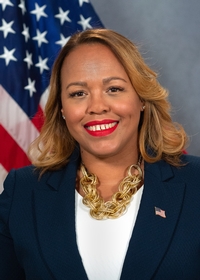
Rep. Johanny Cepeda-Freytiz
Sponsored bills
Maddy summaryThis bill requires health insurance policies in Pennsylvania to cover at least two epinephrine delivery systems, such as EpiPens, for an annual maximum cost of $35 regardless of deductibles or copayments. It applies to standard medical insurance plans but excludes limited coverage types like dental-only or accident policies. Additionally, the state Insurance Department must investigate manufacturer pricing practices and submit a public report with recommendations to control costs within one year. Insurance companies are also permitted to offer lower out-of-pocket costs than the $35 cap if they choose.
Maddy summaryHB 1851 updates Pennsylvania's requirements for death and fetal death certificates under the 1953 Vital Statistics Law. It changes the specific information that must be recorded on these official documents, affecting hospitals, medical examiners, and vital records offices. The bill focuses on standardizing or adding details required for certification purposes. This procedural change aims to modernize record-keeping for public health data collection.
Maddy summaryHB 482 authorizes Pennsylvania to join the Interstate Occupational Therapy Licensure Compact, enabling licensed occupational therapists and assistants from Pennsylvania to practice in other participating states without obtaining separate licenses. The bill establishes mechanisms for mutual recognition of licenses, sharing of disciplinary and investigative data between states, and accountability for practitioners providing services across state lines. It directly affects occupational therapists, assistants, and patients seeking services in multiple states, particularly supporting military spouses relocating and expanding telehealth access. Key provisions include requiring states to participate in a shared data system, defining terms like "Compact Privilege," and preserving each state’s regulatory authority over local practice standards. This is a procedural bill enabling Pennsylvania’s participation in an existing interstate framework, not creating new licensing requirements.
Maddy summaryHB 1862 updates Pennsylvania's laws regarding driving under the influence (DUI) and related offenses. It revises definitions for DUI, modifies chemical testing procedures for drivers, and changes requirements for ignition interlock devices (which prevent a car from starting if alcohol is detected). The bill repeals outdated provisions about ignition interlock limited licenses, adds online services for managing interlock requirements, and specifies penalties for driving without an interlock device. This directly affects drivers convicted of DUI or driving under the influence of drugs, particularly those with prior offenses.
Maddy summaryThis bill (HB 2024) requires Pennsylvania's Office of the Deputy Adjutant General for Veterans' Affairs to create a mandatory training program for county veterans affairs directors. The program must cover specific topics like trauma-informed care, military sexual trauma, PTSD, and traumatic brain injury, developed in collaboration with the State Association of County Directors of Veterans Affairs. It directly affects county-level veterans' service staff who assist veterans across Pennsylvania. The training program becomes effective 180 days after the bill's passage.
Maddy summaryHB 1286 requires human trafficking awareness training for employees at hotels, motels, and similar public lodging establishments (defined as facilities offering >10 rooms for rent) and for workers contracted by third-party providers serving these locations. It also mandates similar training for short-term rental operators (like Airbnb hosts) and platforms listing such rentals. The training must cover identifying trafficking signs, legal definitions, reporting procedures, and differences between labor and sex trafficking in lodging contexts, with records maintained for two years. The Pennsylvania Commission on Crime and Delinquency will approve and list free training programs online to meet these requirements.
Maddy summaryHB 858 requires Pennsylvania county chief assessors to maintain and annually update a public list of property contact information, including owners' names and addresses. This applies directly to county assessors and ensures property owners' contact details are accessible to the public. The bill also imposes penalties for failure to comply with these requirements, aiming to improve transparency in property ownership records.
Maddy summaryThis Pennsylvania bill requires public and private schools to teach students in grades six through twelve about suicide prevention and violence awareness, while also introducing social isolation education for students from kindergarten through grade twelve. To support these requirements, the state education department must create and publish a list of evidence-based, age-appropriate curricula that schools can use to deliver at least one hour of instruction annually. The materials must cover identifying warning signs, seeking help, and reporting dangerous behavior, with the option for schools to combine these lessons into a single class period. Additionally, the legislation allows for the establishment of student-led violence prevention clubs to further promote safety within school communities.
Maddy summaryThis bill modifies Pennsylvania's Public School Code to clarify who must prove their case during special education disputes. Specifically, it states that school districts generally bear the burden of proof in due process hearings involving exceptional children, unless the parents unilaterally chose a private school placement, in which case the parents must provide the proof. The law applies to situations concerning a child's identification, evaluation, classification, placement, or disciplinary actions. The changes are designed to streamline legal procedures by explicitly defining these responsibilities rather than leaving them open to interpretation.