

Maddy summaryThis bill requires Pennsylvania public utilities to provide customers with clear instructions on how to submit comments regarding proposed rate changes or system acquisitions. Under the new rules, the Public Utility Commission must accept these consumer comments via mail or through an accessible online platform. The legislation aims to streamline the process for utility customers to participate in regulatory decisions affecting their services. It applies to all public utilities operating in the state and will become effective 60 days after enactment.
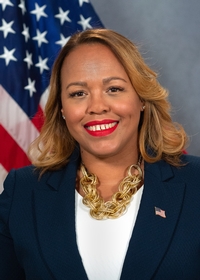
Rep. Johanny Cepeda-Freytiz
Sponsored bills
Maddy summaryThis Pennsylvania House resolution urges the U.S. Congress to update federal copyright laws to protect human creative workers from displacement by artificial intelligence. The bill proposes that only works created primarily by humans should be eligible for copyright protection, while works generated mainly by non-human entities would be considered public domain. Additionally, it suggests that using copyrighted material to train AI systems should not qualify as fair use because it harms the market value of the original works. The resolution does not become law itself but serves as a formal request to the federal government to consider these specific legal changes.
Maddy summaryThis bill establishes the Agriculture Innovation Grant Program within the Pennsylvania Department of Agriculture to provide financial reimbursement grants to eligible farms and agribusinesses. The program specifically targets projects that utilize new technologies or methods to improve energy efficiency, water quality, production processes, biosecurity, and farm management systems. To oversee the initiative, the legislation creates a new Agriculture Innovation Board composed of representatives from government agencies, higher education, cooperatives, financial institutions, and the legislative branches. Eligible applicants include individuals with anticipated agricultural sales over $2,000 annually or processors with sales exceeding $10,000, as well as service providers and entities utilizing agricultural commodities for product creation.
Maddy summaryThis bill designates the month of July 2024 as "Parks and Recreation Month" throughout Pennsylvania to highlight the importance of public parks and recreational programs. It serves as a commemorative resolution that recognizes the benefits of outdoor spaces for community health, economic growth, and environmental resilience. The measure does not create new laws, allocate funding, or change existing regulations, but rather formally acknowledges the value of these resources in the state.
Maddy summaryThis Pennsylvania resolution designates July 19, 2024, as "Parks and Recreation Professionals Day" to honor the workers who maintain local parks and recreation facilities. The bill does not create new laws or change funding; instead, it serves as a symbolic gesture to recognize the contributions of these professionals to community health and environmental well-being. By adopting this designation, the Pennsylvania House of Representatives acknowledges the role of parks in promoting physical activity, mental wellness, and economic prosperity for residents.
Maddy summaryThis resolution designates June 24, 2024, as the "Universal Day of the Romanian Blouse" within Pennsylvania. It directly affects the state's residents and honors the Romanian immigrant community, which includes over 4,200 people living in the Commonwealth. The measure serves as a commemorative gesture to recognize the cultural significance of the traditional Romanian blouse and celebrate the state's diversity. By adopting this date, the House of Representatives formally acknowledges the heritage and craftsmanship associated with this iconic garment.
Maddy summaryThis Pennsylvania House Resolution designates September 2024 as "Military Suicide Prevention and Awareness Month" to highlight the high suicide rates among veterans in the state. The measure aims to raise public consciousness about the issue by officially setting aside the month for recognition and support rather than implementing new laws or funding. It expresses support for ongoing federal and state efforts to assist veterans and their families while acknowledging the specific challenges they face.
Maddy summaryThis bill directs the Legislative Budget and Finance Committee to investigate why students are unable to enroll in career and technical education programs. The study will examine specific obstacles such as limited program availability, facility conditions, staffing shortages, and wait lists across the state. Additionally, the committee will analyze the current funding formula for these programs and review how other states address instructor credentialing to solve workforce gaps. The committee is required to submit a report with its findings and recommendations to the House of Representatives within 120 days.
Maddy summaryThis bill establishes the Pennsylvania Artist Fellowship Grant Program to provide financial support to artists living in the state. To qualify, applicants must be at least 18 years old, reside in Pennsylvania, actively practice in visual, media, film, or performing arts, and not be currently enrolled in school. The program awards up to 25 grants of $100,000 each annually, which recipients can use for a wide range of expenses including housing, studio rentals, materials, travel, and student loans, provided the funds are not used for political campaigns or regular employment. The Pennsylvania Council on the Arts is responsible for managing the application process and administering the program, which is funded by a $2.5 million appropriation for grants and an additional $250,000 for administrative costs.
Maddy summaryThis bill directs Pennsylvania's Human Services department to apply for a federal waiver that would allow SNAP and WIC benefit recipients to use their funds to buy diapers or menstrual hygiene products. The legislation authorizes the department to adopt necessary rules once the USDA approves the waiver, ensuring the state can participate in this potential program change. It does not immediately change how benefits are used but establishes the legal framework to implement such a waiver if federal approval is granted.