

Maddy summaryHB 636 amends Pennsylvania's disabled veterans' real estate tax exemption law by extending the review period for exemption eligibility from every five years to every ten years. The bill requires the Pennsylvania Veterans' Commission to reassess applicants' economic status at least once every decade to determine if they still qualify for the exemption. This change directly affects disabled veterans currently receiving the tax exemption, as it delays the periodic review of their eligibility. The key provision modifies Section 8904(3) of Title 51 of the Pennsylvania Consolidated Statutes, shifting the review cycle without altering the exemption's eligibility criteria or benefits. The bill takes effect 60 days after enactment.
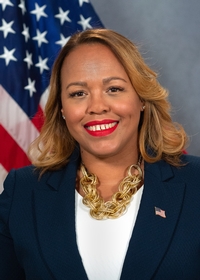
Rep. Johanny Cepeda-Freytiz
Sponsored bills
Maddy summaryThis bill requires Pennsylvania health clubs with swimming pools of 1,500 square feet or larger to have at least one certified lifeguard on duty during all hours the pool is open for swimming by members and guests. A "certified lifeguard" must hold a current certification from a lifeguard training program approved by the Pennsylvania Department of Health. This rule directly affects health clubs operating such pools, mandating a minimum safety standard during pool hours. The law takes effect 60 days after enactment.
Maddy summaryHB 619 requires Pennsylvania employers to provide employees with up to two hours of paid time off to vote in elections, affecting all public and private sector workers in the state. The bill mandates that employees give employers at least two working days' notice before an election and prohibits employers from asking about voting preferences or party affiliation. Employers must post a uniform notice about this policy (available from the Secretary of the Commonwealth) at least 10 days before an election and face fines of $100-$500 for violations. The law aims to ensure voting access without penalty, with employees required to verify voting attendance to retain paid time off.
Maddy summaryHB 680 amends Pennsylvania's Clean Streams Law to clarify enforcement procedures for pollution cases. It specifies that cases involving sewage, industrial waste, or pollution can be filed either by the Attorney General or directly before district justices in the county where the offense occurred or the public was affected. This change simplifies the court process for environmental enforcement by streamlining jurisdiction and clarifying who represents the Commonwealth in appeals. The bill affects how pollution violations are handled in Pennsylvania courts, with no new environmental requirements.
Maddy summaryHB 77 updates Pennsylvania's food protection laws to align with the 2022 FDA Food Code. It requires retail food facilities (like restaurants and grocery stores) to prominently display employee allergy awareness posters detailing major allergens and symptoms, and to include allergen information on menus or written materials for customers. The bill also revises definitions of "potentially hazardous food" and mandates that the Pennsylvania Department of Agriculture adopt the FDA Food Code standards, with updates published in the Pennsylvania Bulletin. The law takes effect 60 days after enactment.
Maddy summaryHB 572 creates a new criminal offense in Pennsylvania for the non-consensual sharing of intimate images. It makes it illegal to knowingly transmit, distribute, publish, or disseminate a sexually explicit image (defined as depicting genitals, pubic area, or breasts shown for sexual stimulation) to someone who didn't request it or give express consent. This offense is classified as a summary offense (similar to a minor misdemeanor), applies if either the victim or offender is in Pennsylvania, and excludes law enforcement officers acting in their official duties. The bill directly affects individuals who share intimate images without consent, providing a specific legal remedy for this type of non-consensual disclosure.
Maddy summaryHB 573 amends Pennsylvania's Landlord and Tenant Act to require that all security deposits, including pet deposits, be fully refundable at the end of a lease. The bill prohibits landlords from including any lease provision labeling these deposits as nonrefundable. This directly affects residential landlords and tenants by ensuring deposits must be returned unless deductions are made for legitimate damages beyond normal wear and tear. The law takes effect 60 days after enactment.
Maddy summaryHB 607 amends Pennsylvania's 1951 Landlord and Tenant Act to protect residential tenants during declared disaster emergencies. It prohibits landlords from evicting tenants who lost jobs due to the emergency or entering rental units to show properties without consent during such periods. Violations carry a minimum $500 penalty per occurrence, and the law specifically applies to residential leases, not commercial properties. The bill takes effect immediately upon enactment and is currently under review by the Housing & Community Development committee.
Maddy summaryThis bill establishes the Opioid Reparation and Accountability Fund, which will receive fees from opioid manufacturers and distributors, and creates the Opiate Epidemic Response Advisory Council. It requires opioid manufacturers/distributors to obtain licenses and pay $27,500 annually for licenses (with $2,500 for non-opioid drugs), plus an additional annual fee if they distribute over 2 million opioid units. The Department of Health, Human Services, and Drug and Alcohol Programs must implement new reporting requirements, manage the fund, and coordinate with the advisory council. The fund will support community programs addressing the opioid crisis, directly affecting opioid manufacturers, distributors, and state agencies responsible for oversight.
Maddy summaryHB 597 establishes a one-year pilot program allowing Pennsylvania municipalities to hire underemployed and unemployed residents for daily community projects like park repairs and beautification. Participants would receive same-day pay for their work, with the Department of Conservation and Natural Resources required to set eligibility rules, track data, and evaluate the program’s feasibility. The bill directs the department to report findings to the legislature after the pilot ends, without creating a permanent statewide program. It affects local governments and job seekers in participating communities, focusing on testing a temporary work model.