

Maddy summaryThis is a ceremonial resolution, not a law with policy changes. It officially recognizes March 9-15, 2025, as "Multiple Sclerosis Awareness Week" in Pennsylvania. The resolution highlights the impact of multiple sclerosis (affecting over 24,000 Pennsylvanians) and acknowledges the work of the National Multiple Sclerosis Society. It has no binding effect or funding provisions - it simply encourages public awareness and support for the cause.
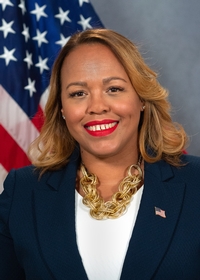
Rep. Johanny Cepeda-Freytiz
Sponsored bills
Maddy summaryThis resolution designates April 29, 2025, as "22nd Amendment Day" in Pennsylvania. It commemorates Pennsylvania's ratification of the 22nd Amendment to the U.S. Constitution on April 29, 1947, which established presidential term limits. The resolution has no legal effect and serves only as a ceremonial observance. It does not alter any laws or impact any individuals or groups.
Maddy summaryThis bill amends Pennsylvania's REAL ID Compliance Act to exempt residents aged 65 or older from all fees when applying for a driver's license or photo ID card. Under Section 3.1(a), eligible seniors only pay standard costs for the license or ID, not the full administrative fees. The exemption applies to all fee-related administration under the existing REAL ID law. The bill takes immediate effect upon passage.
Maddy summaryHB 918 clarifies Pennsylvania's traffic laws to strengthen pedestrian safety in crosswalks. It defines "half of the roadway" as all lanes traveling in one direction on a one-way road and requires drivers to stop and remain stopped when pedestrians are on or within one lane of that half of the roadway they are crossing. Violations carry a $50 fine for most cases, or $200 in school zones. The bill applies to all drivers operating vehicles in Pennsylvania and directly affects pedestrians crossing streets at marked or unmarked crosswalks.
Maddy summaryThis Pennsylvania House resolution formally recognizes March 17, 2025, as "St. Patrick's Day" within the state. It acknowledges Irish Americans' military contributions during the Revolutionary War, citing historical records showing they comprised 40-50% of the Continental Army by 1778. The resolution has no legal effect or policy changes - it is purely ceremonial, celebrating cultural heritage. It directly affects Pennsylvanians of Irish descent (over 15% of the state's population) through this official recognition. The resolution does not alter any laws or provide funding.
Maddy summaryHB 914 amends Pennsylvania's Landlord and Tenant Act to limit annual rent increases for regulated rental units, directly affecting tenants and landlords in these properties. It establishes an annual rent increase allowance calculated as the lesser of CPI-U plus 3% or 6% of base rent (excluding discounts), effective July 1-June 30 each year. Landlords may not exceed this allowance plus any unused "banked amount" when raising rent on lease renewals or new leases, with a 10% cap on increases. For capital improvements costing 40%+ of a unit's value, landlords can petition courts for additional rent increases to cover actual costs, but only if proven necessary for a "fair return" on investment. The Pennsylvania Housing Finance Agency administers the annual allowance calculation and public publication.
Maddy summaryThis resolution designates September 2025 as "Prostate Cancer Awareness Month" in Pennsylvania. It symbolically raises public attention to prostate cancer, highlighting statistics like an estimated 13,000 new cases and 1,500 deaths in Pennsylvania during 2025. The resolution also urges Congress to support federal legislation (H.R. 1300) that would require health insurance coverage for prostate cancer screenings without cost-sharing for at-risk men. It does not create new laws or funding but aims to promote awareness and encourage preventive care.
Maddy summaryHB 915 creates a new supplemental funding program under Pennsylvania's Public School Code to support childcare facilities serving meals through the federal Child and Adult Care Food Program. The bill establishes a "Supplement" administered by the Department of Education, providing additional financial reimbursements to facilities that demonstrate they can serve more meals or improve care for enrolled children and adults. Facilities must meet specific criteria, such as expanding meal service or enhancing educational opportunities (with separate standards for nonprofits vs. for-profits), and must report annually to multiple legislative committees on participation, meals served, and funding needs. This bill directly affects licensed childcare centers, shelters, and similar facilities receiving federal meal reimbursements.
Maddy summaryHB 111 prohibits life insurance companies in Pennsylvania from denying coverage, limiting benefits, or charging higher rates to applicants or policyholders solely because they have been prescribed an opioid overdose reversal agent (like naloxone). The bill directly affects individuals who use these medications, including those with opioid use disorder or at risk of overdose. It defines "adverse action" to include these discriminatory practices and makes such actions violations of existing laws against unfair insurance practices. The law takes effect 60 days after enactment.
Maddy summaryThis bill updates Pennsylvania's driver's license requirements by allowing the inclusion of personal medical data and other emergency-use information on licenses. It also permits the use of substitute addresses for participants in the state's Address Confidentiality Program, which protects victims of domestic and sexual violence. The legislation maintains that Social Security numbers will be required on applications but will not appear on the actual license, while keeping other standard identification details like name, date of birth, and photograph. The changes would take effect 60 days after the bill is enacted.