

Maddy summaryHB 150 proposes changes to Pennsylvania's sentencing laws by removing outdated rules about transferring inmates requiring medical care and creating a new process for judges to modify prison terms when an individual's illness prevents them from serving their full sentence. The bill directly affects people incarcerated in Pennsylvania who develop serious medical conditions during their sentence. Key provisions include ending the current transfer system for medical cases and establishing a clear procedure for courts to adjust sentences based on documented health issues. This would allow judges to shorten sentences for health-related reasons without requiring a separate legal process. The bill is currently under review in the Appropriations committee.
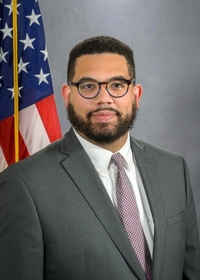
Rep. Manny Guzman
Sponsored bills
Maddy summaryHB 1768 establishes four new grant programs to support Pennsylvania's local food system. It provides incentives for schools and institutions to purchase local food (Local Food Purchasing Incentive Grant), offers financial assistance to farmers for production improvements (Keystone Producer Grant), supports food distribution networks (Keystone Assistance Grant), and funds school meal programs sourcing from local farms (Keystone Fresh Farm to School Account). The Department of Agriculture and Department of Education would administer these programs and manage the grant allocations. The bill directly affects Pennsylvania farmers, schools, food distributors, and local food businesses by creating new funding mechanisms to strengthen regional food systems.
Maddy summaryHB 1881 updates Pennsylvania's Pharmacy Act to modernize requirements for pharmacy technicians and trainees, including new registration qualifications and supervision rules by licensed pharmacists. It adds specific protocols for pharmacies administering injectable medications, biologicals (like vaccines), and immunizations, while requiring detailed reports on vaccine administration. The bill also establishes new standards for clinical laboratory certificates and repeals outdated sections of the original 1961 law. These changes directly affect pharmacies, pharmacy technicians, trainees, and pharmacists who oversee vaccine and medication administration.
Maddy summaryHB 2107 would authorize Pennsylvania to join the Interstate Compact for School Psychologists, an existing agreement among states to simplify licensing for school psychologists who wish to work across state lines. The compact would allow school psychologists licensed in one participating state to obtain an equivalent license in another without repeating lengthy application processes, while still requiring them to follow the practice laws of the state where they work. This aims to address school staffing shortages by making it easier for licensed psychologists to relocate, particularly benefiting military families and schools facing workforce gaps. The bill also specifies that Pennsylvania's Governor and Secretary of the Commonwealth must take steps to join the compact and implement its requirements.
Maddy summaryThis resolution designates October 6, 2025, as "World Cerebral Palsy Day" within Pennsylvania. It serves as a symbolic recognition to raise awareness about cerebral palsy and support affected individuals and families in the state. The bill does not create new programs or alter existing laws, but formally acknowledges the day through a state resolution.
Maddy summaryHouse Bill 1450 establishes a Homebuyer Rebate Program to provide a financial rebate to eligible individuals purchasing a home in Pennsylvania. The bill creates a dedicated Homebuyer Rebate Program Fund, into which 10% of the state's realty transfer tax collected annually will be deposited, starting July 31, 2026. Beginning January 1, 2026, qualified homebuyers can apply to the Department of Revenue for a $2,500 rebate to help offset their realty transfer tax liability.
Maddy summaryHB 1676 establishes Pennsylvania's Nursing Shortage Assistance Program, which provides state grants to "qualified nursing servicers" to help nursing students repay loans after graduation. The program requires partner hospitals to match state funds 1:1 for loan repayment and commit to hiring graduates, with grants only covering tuition expenses (not administrative costs). Nursing students working at participating hospitals may receive up to $10,000 annually or $30,000 total in loan repayment assistance. The Department of Labor and Industry administers the program, sets application rules, and reports annually on its effectiveness to the legislature.
Maddy summaryHB 1545 would require vehicle registration suspension in Philadelphia after six unpaid parking tickets, with a warning notice sent after four unpaid tickets. It specifies suspensions apply only to violations within three years and increases the reinstatement fee to $88 (from $70). The bill directly affects Philadelphia vehicle owners who accumulate multiple unpaid parking violations. Key mechanisms include mandatory written warnings before suspension, electronic notification requirements for parking authorities, and a process for reinstatement after payment. The policy change applies only to parking violations issued after the law's effective date.
Maddy summaryHB 2098 establishes a new Office of Manufactured Home Ombudsman to help residents resolve disputes with community operators. It creates a Manufactured Home Hearing Board to handle formal disputes (like eviction cases) and sets up a Restricted Account for program funding. The bill consolidates existing manufactured home community laws under a single chapter and requires the Department of Community and Economic Development to oversee implementation. These changes apply to all Pennsylvania manufactured home communities - defined as sites with three or more homes for residential use - directly affecting residents, operators, and community owners.
Maddy summaryHB 2085 requires public water systems serving over 100 connections to maintain minimum disinfectant levels (0.5 mg/L chlorine or 1.0 mg/L chloramine) to prevent Legionella bacteria growth. It mandates these systems to develop annual maintenance plans based on state-developed "best management practices" covering infrastructure monitoring, flushing schedules, and stagnation prevention. The bill also requires public water systems to report disruptions (like treatment changes or infrastructure failures) to the Department of Environmental Protection within 72 hours. Additionally, it creates a Legionnaires' Disease Awareness Fund for public education and imposes duties on both the DEP and Department of Health to manage risk and investigate outbreaks. This directly affects water providers, building owners, and public health agencies across Pennsylvania.