

Maddy summaryHB 2213 establishes a regulatory framework for "skill video gaming" in Pennsylvania, directly affecting businesses that operate or distribute gaming systems. The bill requires licenses from the Department of Revenue for operators, distributors, and establishments, imposes fees, and mandates a central reporting system to track transactions like "coin in/out" and jackpots. Key provisions include banning access for people under 18, prohibiting "miniature casinos," requiring security measures for players, and creating criminal penalties for operating unlicensed systems or distributing to minors. It aims to eliminate illegal gambling devices disguised as skill-based games while leveraging the State Lottery's existing experience in retail gaming oversight.
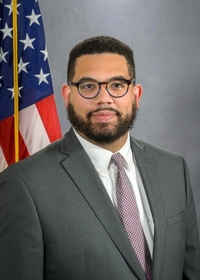
Rep. Manny Guzman
Sponsored bills
Maddy summaryHB 2195 establishes a $1,000 tax credit for Pennsylvania resident individuals who adopt a child under 18 years old in the year the adoption is finalized. The credit applies only once per adopted child and may be claimed jointly by filing spouses, but not for children who are the spouse's biological child. To claim the credit, taxpayers must submit proof with their tax return, and the Department of Revenue must annually report usage statistics (including total claims and amounts) to the General Assembly starting in 2027. The credit applies to tax years beginning after December 31, 2025.
Maddy summaryThis resolution designates February 2026 as "Black History Month" in Pennsylvania, symbolically recognizing the century-long observance of African American contributions to the Commonwealth and nation. It directly affects all Pennsylvania residents by formally honoring the historical achievements, resilience, and sacrifices of African Americans, marking the 100th anniversary of the movement founded by Dr. Carter Godwin Woodson. The resolution includes historical context about the origins of Black History Month and Pennsylvania's connections to Black labor and civil rights history, but it has no binding policy effects.
Maddy summaryHR 392 is a ceremonial House Resolution designating the week of March 8-14, 2026, as "Multiple Sclerosis Awareness Week" in Pennsylvania. It does not create new laws or policies but formally recognizes the issue and encourages Pennsylvanians to support efforts against multiple sclerosis. The resolution cites that over 24,000 people in Pennsylvania are affected by the disease and acknowledges the work of the National Multiple Sclerosis Society. This is a symbolic gesture with no direct impact on funding, healthcare, or legislation.
Maddy summaryThis is a symbolic resolution, not a law, recognizing February 27, 2026, as "Dominican Republic Independence Day" in Pennsylvania. It has no policy impact or effect on any specific group; it is purely a ceremonial acknowledgment. The resolution cites the Dominican Republic's independence from Haiti in 1844 and the state's Dominican-American community as context. It does not create new requirements, change existing laws, or allocate funding.
Maddy summaryThis Pennsylvania House resolution (HR 402) urges the U.S. Congress to require meaningful accountability and civil rights reforms before approving new funding for the Department of Homeland Security (DHS) and Immigration and Customs Enforcement (ICE). It directly addresses federal agencies by demanding reforms like enforceable use-of-force standards, independent reviews of serious incidents, and public release of body-camera footage after deaths or injuries during enforcement. The resolution cites the January 2026 deaths of two U.S. citizens during an ICE operation in Minneapolis as a catalyst for requiring transparency and oversight before additional federal appropriations are granted. It does not create new law but calls on Congress to condition future funding on specific, concrete reforms to protect civil rights and public safety.
Maddy summaryHB 2148 requires Pennsylvania school entities (including school districts, charter schools, and cyber charters) to adopt policies ensuring all students, parents, guardians, and school personnel can access school property regardless of immigration status. Specifically, schools must develop and publicly adopt inclusive policies within 90 days of the bill’s effective date, requiring school boards to approve these policies via public resolution with 45 days’ notice. Policies must be published in all languages spoken by students at home and reviewed quarterly to maintain accessibility. The bill explicitly prohibits immigration or law enforcement officials (including ICE, Customs, and local agencies acting under federal immigration authority) from restricting access to school zones without proper legal process. This directly affects all Pennsylvania public and private schools serving students, mandating concrete procedural changes to protect school access.
Maddy summaryThis resolution designates February 2, 2026, as "Rheumatoid Awareness Day" in Pennsylvania. It aims to increase public understanding of rheumatoid arthritis, a chronic inflammatory disease affecting joints and organs that impacts over 1.3 million Americans and carries significant health risks like higher heart attack rates. The resolution is symbolic - meaning it does not create new laws or funding, but rather formally recognizes the day to highlight the disease's challenges and connect to broader health awareness efforts. It directly affects Pennsylvanians by encouraging community recognition of rheumatoid arthritis through official state acknowledgment.
Maddy summaryThis bill (HB 2121) creates a provisional license pathway for international medical graduates (IMGs) seeking to practice medicine in Pennsylvania. To qualify, IMGs must provide evidence of at least three years of overseas practice, English proficiency, a foreign medical education credential, passing scores on required U.S. medical exams, verification of training, U.S. work authorization, and a full-time job offer from a Pennsylvania healthcare facility. The provisional license is valid for up to four years and requires supervised practice in underserved areas or approved specialties. After four years of good standing, IMGs may transition to a full, unrestricted license, and the board must report annually on license recipients, their practice locations, and specialties to the legislature.
Maddy summaryHB 2116 amends Pennsylvania's Taxpayer Relief Act to provide additional property tax relief for low-income senior citizens. It creates a 50% supplemental rebate on top of existing property tax rebates for seniors with household income ≤ $30,000 who live in cities other than first-class cities (e.g., Philadelphia), school districts, or second-class A cities. The bill changes income calculation by allowing property taxes paid on primary residences to reduce taxable income, and updates rebate schedules with annual inflation adjustments based on the Consumer Price Index. These changes directly affect seniors aged 65+ with low fixed incomes who qualify for base property tax or rent rebates.