

Maddy summaryHB 1751 creates a new Office of Employee Ownership within the state's Department of Community and Economic Development to support employee-owned businesses. It establishes an Employee Ownership Advisory Board to guide the program and a Main Street Employee Ownership Grant Program to provide funding for these businesses. The bill also directs the state to offer technical and financial assistance to help employee-owned enterprises grow and operate. This bill directly affects employee-owned businesses seeking support, grants, and guidance through state programs.
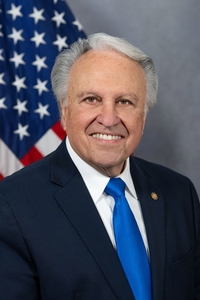
Rep. Eddie Pashinski
Sponsored bills
Maddy summaryHB 1575 creates a new tax credit program to revitalize vacant industrial properties in Pennsylvania. It directly affects building owners of pre-1973 factories or mills that have been at least 75% vacant for 24 months and are designated by their municipality for rehabilitation. The bill establishes a credit equal to 20% of qualified renovation costs (like structural repairs or equipment upgrades) that meet specific value thresholds, applied against certain business taxes. To qualify, properties must be rehabilitated for mixed commercial/residential use, and the program is administered by the Department of Community and Economic Development.
Maddy summaryHB 1412 amends Pennsylvania's child custody laws to clarify and streamline the process for modifying existing custody orders. It directly affects parents, guardians, or custodians seeking changes to court-ordered custody arrangements. The bill establishes specific criteria and procedures for when and how custody modifications can be requested, including requirements for demonstrating a significant change in circumstances. This creates a more structured framework for courts to evaluate modification requests while maintaining focus on the child's best interests.
Maddy summaryHB 1712 updates Pennsylvania's emergency communication rules under Title 35 (Health and Safety). It requires the state emergency management agency to maintain a single integrated system for weather advisories, disaster warnings, and coordination with local agencies, police, and the National Weather Service. The bill mandates two new statewide phone numbers: one for the public and emergency personnel to report hazardous materials or disasters, and another for the legislative branch to directly communicate with the agency during weather emergencies. These changes directly affect county/municipal emergency responders, state agencies (including the State Police), and legislative offices. The law takes effect 60 days after enactment.
Maddy summaryThe provided context does not include details about the specific changes made by HB 956 to Pennsylvania's aggravated assault laws. While the bill's title indicates it amends Title 18 regarding aggravated assault, the context lacks the concrete policy provisions, definitions, or affected groups necessary to describe what the bill actually does. Without this information, a factual summary of its mechanisms or direct impact cannot be provided. Legislative actions (like passage and referral) are noted but do not describe the bill's content.
Maddy summaryThis resolution designates September 18, 2025, and September 18, 2026, as "State Grange Day" in Pennsylvania to celebrate the Pennsylvania State Grange's 152nd and 153rd anniversaries. It directly affects the Pennsylvania State Grange organization and its members by formally recognizing their anniversary through a state-level designation. The resolution is purely ceremonial, with no binding requirements or policy changes beyond this symbolic recognition, and it was adopted by the Pennsylvania House on June 30, 2025.
Maddy summaryHB 1682 amends Pennsylvania's 1929 Administrative Code to require that if the state budget (general appropriation bill) isn't passed by June 30 for the next fiscal year, compensation for the Governor, Lieutenant Governor, and members of the General Assembly is suspended until the budget is enacted. Once the budget passes, the suspended pay is paid retroactively starting July 1. This procedural bill directly affects state executive and legislative leaders by linking their pay to the timely passage of the annual budget. It does not change substantive policy but establishes a specific financial consequence for budget delays.
Maddy summaryHB 1100 amends Pennsylvania's Human Services Code to allow public assistance recipients to use their benefits to purchase diapers and menstrual hygiene products through a new waiver program. This directly affects low-income individuals and families enrolled in public assistance programs who currently cannot use their benefits for these essential items. The key provision adds diapers and menstrual hygiene products to the list of eligible purchases under an administrative waiver, changing the existing code to expand access to basic necessities. The bill does not change benefit amounts or eligibility criteria but creates a new pathway for purchasing specific hygiene products. It passed the legislature in June 2025 and was referred to the Health & Human Services committee for implementation.
Maddy summaryHR 173 is a non-binding resolution urging Congress to establish a National Infrastructure Bank. It does not create new laws or funding but formally requests Congress take action to create this bank, which would provide financing for infrastructure projects. The resolution directly affects Congress itself, as it calls on the legislative body to initiate this specific action. This is a procedural measure with no immediate policy impact, as it only expresses a recommendation.
Maddy summaryHR 230 is a symbolic resolution designating September 15-21, 2025, as "Diaper Need Awareness Week" in Pennsylvania. It directly affects low-income families, infants, toddlers, and incontinent adults who face challenges affording diapers, as highlighted by statistics showing 46% of affected families cut food or utility spending to cover costs. The resolution recognizes Pennsylvania’s 10 active diaper banks and the National Diaper Bank Network, while encouraging public support through community donations and diaper drives. It does not create new funding or regulations but aims to raise awareness about the lack of access to diapers, which impacts health, childcare participation, and economic stability.